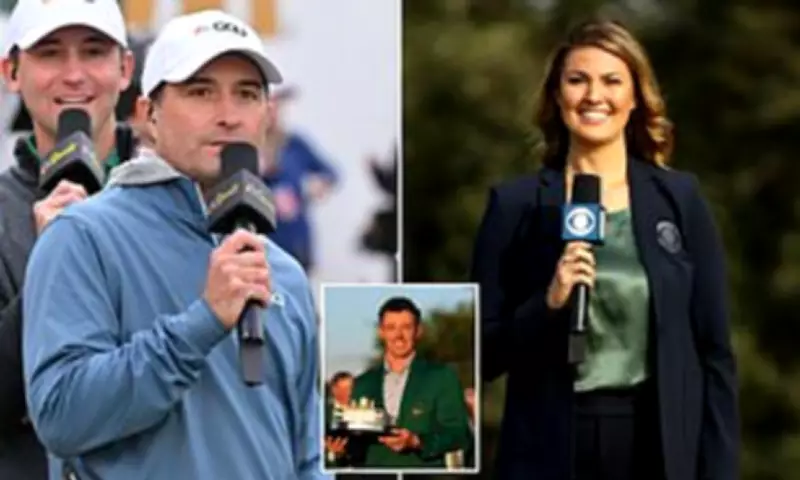
PGA Tour professional Kevin Kisner has executed a dramatic reversal after learning that the world of golf broadcasting presents hazards as challenging as those on the course itself. The 42-year-old, who serves as the lead golf voice for NBC, launched a fierce critique of rival network CBS's coverage of The Masters earlier this week, only to retract his statements following significant backlash.
Initial Criticism and Swift Backlash
In a blistering rant, Kisner targeted the noticeable delay between real-time shots and their broadcast presentation during the prestigious tournament. He asserted that CBS was "way behind the action," with lags reaching seven to ten minutes in certain instances. The four-time PGA Tour winner did not hold back, expressing clear frustration with the production quality during one of golf's most watched events.
A Public Apology and Reflection
However, recognizing that his comments had overstepped professional boundaries, Kisner issued a public apology on the Fore Play podcast. "It is what it is, man, and I just have to apologize to the golf team at CBS," he stated. "I crossed the line probably too much by talking about that whole content. And I know, from my short time in the business, how wild production is."

Kisner elaborated on the complexities of live broadcast production, noting: "It is a very difficult thing to produce a live show and make it all work, and everybody does their best. NBC screws up all the time - we're just trying to do our best. I went too far in being critical of them." He further acknowledged CBS's efforts to promote the sport, adding that "everyone's trying to do their best, and I was too critical."
The Challenges of Multiple Roles
The golfer-turned-broadcaster reflected on the difficulties of balancing his various professional commitments. "I feel like I am wearing so many hats… I am going to screw up," Kisner admitted, referencing his roles as a broadcast analyst, part-time podcaster, and occasional player. "I probably shouldn't have gone down that road at all. I could have just stepped out and said, 'I was involved in the tournament, I don't really need to have an opinion on it.'"
He continued: "Then we sit here all the time and I do have an opinion and I want to tell my opinions, so it's an interesting line to walk. I am sure we're going to have people coming after us once I get on the NBC show now. I can handle it, it's all good. I am not trying to hurt somebody when I have that opinion, that's the craziest thing in the world. I was just frustrated as others and let it all come out. P****d some people off, apologized to them and won't do it again."
Industry Reaction and Warnings
Former CBS Sports PR executive LeslieAnne Wade responded to Kisner's initial criticism with a pointed warning on social media. She tweeted: "He might soon find out that this golf television thing is a tight syndicate and this is not how this game is traditionally played and won. Watching the back 9 closely on this…" This comment highlighted the insular nature of sports broadcasting and the potential professional repercussions of public criticism between networks.
Specific Complaints About Masters Coverage
Kisner's original frustration stemmed from his experience at Augusta National, where he worked for SiriusXM Radio during Rory McIlroy's victory. On Monday's Fore Play podcast, he detailed his observations: "They were literally showing s*** that I knew happened 10 minutes ago all day long. What are we doing? You have no commercials. Play live shots."
He contrasted this with NBC's approach: "Our production team at NBC prides themselves at showing every shot that they possibly can live... And when we don't, we have to say, 'a moment ago,' because we are trying to make the whole movie make sense."
Widespread Viewer Dissatisfaction
Kisner was not alone in his criticism of CBS's coverage. Home viewers experienced numerous broadcast errors that marred their viewing experience during crucial tournament moments. Social media platforms erupted with complaints as the production team repeatedly failed to track golf balls during key shots in the final round.

The most significant error occurred on the tournament's final hole, where the broadcast lost sight of McIlroy's drive after it veered into trees on the right side. For over a minute, viewers remained uncertain whether the reigning champion faced a penalty or a manageable recovery shot. Even when the ball was eventually located in a greenside bunker, commentators expressed confusion about whether it belonged to McIlroy or his playing partner, Cameron Young.
Additional Production Failures
The technical issues extended beyond the 18th hole. The network also missed capturing McIlroy's final winning putt dropping into the cup due to a poorly selected camera angle that was obstructed by the golfer's own legs. Throughout the broadcast, viewers complained about extended periods where notable players disappeared from screens, only for the coverage to abruptly switch to random putts without proper context.
This series of errors led critics to label the coverage as among the worst in recent memory, with some fans questioning whether camera crews were "in training" during golf's most prestigious event. The combination of technical failures and production missteps created a frustrating experience for audiences attempting to follow the dramatic conclusion to The Masters.