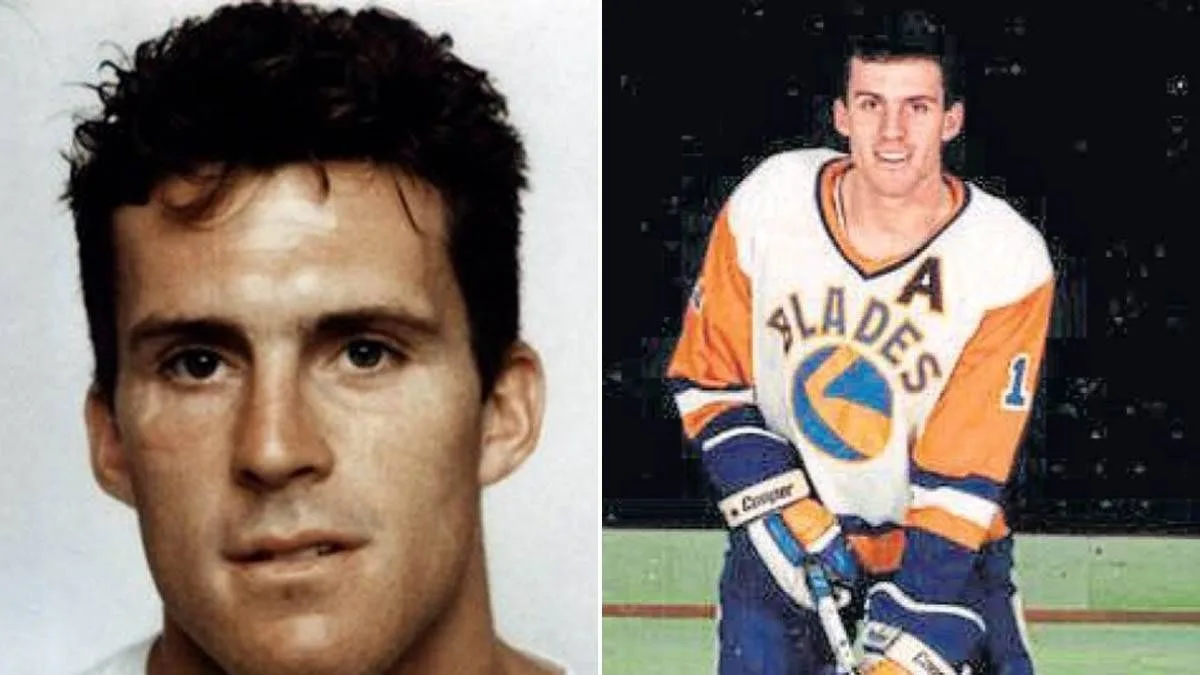
The Enduring Mystery of Duncan MacPherson's Glacier Discovery
The perplexing case of Canadian ice hockey player Duncan MacPherson, whose body was found encased in an Austrian glacier fourteen years after his disappearance, continues to baffle investigators and haunt his family. MacPherson vanished in August 1989, just days before he was scheduled to sign a contract with Dundee's Tayside Tigers as a player-coach, leaving behind a trail of unanswered questions and alleged intelligence connections.
A Promising Career Cut Short
Duncan MacPherson, a 23-year-old from Saskatoon, had been selected by the New York Islanders in the 1984 NHL draft but never played a game for the team. Following the conclusion of his contract with the Islanders in 1989, he secured an opportunity to join the Tayside Tigers in Scotland. In the days leading up to his disappearance, MacPherson telephoned millionaire Ron Dixon, who was preparing to purchase the Tigers, to confirm his imminent arrival in Dundee within two days.
Instead of travelling directly to Scotland, MacPherson opted for a snowboarding break in Austria. He was last seen alive on August 9, 1989, on the Stubaier Glacier in south Tyrol. A vehicle left at the glacier's base station was later traced back to a friend in Nuremberg who had lent it to him, but MacPherson himself had vanished without a trace.
The Grisly Discovery and Unexplained Injuries
For over fourteen years, MacPherson's whereabouts remained a complete mystery, despite his family's desperate efforts. Tragically, in the summer of 2003, his remains were discovered by a worker operating snow-grooming equipment on a busy ski slope in Neustift, Austria. His body, remarkably preserved by the glacial ice, was found with multiple broken bones and a crushed leg.
While Austrian authorities concluded that MacPherson died after falling into a crevasse, a Canadian forensic anthropologist contested this explanation. She argued that the pattern of bone fractures was inconsistent with a simple fall and suggested likely contact with substantial machinery. This analysis fueled suspicions and allegations from the MacPherson family, who accused Austrian officials of actively suppressing the truth.
Claims of CIA Involvement and a Family's Quest for Answers
Adding a layer of intrigue to the case, Duncan MacPherson had previously claimed that the CIA had attempted to recruit him as an intelligence operative. This assertion deepened the confusion and concern for his relatives following his disappearance. With little assistance from Austrian police or Canadian consular officials, the MacPherson family exhausted their life savings, making ten trips to Austria and distributing 2,500 missing person notices in several languages across four countries in a relentless pursuit of answers.
Their efforts included a 1994 false alarm when a man with amnesia in Austria was initially thought to be Duncan, but was quickly ruled out. The family's frustration culminated in an application to the European Court of Human Rights in Strasbourg, where they alleged breaches of the right to life and the right to an effective remedy. The court ultimately concluded that the authorities had done everything within their power, but the family remained unconvinced.
A Lingering Enigma in Ice Hockey History
Dundee hockey supporter George Carr reflected on the case, stating, "It definitely is a strange scenario and leaves a question mark over his disappearance. MacPherson going missing must rank as one of the most unusual episodes in the history of ice hockey in Dundee." The mystery of Duncan MacPherson's death, entangled with claims of CIA recruitment, unexplained injuries, and allegations of a cover-up, remains an unresolved and haunting chapter, leaving a permanent shadow over what should have been a promising sports career.