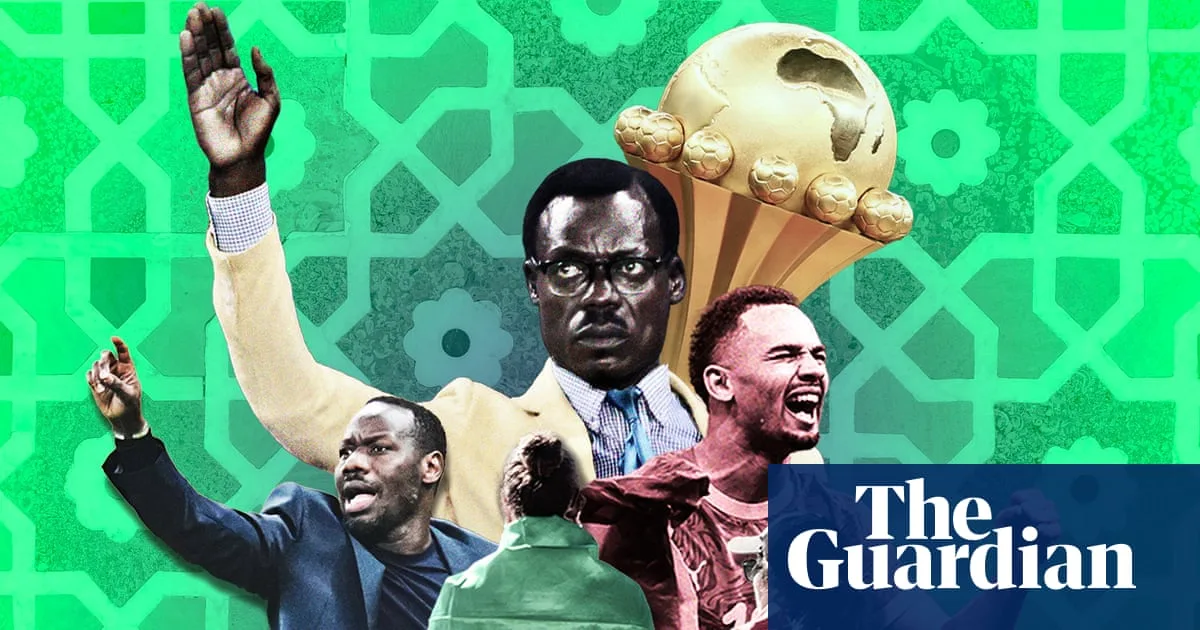
While Senegal’s victory in the chaotic final has made the headlines, we look at five other big takeaways from the tournament – from the strong diaspora representation to the floor-filling tunes.
Morocco’s broader strategy is to demonstrate to global players, such as Fifa, that they are capable of hosting high-profile sporting events. At Afcon, they were out to prove a point. It was evident as soon as I walked through Mohammed V airport, where passengers were met with live displays from musicians and dancers, while the streets outside were covered in flags and Afcon branding. All this before the pomp and ceremony that accompanied the national team’s matches at the Prince Moulay Abdellah Stadium in Rabat.
However, for some locals, the ambition represents an obsessive need by the country’s government to project an image to the outside world that far exceeds their willingness to help their own people on the ground. For example, there were criticisms about the speed of the state’s response to the 6.8-magnitude earthquake in the north-western Al Haouz province in September 2023, which sits in stark contrast to the speedy pace of stadium construction. “If you go [to Al Haouz], you will still see the people [who] have no house until now,” says Yacine, who works for a French NGO in Rabat. Displacement in urban areas such as Casablanca and gen Z-led protests in October last year bemoaning a lack of hospitals reflected a sombre pre-tournament mood.
Morocco brushed off the sceptics to put on a largely successful tournament, but it wasn’t without controversy. Senegal’s claims of inadequate treatment by the hosts, if true, could demonstrate that Morocco is not as ready for the big time as it wants the world to believe. People may be focusing on Brahim Díaz’s crucial penalty miss or the brilliance of Pape Gueye’s winning goal, or the Senegalese walk-off that has prompted the Moroccan FA to announce it is pursuing legal action. But in the days after, the clips of ballboys, under instruction, hiding towels from the Senegal goalkeeper Édouard Mendy and his deputy Yehvann Diouf are what jars. It’s fair to say that the context matters little here; it leaves a sour taste to watch the hosts implement such extreme gamesmanship, trying to police and physically challenge a Black goalkeeper at a time when the balance of power was weighted with the north African hosts. Not the best look for a nation hoping to host the 2030 World Cup final.
This was an Afcon where the global reach of the Black diaspora was apparent: British and American-born Nigerians in Fez, Parisian Senegalese in Tangier and Portuguese Mozambicans in Agadir, to name a few. Nassim Bellaoud and Soriba Cissoko, born and raised together in Paris’s 18th arrondissement, are second-generation Moroccan and Senegalese, respectively. “Afcon is always a big tournament in the diasporas,” they told me. “Like in Paris, we have a lot of Moroccans, Algerians, Malians, and Congolese and French-speaking Africans who always follow it. So to be here is amazing,” said Nassim, who took the opportunity to visit his home town of Khemisset and to do a tour of the host cities with his friend. Soriba’s decision was more organic – he saw “tickets were cheap and Morocco is not far”, so he chose to “follow the growing movement, the energy and the atmosphere” on the continent.
Afcon’s reach extends way beyond what happens in the stadiums. Across the world in little versions of Kingston, Accra, Lagos and Douala, people flocked to watch parties in cafes or function halls. Tomisin Ogunfunmi, a Nigerian from Dallas, Texas, and his friends Abdulkadir Fiqi, a Somali, and Ammar Alinur, an Ethiopian from Brooklyn, told me, in Rabat’s pouring rain, that the popularity of the tournament is a testament to its cultural significance.