Coventry's Remarkable Return to Premier League Football After 25 Years
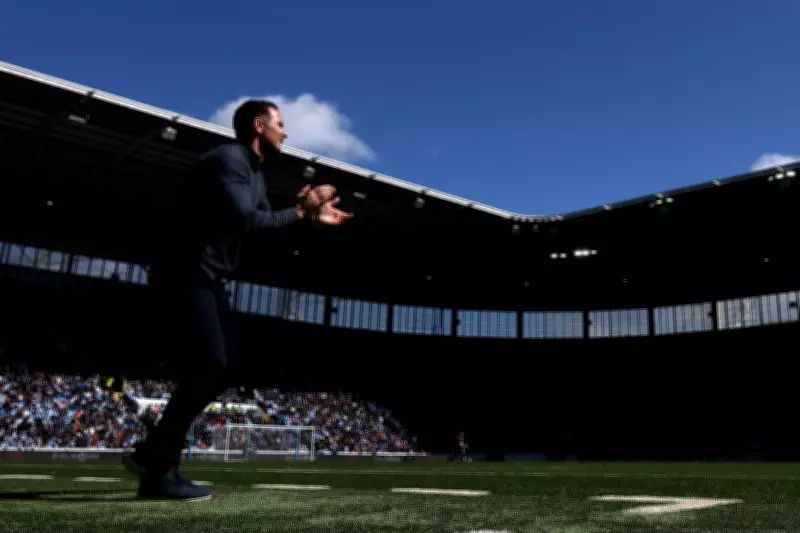
For years, the CBS Arena stood as a stark monument to Coventry City's prolonged misery and institutional decline. Now, this same stadium has become the beating heart of a football club on the verge of completing one of English football's most extraordinary comebacks. After a quarter-century absence, Coventry City stands tantalizingly close to returning to the Premier League, having navigated a tortuous journey that nearly destroyed the club entirely.
The Stadium That Symbolized Struggle
The eight-minute train journey from Coventry city centre to the CBS Arena before a match against Sheffield Wednesday reveals a sea of sky blue shirts. Supporters of all ages pack the carriages, representing two distinct generations: those who witnessed the 1987 FA Cup triumph firsthand, and those who have absorbed the legend through countless retellings. The stadium's location speaks volumes about Coventry's historical plight. Unlike Highfield Road, which sat woven into the city's urban fabric for 106 years, the Ricoh Arena (as it was originally known) was constructed on the periphery, adjacent to the M6 motorway and a large supermarket.
This geographical isolation mirrored the club's emotional distance from its fanbase during the darkest years. Yet, through perseverance and renewed success, this once-alienating structure has gradually transformed into a genuine home. New memories have been forged within its walls, and the Premier League now glimmers on the horizon. The journey back began with a simple, defiant message from a fan on the day relegation was confirmed in 2001: a sign reading "We'll be back." That promise has taken a quarter of a century to fulfill, through a saga that tested the club's very existence.

The Scandinavian Connection and the 'Black Years'
Coventry's story resonates far beyond the Midlands. In Oslo, Norway, Jorg Nannestad flies a sky blue flag from his porch before every Coventry match, a ritual that puzzles his neighbours. As president of the Scandinavian Supporters Club, with 300 members spread from Denmark to the Arctic Circle, Jorg represents the global pull of English football and Coventry's unique place within its narrative. He experienced the tail end of Jimmy Hill's exciting 1960s side, celebrated the 1987 Cup final, and enjoyed the 1990s era featuring players like Peter Ndlovu.
However, Jorg describes the subsequent period in grave terms, labeling them "the black years." The Ricoh Arena was initially conceived as a 45,000-seat venue with a retractable roof, intended to host 2006 World Cup matches and cement Coventry's top-flight status. Reality proved bitterly different. It finally opened in 2005 with reduced capacity, no roof, no World Cup, and crippling debts that brought the club to its knees.
Administration, Exile, and Mismanagement
To survive, Coventry sold everything: star players, their historic Highfield Road ground, and eventually their 50% stake in the Ricoh Arena itself. In 2007, on the brink of extinction, the club was purchased by Sisu, a Mayfair-based hedge fund specializing in distressed debt. What followed was a 16-year masterclass in mismanagement that plunged Coventry into administration, resulted in points deductions, triggered two relegations, and saw fan boycotts and angry pitch invasions become commonplace.
The lowest point arguably arrived in 2012, when Sisu's hardball negotiations over rent with the local council led to Coventry losing their home entirely. The club was forced into a humiliating groundshare with Northampton Town at Sixfields Stadium, 30 miles away, where attendances plummeted below 2,000. Further insult came in 2014 when Wasps Rugby Club purchased the Ricoh. Coventry staff would arrive on matchdays to find Wasps branding plastered everywhere, initiating a painstaking process of replacement. Fans discovered Wasps logos even emblazoned on the seats themselves.
Sisu's asset-stripping and budget-strangling left the club in a state of terminal decline, treating a century-old cultural institution as merely a business to be squeezed dry. By 2017, with a threadbare squad, Coventry were relegated to League Two, hitting what seemed like rock bottom.

The Turning Point: Robins, Wembley, and Rebuilding Love
Two crucial events in 7 marked the beginning of the long climb back. The first was the return of Mark Robins as manager, a move that would have a transformative effect over the next seven years. "He saved our football club," states James Darlaston of the That Cov Pod. "We were probably going to go either extinct or down to the National League in front of a handful of fans if Robins didn't come in."
The second was the EFL Trophy final at Wembley that summer. While normally sparsely attended, Coventry fans descended on the capital in their tens of thousands, making up the bulk of a 74,434 crowd—the highest for the final in decades—to see Robins' team beat Oxford United. This day of celebration won new fans and provided a beacon of hope. "This is the main thing Mark Robins did," explains Simon Lillibury of That Cov Pod. "People decided they could fall in love with the club again."
Even League Two had its silver linings, offering trips to smaller, intimate grounds and a renewed sense of community among the traveling support. Despite another forced groundshare at Birmingham City's St Andrew's due to ongoing stadium disputes, Robins and assistant Adi Viveash engineered a steady ascent: promotion to League One in 2018, and then to the Championship in 2020.
Smart Recruitment, New Ownership, and Lampard's Gamble
Coventry's revival was not built on a magic pill or a billionaire sugar daddy. It was a meticulous, step-by-step reconstruction. In the Championship, head of recruitment Chris Badlan oversaw astute signings from smaller European markets, like Viktor Gyokeres and Gustavo Hamer, who were later sold for significant profit. Sisu gradually receded and finally sold the club in 2023 to local businessman Doug King.
King's decision to sack the iconic Mark Robins and appoint Frank Lampard was a monumental gamble. However, Lampard has guided the team to the Premier League's brink. On his first day, he gathered everyone—players, staff, chefs, cleaners—and declared the sky was the limit for Coventry City. Off the pitch, King focused on creating a self-sustaining business. A cornerstone of his plan was finally owning the CBS Arena. Two decades after it opened, Coventry bought back their stadium last summer, a moment of profound symbolic and practical importance.
A Stadium Reclaimed and a Soul Restored
The transformation is now palpable. Giant images of current stars and past heroes adorn the stadium walls. Bars stay open after matches, and DJs play on the concourses. "Credit to Doug King," says James Darlaston. "He's dragged the club into the 21st century." The club's resurgence has been soundtracked by The Enemy's anthem "We Live and Die in These Towns," which blares before and after every game. The song, written by Coventry fans, captures the melancholy, resilience, and gallows humour of supporting the club through thin and thinner. The line "Don't let it drag you down now" feels written for those who never surrendered hope.
"It encapsulates Coventry people," reflects season-ticket holder Paul Barnes. "We are sometimes quite dour, we have a certain sense of humour." There is a poignant edge, as many fans from the Premier League era have passed away during the long exile. The song has become a modern-day hymn for a congregation that has endured a severe test of faith. The pre-kickoff moment, with dimmed lights and pounding drums, is genuinely spine-tingling, imbuing the CBS Arena with a soul it lacked for two decades.
"We have a song called 'Take Me Home Highfield Road'," Simon Lillibury recalls. "It used to express a real desire to return there because the CBS felt half-full, or we were playing in Birmingham or Northampton. Now the CBS feels like the ground we thought we were going to get in 2005. We've been through all this rubbish to get here, but now it feels properly like home. I don't think any fans would swap it." After 25 years of turmoil, Coventry City has not just chased a Premier League place; it has won back its very soul.