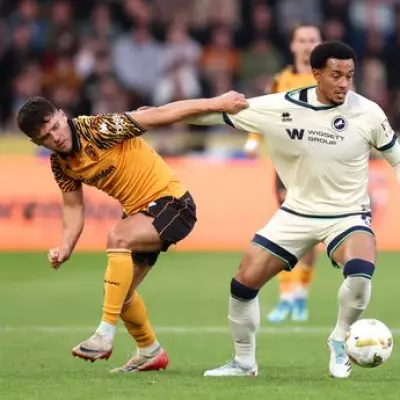
Coventry City's 25-Year Journey: From Turmoil to Premier League Brink
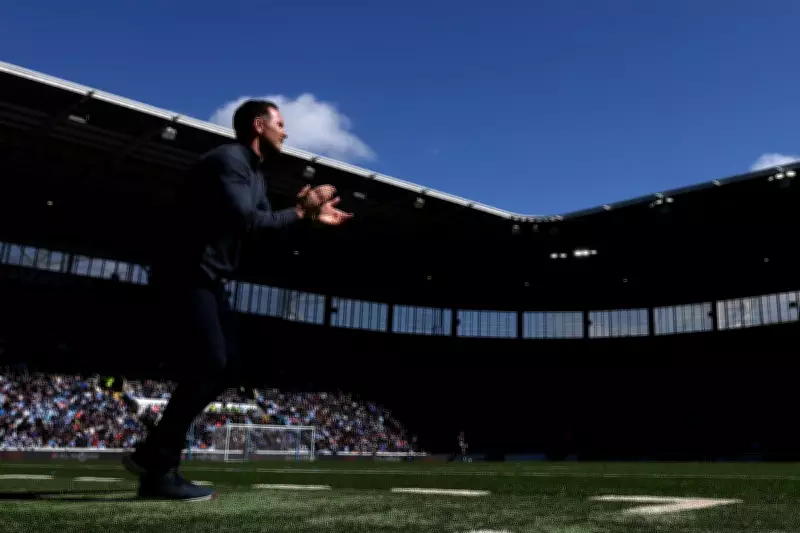
For years, the Ricoh Arena stood as a stark monument to Coventry City's prolonged misery and decline. Now, rebranded as the CBS Arena, the stadium pulses with genuine soul as the club edges closer to a remarkable return to the Premier League after a tortuous quarter-century absence.
A Stadium Transformed from Periphery to Heart
It is two hours before kick-off against Sheffield Wednesday, and the eight-minute train from Coventry city centre to the CBS Arena is packed with fans wearing sky blue shirts. The carriages are filled with supporters of all ages, from octogenarians to young children, united by a shared history. They disembark into the cold air under the South Stand, a location that once symbolised the club's dislocation.
Highfield Road served as Coventry's home for 106 years, woven into the city's urban fabric among terraced houses. In stark contrast, the Ricoh Arena was built on the periphery, next to the M6 motorway and a large Tesco, initially representing the club's fractured identity and plight. Yet, through perseverance and new memories, this stadium has gradually become home. The Premier League is now tantalisingly within sight, fulfilling a promise made on the emotional day of relegation in 2001 when a fan's famous sign declared: "We'll be back."

The Disastrous Reign and Near-Destruction
The Ricoh Arena was originally conceived to open in 2001 with 45,000 seats and a retractable roof, poised to host 2006 World Cup matches and cement Coventry's status as a Premier League club. It finally opened in 2005 with reduced capacity, no roof, no World Cup, and crippling debts that brought the club to its knees.
Coventry sold everything to fund the construction: star players, their historic Highfield Road ground, and even their 50 per cent stake in the Ricoh. Facing extinction in 2007, the club was purchased by Sisu, a Mayfair-based hedge fund specialising in distressed debt. What followed was a 16-year masterclass in mismanagement.
The low points were numerous and severe:- In 2012, Sisu's hardball negotiations over rent with the council led to Coventry losing their home, forcing a groundshare with Northampton Town at Sixfields Stadium, 30 miles away. Attendances plummeted to less than 2,000.
- The 2014 sale of the Ricoh to Wasps Rugby Club added insult to injury. Coventry staff recall arriving on matchdays to find Wasps branding plastered everywhere, requiring a painstaking removal process before each game.
- By 2017, after years of stripped budgets and decline, Coventry were relegated to League Two, hitting what many believed was rock bottom.
Through it all, the club's identity as a century-old cultural institution was neglected, treated merely as a business to be squeezed dry.
The Global Fanbase and the "Black Years"
Coventry's story resonates far beyond the Midlands. In Oslo, Norway, Jorg Nannestad flies a sky-blue flag over his porch whenever Coventry play. As president of the Scandinavian Supporters Club, his 300-strong membership spans Denmark, the Arctic Circle, and beyond, a testament to English football's global pull and Coventry's place within its narrative.
Jorg witnessed the end of Jimmy Hill's swashbuckling 1960s side, the 1987 FA Cup final victory, and the 1990s era featuring stars like Peter Ndlovu. He gravely describes the subsequent period as "the black years," a time when hope seemed lost.
The Turning Point: Rebuilding Love and Identity
Two crucial events in 7 marked the beginning of the turnaround. First, the return of Mark Robins as manager proved transformative over the next seven years. "He saved our football club," says James Darlaston of That Cov Pod. "We were probably going to go either extinct or down to the National League in front of a handful of fans if Robins hadn't come in."
Second, that season's EFL Trophy final at Wembley saw Coventry fans descend en masse, making up most of the 74,434 attendance—the highest for the final in decades. Although relegation to League Two followed that summer, the Wembley trip won new fans and provided a beacon of hope.
"I loved it," recalls Simon Lillibury of That Cov Pod, reflecting on the League Two days. "It was very much: 'I'm a Coventry fan – yeah, we're s***, who cares? It's the team I support.'"

Despite another forced groundshare at Birmingham's St Andrew's due to stadium disputes, Robins and assistant Adi Viveash engineered a steady climb: promotion to League One in 2018 and then the Championship in 2020.
"There was a whole generation of kids growing up who just fell out of love with the football club," says Simon. "This is the main thing Mark Robins did: it was just Cov shirts absolutely everywhere. People decided they could fall in love with the club again."
The Modern Ascent and Stadium Redemption
Coventry's rise was not fuelled by a billionaire benefactor but built meticulously. In the Championship, head of recruitment Chris Badlan oversaw astute signings from smaller European markets, like Viktor Gyokeres and Gustavo Hamer, who were later sold for profit.
Sisu finally sold the club in 2023 to local businessman Doug King. King's decision to replace Robins with Frank Lampard was a gamble, but it has brought the team to the Premier League's brink. On his first day, Lampard gathered everyone—players, staff, chefs, cleaners—and told them to believe the sky is the limit.
Off the pitch, King focused on making Coventry self-sustaining. Central to this was owning the CBS Arena. Two decades after its opening, Coventry finally bought back their stadium last summer. Now, giant images of current stars and past heroes adorn the ground, stadium bars stay open post-match, and DJs play on the concourses.
"Credit to Doug King," says James Darlaston. "He's dragged the club into the 21st century."
An Anthem for Resilience and Home
Coventry's resurgence has been soundtracked by The Enemy's "We'll Live and Die in These Towns," which blares before and after every game. The band, Coventry fans themselves, performed it live at a match this season. The song's lyrics about melancholy, resilience, and gallows humour perfectly capture the Coventry experience.
"It encapsulates Coventry people," says season ticket holder Paul Barnes. "We are sometimes quite dour, we have a certain sense of humour." For many, like Paul Armstrong who runs the Coundon Supporters Club, it holds poignancy: "A lot of fans I know have died since the club were last in the Premier League."
Jorg Nannestad calls the song a "hymn," and indeed, the CBS Arena has become a place of worship and tested faith. The pre-kick-off moment when lights dim and trumpets sound is spine-tingling, symbolising why the stadium now has new meaning.
"We have a song called 'Take Me Home Highfield Road,' and it used to be a real desire to go back there because CBS was half-full, or we were playing in Birmingham or Northampton," reflects Simon Lillibury. "Now the CBS feels like the ground we thought we were going to get in 2005. We've been through all this rubbish to get here, but now it feels properly like home, and I don't think any fans would swap it."
After 25 years of turmoil, exile, and heartache, Coventry City have not only survived but thrived, transforming a soulless monument into a beloved home as they stand on the precipice of a Premier League return.