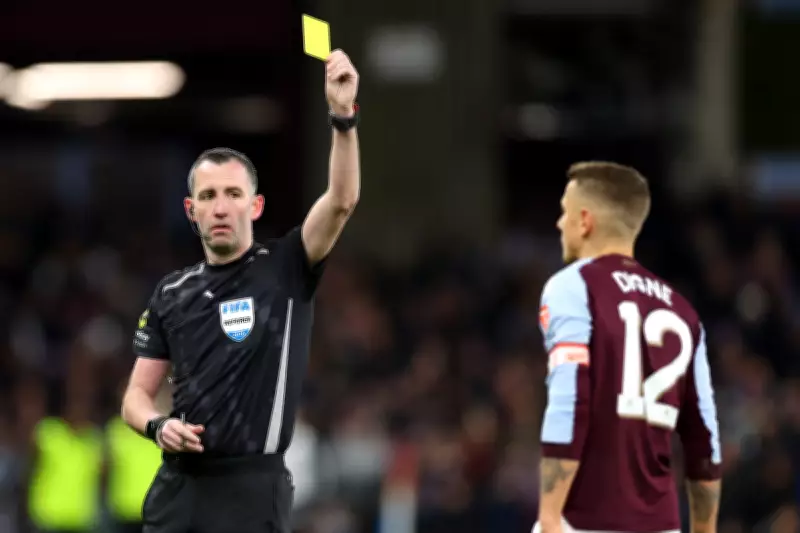
Referee Chris Kavanagh has been omitted from this weekend's Premier League appointments following a series of controversial decisions made during last Saturday's FA Cup match between Aston Villa and Newcastle United. The omission comes after significant criticism directed at Kavanagh and his assistants for multiple errors that impacted the outcome of the high-profile cup tie.
Controversial Incidents in FA Cup Match
During the Emirates FA Cup Fourth Round match, Kavanagh and his team faced scrutiny for several key mistakes. One of the most notable errors was failing to identify Tammy Abraham as offside for Aston Villa's opening goal, a decision that sparked immediate debate among fans and pundits alike. Additionally, Kavanagh did not punish a shin-high challenge by Lucas Digne, which many argued warranted a red card for dangerous play.
Penalty Area Controversy
Another contentious decision involved awarding a free-kick for a handball by Lucas Digne, despite the incident clearly occurring inside the penalty area. This mistake was compounded by the fact that no Video Assistant Referee (VAR) was available for that round of the FA Cup, leaving officials without technological support to review and correct the call. The absence of VAR highlighted the reliance on human judgment in critical moments, raising questions about consistency in officiating standards.

Post-Match Assessments and Selections
The Premier League's decision to drop Kavanagh from upcoming games is based on post-match performance assessments, which evaluate referees' accuracy and decision-making under pressure. While assistant referee Gary Beswick has been named for another match, Kavanagh and fellow official Nick Greenhalgh do not feature in any appointments for the weekend. This move underscores the league's commitment to maintaining high standards in officiating, even as it faces ongoing challenges with referee performance and public perception.
Expert Opinions on Refereeing and VAR
The controversy has sparked a broader debate about the role of technology in football officiating. Former England captain Wayne Rooney suggested that the errors indicated an over-reliance on VAR by officials, arguing that referees may become complacent when expecting technological backup. However, former referee Graham Scott disagreed, stating that officials do not hide behind VAR and must take responsibility for their on-field decisions. This divergence in views reflects the ongoing tension between traditional refereeing methods and the integration of modern technology in the sport.
As the Premier League continues to navigate these issues, the dropping of Chris Kavanagh serves as a reminder of the intense scrutiny faced by match officials and the importance of accountability in maintaining the integrity of the game. Fans and analysts will be watching closely to see how this incident influences future refereeing appointments and potential reforms in football governance.