The front of Chelsea’s shirts displayed the nondescript logo of an AI firm serving as a temporary sponsor, a visual metaphor for the broader atmosphere of impermanence and uncertainty that currently pervades Stamford Bridge. This sense of transience was palpable throughout a match where Chelsea failed to capitalise on early dominance.
Disjointed Management and Missed Opportunities
Liam Rosenior’s managerial demeanour contributed to the disquiet. He shared a dug-out seat with assistant Justin Walker, who repeatedly stood up to vacate it whenever Rosenior needed to sit. Rosenior’s extended pre-match hug with Burnley manager Scott Parker seemed excessively long for such a high-stakes encounter, raising questions about his public exuberance.
His communication style involved frequent clapping while issuing instructions, though there was little evidence players were listening. When captain Reece James approached the technical area during a second-half pause, Rosenior was busy writing on a notepad and missed him entirely. The intended message – ‘maintain intensity’ – hardly required written notes, yet Chelsea devolved into walking football after halftime, failing to register a single shot on target.

Joao Pedro’s Brilliance Contrasts with Collective Wastefulness
The primary source of positivity was Brazilian forward Joao Pedro, whose relentless awareness and physical presence haunted Burnley defender Joe Worrall throughout. Pedro opened the scoring within four minutes, sliding to convert Pedro Neto’s cross after a precise through-ball dismantled Burnley’s defence. This marked his seventh goal in nine appearances.
Beyond the goal, Pedro’s intelligent diagonal movements and crisp passing created space for teammates, particularly Cole Palmer. Unfortunately, Palmer’s poor touch throughout the afternoon prevented Chelsea from capitalising on numerous opportunities that could have sealed victory early.
Rosenior had previously suggested the 24-year-old Pedro could become world-class, and for once this exuberance seemed justified. His blend of physicality and tactical intelligence made him Chelsea’s standout performer.
Defensive Collapse and Burnley’s Resilience
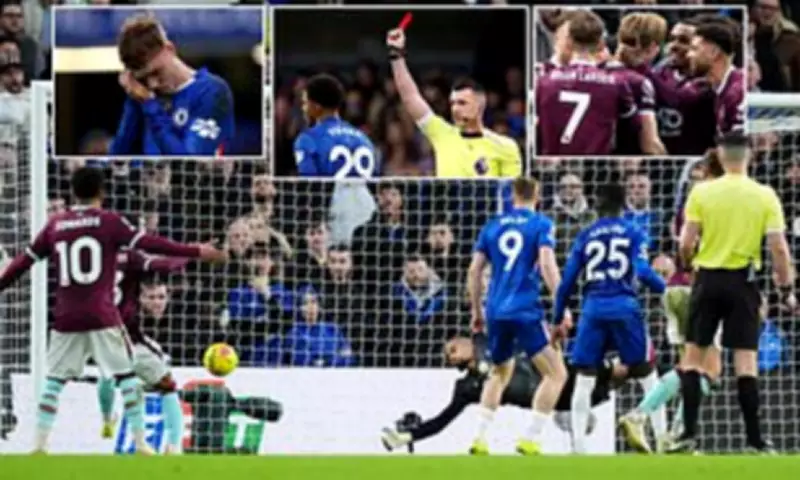
Burnley grew into the game despite Chelsea’s early dominance. The turning point arrived when Wesley Fofana received a second yellow card for a lunging challenge on James Ward-Prowse, reducing Chelsea to ten men. Fofana’s dismissal followed an earlier booking for a foul on Hannibal Mejbri, leaving Chelsea with no complaints about the decision.
With numerical advantage, Burnley began to smell blood. Ward-Prowse’s renowned set-piece delivery proved decisive when his impeccable corner found striker Zian Flemming unmarked for a late equaliser. Moments later, Jacob Brunn Larsen sent a header over from another Ward-Prowse corner, nearly stealing all three points.
Limited Options and Questionable Substitutions
Rosenior’s limited attacking options became apparent when he withdrew Cole Palmer early and introduced a sixth defender. The subsequent reshuffle saw Joao Pedro replaced ten minutes from time, with substitute Liam Delap firing over a late chance that could have won it for Burnley.
Chelsea’s wastefulness and ill-discipline proved costly once again at Stamford Bridge. While Burnley celebrated a potentially vital point in their relegation battle, Chelsea were left contemplating how such dominance yielded only a draw, further jeopardising their Champions League aspirations.
The atmosphere at full-time was muted, with half-hearted boos greeting the whistle. For a club of Chelsea’s stature, the performance reinforced troubling questions about direction and consistency under current management.