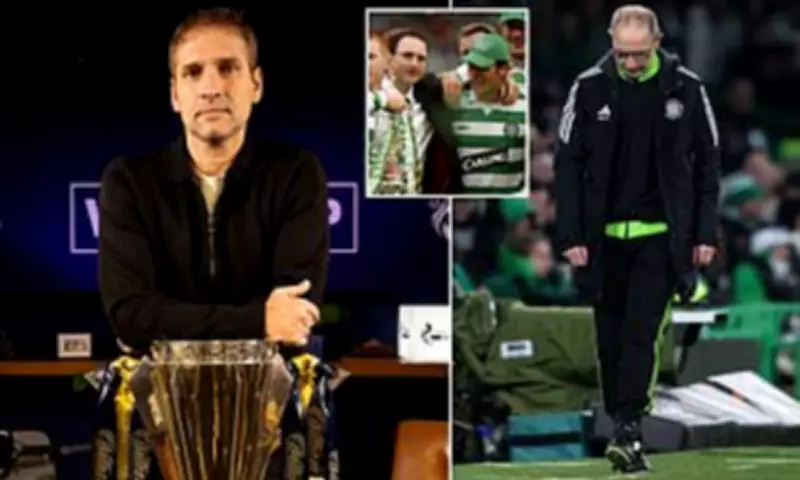
Stiliyan Petrov returned to a hauntingly familiar scene at Celtic Park last Thursday, but the atmosphere was unrecognisable. The Bulgarian legend, once a midfield stalwart for the Hoops, expressed shock at the subdued environment during Stuttgart's visit. "It's well known for the atmosphere," Petrov remarked. "The fan base, the singing, the emotion, the enthusiasm. I've never seen Celtic Park outsung by the opposition fans. At the moment, it's a really strange place."
The Root of the Discontent
The ongoing suspension of the Green Brigade ultras group contributed to the low-key occasion, but the lack of volume from those present mirrored a fanbase growing increasingly angry and demoralised. Discontent stems from both on-field performances and off-field decisions, with Celtic's rapid decline from domestic dominance and Champions League promise to their current struggles leaving supporters disillusioned.
A Club in Freefall
Just a year ago, Celtic appeared poised to continue their domestic supremacy while making significant strides in Europe. Now, this financially robust club has plummeted dramatically. Petrov attributes this fall to systemic failures at the highest levels. "Everything has been going wrong since the start of the season," he added. "I think it was inevitably going to happen. The football club have become too comfortable in the last couple of years."

He pointed to poor decision-making in recent transfer windows, inadequate support for managers, and frequent managerial changes as key factors destabilising the club. "Usually, we've seen Celtic being comfortable in February. Now, Celtic have been pushed by probably not making the right decisions in the last two transfer windows. Not supporting the managers, changing managers in a short period of time. That affects the club."
Leadership Vacuum and Structural Flaws
Petrov emphasised that Celtic resemble an analogue club struggling in a digital era, lacking clear vision or a grand plan. He argued that too few senior roles are filled based on merit, leading to a leadership vacuum. "Maybe Celtic have to restructure," said the former midfielder. "I think the club have been outdated. In modern clubs, the way they're working, the sporting directors and technical directors are navigating and taking action. They are going in the right direction, supporting the managers."
He continued, "Celtic haven't really had that. Maybe it's time to start looking at it and being restructured in a different way. To give the fans the opportunity to believe that the club will go in the right direction." However, Petrov noted little hope among fans that the current boardroom occupants possess the capability to enact necessary changes.
Accountability and Communication Failures
Throughout this turbulent period, as one disastrous decision followed another, the lack of accountability from those in leadership positions has been stark. Dermot Desmond's defence of the club's structure, while criticising former manager Brendan Rodgers, seemed detached from reality. Meanwhile, chief executive Michael Nicholson has maintained near-silence, exacerbating frustrations.
"You need strong leaders in difficult times," Petrov asserted. "At the moment, it seems like there's nobody out there leading in the right direction, doing the right things, trying to calm things down and give the opportunity for the fans to settle and the team to start performing. There's not a clear message of who makes the decision, who finds players, who signs the players, who makes plans of what's happening. At the moment, you don't know."
Martin O'Neill's Unenviable Position
Interim chairman Brian Wilson has attempted to engage with disaffected fans through meetings, but these efforts feel insufficient. Martin O'Neill, nearing 74, has been burdened with addressing fan protests instead of focusing solely on team performance. Petrov expressed sympathy for his former manager, deeming this situation fundamentally unfair.
"It's great to see him, but I have kind of felt sorry for him," he said. "He's 73-years-old and he's trying to save the club at a difficult time. He's trying to motivate, trying to be the connection between the fans and the board and trying to do his job with the team on the pitch. It's really sad to see."

Petrov questioned the wisdom of relying on O'Neill to salvage the season, noting the immense pressure. "Fair play to him. If it was me, I'd never do it. He's done great, he's cut the gap. But if he doesn't win the league, what does that mean? What will the fans think about it? Because, if you don't win the league, you are a failure. The fans might not see it that way, but I know Martin will feel he could have done better. It seems like all of the pressure right now is on Martin. He is trying to deal with so many things. The club is divided. He doesn't need that now."
Uncertain Future and Call for Clarity
Despite the current chaos, Petrov hopes O'Neill remains involved at Celtic in some capacity long-term. However, the veteran's willingness to take on another role amidst this climate is uncertain. Petrov highlighted the broader lack of direction, making it nearly impossible to predict the club's next moves.
"Martin is there to the end of the season and he'll take the hits and the questions," said Petrov. "But what happens next? There's no clarity. It needs a clear plan of action. What is happening here? What happens next? Who leads? There's not a clear message to the fans. That's where the fans get frustrated. It's about what we do next, but no one knows what's happening."
He concluded with a call for decisive leadership: "That's where the big leaders - the chairman, the chief executive - stand up. If you make a mistake, and we all make mistakes, you have to take it as a man. You show leadership, you are proactive. What is the action plan and how are you are going to execute it? At the moment, there is no message like that. A good leader communicates and is clear about what they want to achieve and how he's going to achieve it."