Der Klassiker: A Historic Rivalry or Marketing Creation?
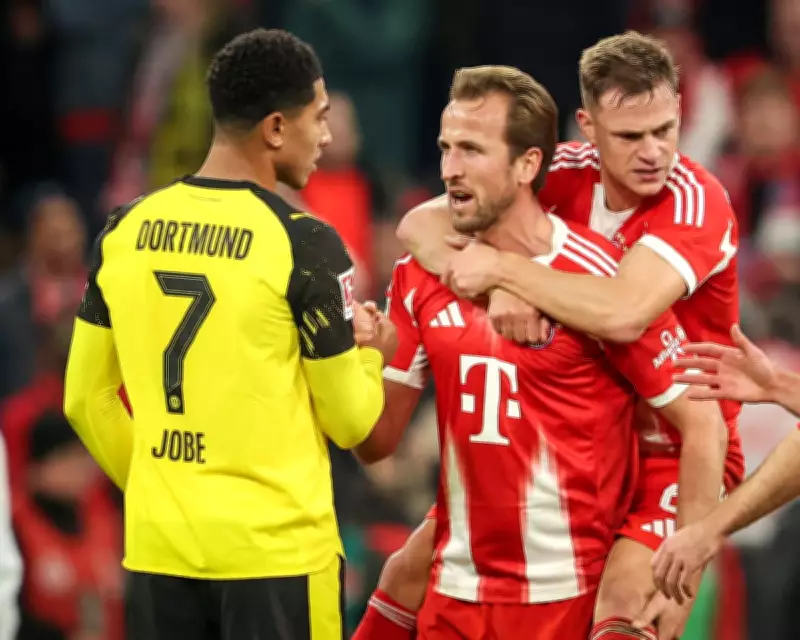
This weekend brings another installment of Der Klassiker, the Bundesliga's showcase fixture between Bayern Munich and Borussia Dortmund. While La Liga boasts El Clásico and Argentina revels in the Superclásico, Germany's premier football clash has faced persistent questions about its authenticity as a true, historic rivalry.
The Dominance of Bayern Munich
Bayern Munich's supremacy in German football stretches back to their first Bundesliga title in 1968-69. Since then, they have celebrated league championships with traditional weissbier festivities outside Munich's Rathaus nearly every year, with only Xabi Alonso's unbeaten Bayer Leverkusen interrupting their procession in 2024.
During the 1970s, Bayern's primary rivals were actually Borussia Mönchengladbach, featuring stars like Günter Netzer and Allan Simonsen. It wasn't until the mid-1990s that Dortmund emerged as serious contenders, winning two domestic titles and the Champions League in 1997 under Ottmar Hitzfeld.

The Needle Begins
The modern rivalry traces its origins to several heated encounters in the late 1990s. A notable spat between Lothar Matthäus and Andy Möller in 1996 set the tone, followed by Oliver Kahn's infamous flying kick on Stéphane Chapuisat and subsequent ear-biting incident involving Heiko Herrlich in 1999.
These confrontations provided the foundation for what Bundesliga marketers would later brand as Der Klassiker. After Dortmund's near-bankruptcy following their 2002 Bundesliga triumph, it took Jürgen Klopp's "heavy-metal football" to genuinely challenge Bayern's dominance during his tenure from 2008 to 2015.
Current State of Affairs
This season finds Bayern eight points clear of Dortmund at the Bundesliga summit. Only a Dortmund victory at the Westfalenstadion can prevent another Bayern procession toward the title. Dortmund's recent Champions League collapse against Atalanta, featuring Ramy Bensebaini's disastrous own-goal contribution, has further highlighted their inconsistency.
Bayern manager Vincent Kompany emphasized the fixture's significance: "For me, it's always a title in its own right, even if people say we can't win anything more now. These games are also important to the masses."
Harry Kane's Impact
Dortmund coach Niko Kovac faces the daunting prospect of containing Harry Kane, who has continued Bayern's tradition of elite strikers following in the footsteps of Robert Lewandowski and Gerd Müller. The England captain has scored 45 goals in 37 matches for club and country this season, establishing himself as truly "best in class."
While Dortmund have developed into football's premier talent incubator, producing and developing young stars before often selling them to wealthier clubs, they have struggled to maintain consistent title challenges against Bayern's financial and sporting might.
The Verdict on Der Klassiker
The question remains whether this fixture deserves its "classic" designation. Unlike truly historic rivalries built over decades of competitive balance, Bayern's overwhelming dominance—with 32 Bundesliga titles to Dortmund's 5—creates an inherent imbalance. Dortmund's last league championship came in 2012 under Klopp, while Bayern have won 11 consecutive titles since then until Leverkusen's interruption.
Nevertheless, the fixture consistently delivers drama, quality football, and massive television audiences. The Bundesliga's marketing efforts have successfully positioned Der Klassiker as Germany's premier football event, even if its competitive equilibrium doesn't always match the hype.
As the teams prepare for their latest encounter, the broader football world watches to see if Dortmund can mount a credible challenge or if Bayern will continue their procession toward another title. The answer may determine whether Der Klassiker evolves into a truly competitive rivalry or remains primarily a marketing success story.