Abandoned Football Stadium's Iconic Features Preserved in Swansea Community Park
Across the United Kingdom, numerous abandoned football grounds lie derelict, often becoming burdens to their surrounding neighbourhoods. However, Swansea City's former home at Vetch Field stands as a rare success story in this regard, transforming into a vibrant community space while preserving poignant remnants of its sporting past.
From Football Ground to Community Hub
Swansea City called Vetch Field home from the club's 1912 debut until 2005, when they relocated to the Liberty Stadium, now known as the Swansea.com Stadium. During that extensive period, the team experienced numerous promotions and relegations, competing primarily in the second, third, and fourth tiers of the English Football League system.
At its closure nearly 21 years ago, Vetch Field could accommodate a maximum capacity of just under 12,000 spectators. While considerably smaller than the modern Liberty Stadium, many loyal fans still nostalgically recall the more intimate atmosphere of the old ground.
Preserving History for Future Generations
Swansea Council has made concerted efforts to maintain segments of the historic ground, now known as Vetch Park. The local community area prominently features the pitch's original centre circle, which remains meticulously maintained as a grassy area offering panoramic views over Wales' second-largest city.
A significant factor in this preservation is the emotional connection many supporters maintain with the site. Numerous fans have had their ashes spread over the ground throughout the years, prompting both the club and council to preserve these areas as a mark of respect for those memories.
Architectural Relics Amid Urban Landscape
The park also incorporates a well-preserved section of the original stadium wall, emblazoned with the Swansea City crest. This partition runs alongside expansive grassy areas, reminiscent of the pitch it once enclosed during thrilling matchdays.
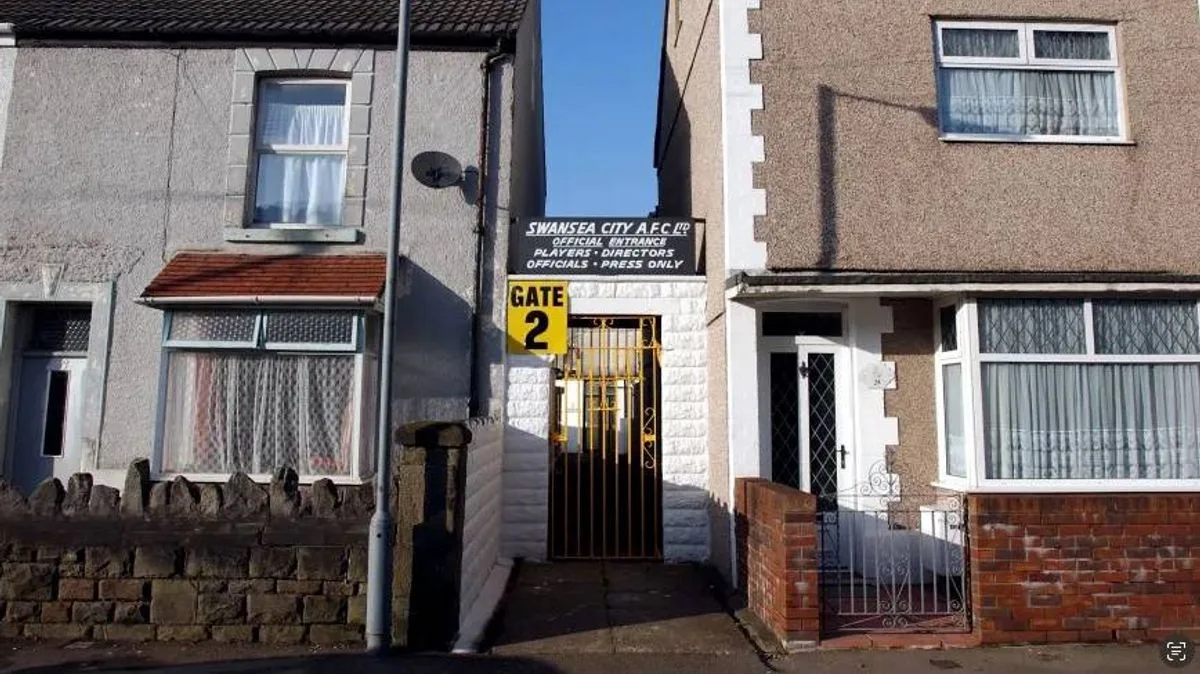
Perhaps most remarkably, the players' tunnel remains intact, positioned between two neighbouring terrace houses. Just beyond a wall bordering Vetch Park stands the official entrance, Gate 2, which still bears signage indicating it was reserved exclusively for "players, directors, officials" and "press only."
This architectural feature evokes comparisons to the Oak Stand entry at Kenilworth Road, home of Luton Town, where fans pass within feet of residential properties integrated into the stadium's infrastructure. Additionally, a rusting gate to the old East Stand remains nearby, one of the few features yet to be demolished, though it now leads to a dead end rather than the bustling stands of yesteryear.
Cultural Legacy Beyond Football
Vetch Field's history extends beyond football, having hosted legendary musical performances by household names like The Who in 1976 and Stevie Wonder in 1984. The ground's record attendance of 32,796 occurred during an FA Cup clash in February 1968, when Swansea narrowly lost 1-0 to Arsenal.
This unique preservation project demonstrates how abandoned sporting venues can be thoughtfully repurposed, honouring their historical significance while serving contemporary community needs. The careful integration of football heritage into everyday urban life makes Vetch Park a distinctive example of sustainable urban regeneration.