The End of LIV Golf: A £4 Billion Saga Concludes
After four years, an estimated £4 billion in expenditure, and a prolonged civil war within professional golf, the LIV Golf experiment appears to be reaching its conclusion. Reports indicate that Saudi Arabia's Public Investment Fund (PIF) is preparing to withdraw its lavish financial backing from the rebel golf league at the end of the current season, bringing to a close one of the sport's most turbulent and expensive chapters.
Emergency Meetings and Memos Signal the End
Key figures behind the LIV Golf project were summoned to an emergency meeting in New York this week amid mounting speculation about the league's future. LIV Golf CEO Scott O'Neil subsequently sent a memo to staff, insisting that operations would continue at "full throttle" through the remainder of the season, including this weekend's event in Mexico City. However, without the deep financial wells of the Saudi PIF, there is no viable future for the league beyond 2026.
The signs of instability had been growing for some time. Major contracts were nearing their conclusion, and star players like Brooks Koepka and Patrick Reed had already departed. More defections were anticipated given sufficient time. The irony is palpable: LIV Golf had only recently secured Official World Golf Ranking (OWGR) points for its competitors, finally achieving a layer of credibility it had desperately sought since its inception.

A Rocky Start and Questionable Format
LIV Golf's journey was fraught with missteps from the very beginning. When the first tournament teed off at the Centurion Club near St Albans in June 2022, tickets remained on sale, there was no functional leaderboard on the website, and no UK broadcast deal was in place to televise the action. The format itself—three rounds with a shotgun start for the entire field—made following any coherent narrative nearly impossible for viewers.
The league further undermined its own seriousness with team names that sounded more suited to a science fiction competition than a professional golf tour: HyFlyers, Iron Heads, Majestick, Range Goats, Torque, and Fireballs. This contributed to a widespread perception that LIV Golf was little more than an expensive gimmick rather than a legitimate sporting enterprise.
Financial Windfalls and Sporting Decline
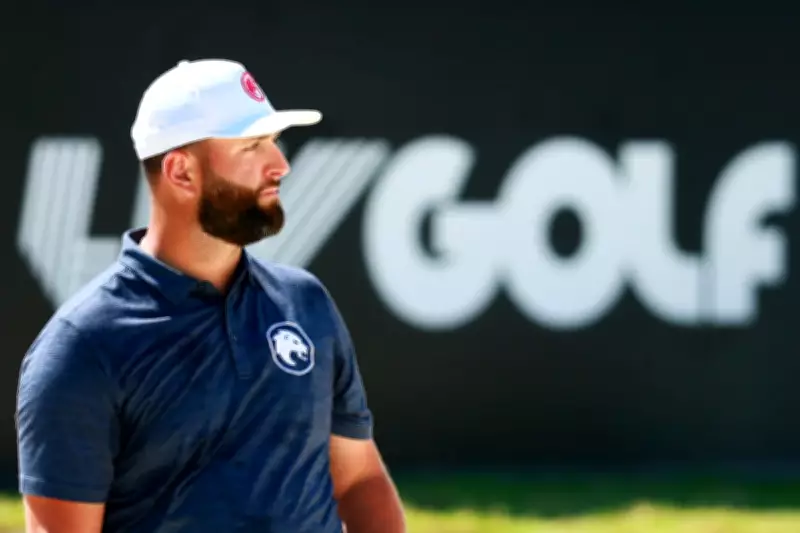
What did this multi-billion pound venture ultimately achieve? A select group of golfers became extraordinarily wealthy, with contracts reaching astronomical figures. Jon Rahm, for instance, signed a deal reportedly worth £500 million, ensuring financial security for generations of his family. Laurie Canter, currently ranked 103rd in the world, admitted to earning a life-changing £4.5 million before leaving the tour.
However, this financial bonanza came at a sporting cost. Many of LIV's star players appear to have regressed in their competitive abilities over the past four years. The symbolic moment may have been watching Bryson DeChambeau, LIV's flagship player, miss the cut at the Masters after a disastrous bunker shot on the 18th green. Ultimately, LIV Golf could never shake the perception that its participants were motivated primarily by financial gain rather than sporting excellence.
The Geopolitical Dimension and Soft Power
In one significant sense, LIV Golf did accomplish its underlying objective. The league successfully recruited globally recognized stars to front its project, essentially purchasing their endorsement and providing a smiling facade for Saudi Arabia's soft power ambitions. Over the past decade, Saudi Arabia has invested approximately £600 million in Formula One, spent £400 million on a Premier League football club, and made substantial investments in horse racing, tennis, chess, and boxing.
What distinguished LIV Golf was its brazen approach—no subtlety or discretion, simply purchasing big names under the thinnest of veils regarding "growing the game." This allowed Saudi Arabia to accrue legitimacy and display its influence on the global stage, even as players had to reconcile receiving money directly from an authoritarian state known for incarcerating and executing dissenters.

Resistance from Golf's Establishment
Not every golfer succumbed to LIV's financial allure. Rory McIlroy, Tiger Woods, and to a lesser extent Scottie Scheffler rejected offers that reportedly exceeded even Rahm's monumental contract, helping to maintain the PGA Tour's stability during the crisis. While golf's traditional structures certainly have their flaws and should never become a closed system, LIV's aggressive attempt to present itself as "golf but louder" ultimately failed to resonate with broader audiences.
Even when events attracted healthy live crowds in locations like Australia and South Africa, television viewership remained dismal. LIV tournaments typically drew around 300,000 viewers on Fox Sports in the United States, compared to approximately 2 million for a standard PGA Tour event. The league simply failed to capture mainstream attention.
Legacy and Ironies
LIV Golf did provoke a response from the PGA Tour, leading to increased prize money and the creation of signature events featuring smaller, high-quality fields without cuts—a deliberate imitation of one of LIV's innovations. "Imitation is the greatest form of flattery," LIV Golf tweeted at the time. "Congratulations PGA Tour. Welcome to the future."
The final irony came earlier this year when LIV itself was forced to adopt traditional PGA Tour practices. The name LIV derives from the Roman numeral for 54, referencing the league's original three-day, 54-hole format designed for faster-paced entertainment. However, in a bid to secure those elusive ranking points, LIV switched to the conventional 72-hole format. By the end, even the league's name had become meaningless, symbolizing the hollow nature of the entire venture.
As LIV Golf fades into history, it leaves behind a legacy of division, enormous expenditure, and questions about the intersection of sport, finance, and geopolitics. The PGA Tour emerges battered but intact, while Saudi Arabia's experiment in sports washing through professional golf appears to have reached its costly conclusion.