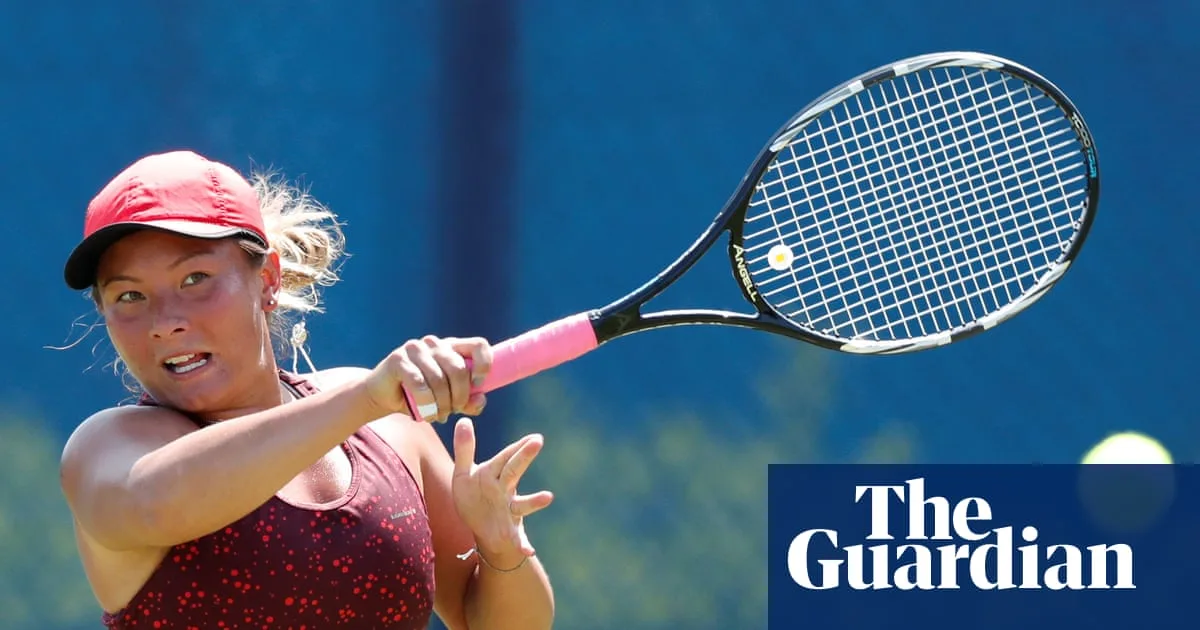
Tara Moore's $20m WTA Legal Battle Backed by Breakaway Tennis Union
Tara Moore's $20m WTA Legal Fight Supported by Union

In a significant escalation of tennis's internal conflicts, the breakaway Professional Tennis Players Association (PTPA) has publicly endorsed Tara Moore's substantial $20 million legal action against the Women's Tennis Association (WTA). This development marks a new chapter in the sport's ongoing civil war, highlighting deep-seated tensions between player unions and governing bodies.

Background of the Doping Allegations

British doubles specialist Tara Moore, aged 33 and formerly ranked as the UK's number one in doubles, was initially suspended in June 2022. This suspension followed positive tests for the banned substances boldenone and nandrolone during a tournament held in Bogota, Colombia. Throughout the ordeal, Moore has consistently and vehemently denied any intentional doping, maintaining her innocence from the outset.

In December 2023, an independent tribunal cleared Moore, concluding that contaminated meat was the probable source of the positive results. However, this decision was later overturned by the Court of Arbitration for Sport (CAS) in July 2025, after an appeal from the International Tennis Integrity Agency (ITIA). CAS reinstated Moore's original four-year ban, deducting the 19 months she had already served, and ruled that she had not adequately demonstrated the accidental nature of the high nandrolone levels in her system.

Legal Proceedings and Union Involvement

Moore has now filed a negligence lawsuit against the WTA in the New York Southern District Court, seeking $20 million in compensation. She argues that the WTA failed in its duty of care by not warning players about the risks of meat contamination, particularly before the Bogota event. The lawsuit claims this negligence led to her reputational and financial devastation.

Notably, Moore is represented by King & Spalding, the legal firm affiliated with the PTPA. While the PTPA is not funding her legal expenses, sources confirm they are providing moral and strategic support, with King & Spalding handling the case on a pro bono basis. This alignment underscores the union's broader legal campaign against tennis authorities.

Allegations of Preferential Treatment

In her court filings, Moore alleges that the ITIA showed bias by imposing lighter penalties on higher-profile players. For instance, Jannik Sinner received a three-month ban and Iga Swiatek a one-month ban for similar contamination issues, compared to her four-year suspension. A union source commented, "We're supporting Tara, as she has been treated appallingly. It appears clear there are different systems in place for different people."

Broader Context of Tennis's Civil War

The PTPA, founded by Novak Djokovic six years ago—though he departed last month—has been actively challenging the sport's establishment. It has already filed an anti-trust lawsuit against the WTA, ATP, and three grand slam tournaments, accusing them of colluding to reduce prize money and enforce restrictive ranking systems. Additionally, the union is pursuing a $1 billion investment round to launch a new global tour, posing a potential threat to the existing tours.

Recently, the PTPA dropped its lawsuit against Tennis Australia after reaching a settlement ahead of the Australian Open. As part of this agreement, Tennis Australia will cooperate with the PTPA by providing confidential financial data against other tournaments, in exchange for immunity from damages that could amount to tens of millions of pounds.

Responses from Authorities

A WTA spokesperson stated, "We are aware of Tara Moore's filing in the US District Court and will respond through the appropriate legal process. The arbitration was conducted by a neutral arbitrator, and there is no basis to vacate the arbitrator's award. We respect the judicial process and will not comment further while the matter is pending." The ITIA was unavailable for comment at the time of reporting.

This case not only highlights individual grievances but also reflects wider issues of governance and fairness in professional tennis, as player unions like the PTPA continue to push for reform and accountability within the sport.