Sir Craig Reedie, Olympic Administrator Who Secured London 2012, Dies at 84
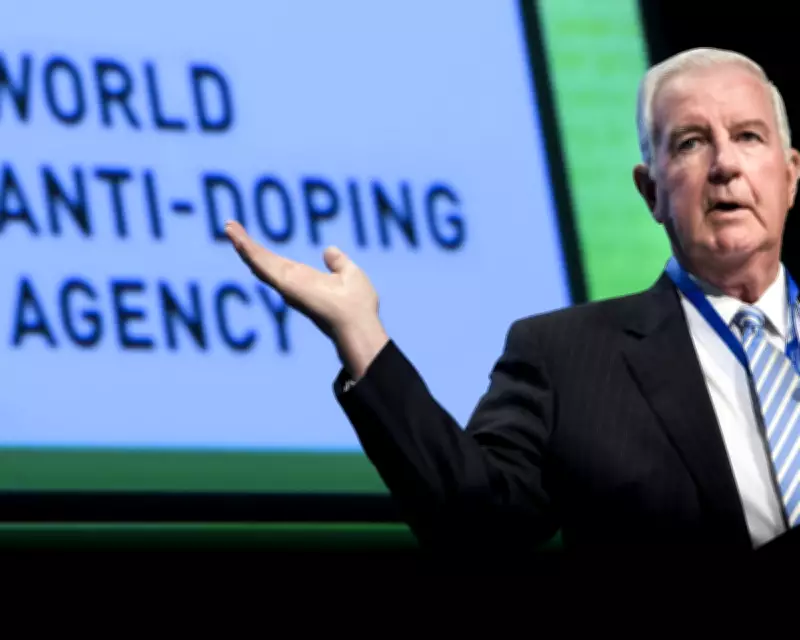
Sir Craig Reedie, the influential Olympic administrator who played a pivotal role in securing the 2012 Games for London and later became a formidable president of the World Anti-Doping Agency, has died at the age of 84. His death marks the passing of a central figure in British and international sports governance, whose career spanned decades of voluntary service and unwavering commitment to clean competition.
The Architect of London's Olympic Triumph
Reedie's most celebrated achievement was his crucial contribution to London's successful bid for the 2012 Olympics. Serving on the London Organising Committee from 2005 to 2013, he formed a brilliantly effective partnership with bid leader Sebastian Coe. Reedie's diplomatic skills and deep connections within the Olympic movement, cultivated during his tenure as chair of the British Olympic Association from 1992 to 2005, proved indispensable.
He worked tirelessly behind the scenes, first securing support from British politicians and then meticulously marshalling the votes of Olympic delegates. Coe himself acknowledged that without Reedie's guidance and influence, London might never have won the right to host the Games. This campaign showcased Reedie's unique ability to navigate complex political landscapes while maintaining his integrity and vision.

A Formidable Anti-Doping Crusader
Reedie's passion for drug-free sport led him to become a founding board member of the World Anti-Doping Agency in 2000, eventually serving as its president from 2014 to 2019. His tenure was marked by a steadfast commitment to confronting cheating, particularly in his high-profile clashes with Russia over state-sponsored doping programs.
Despite pressure from International Olympic Committee president Thomas Bach, who resisted calls for Russia's complete exclusion, Reedie refused to compromise. His persistence culminated in WADA's 2019 ruling that banned the Russian Federation from international competition, though some athletes were permitted to compete under a neutral flag. For Reedie, this was not about abstract principles but about practical justice: ensuring cheats would not prosper in the sporting arena.
From Badminton Champion to Sports Statesman
Reedie's sporting journey began in his native Scotland, where he excelled as a badminton player from a young age. Born in Stirling in 1941 to Robert, an Inland Revenue surveyor, and Anne Reedie, he discovered badminton in a church hall at age 10 while also playing golf and rugby. His athletic talent continued at Glasgow University, where he studied history and law and met his future wife, Rosemary Biggart, during a badminton match in Belfast.
After university, Reedie built a career as a financial consultant in Glasgow while simultaneously ascending through sports administration. He served as secretary and later president of the Scottish Badminton Union, and from 1970 to 1984 held various leadership roles in the International Badminton Federation. His crowning achievement in badminton was successfully lobbying for its inclusion in the Olympic program, which was approved for the 1992 Games.
A Legacy of Voluntary Service and Recognition
Remarkably, Reedie fulfilled all his sports administration roles on a voluntary, unpaid basis. His contributions were recognized with numerous honors: he was made CBE in 1999, knighted in 2006, and elevated to Knight Grand Cross in 2018. In 2014, Scotland's national badminton centre in Glasgow was renamed the Sir Craig Reedie Badminton Centre in his honor.
Colleagues described him as tough, shrewd, and formidably well-informed, yet also witty, charming, and always willing to offer advice. Beyond his administrative duties, Reedie was an avid golfer with a single-figure handicap and a member of the Royal and Ancient Club of St Andrews. He took particular pride in carrying the Olympic torch past the Old Course at St Andrews during the 2012 torch relay.
Sir Craig Reedie is survived by his wife, Rosemary, and their two children, Colin and Catriona. His passing leaves a significant void in the world of Olympic sports, where his legacy of integrity, diplomacy, and unwavering commitment to fair play will endure for generations.