Zimbabwe's Cricket Renaissance Ignites Fan Passion at T20 World Cup
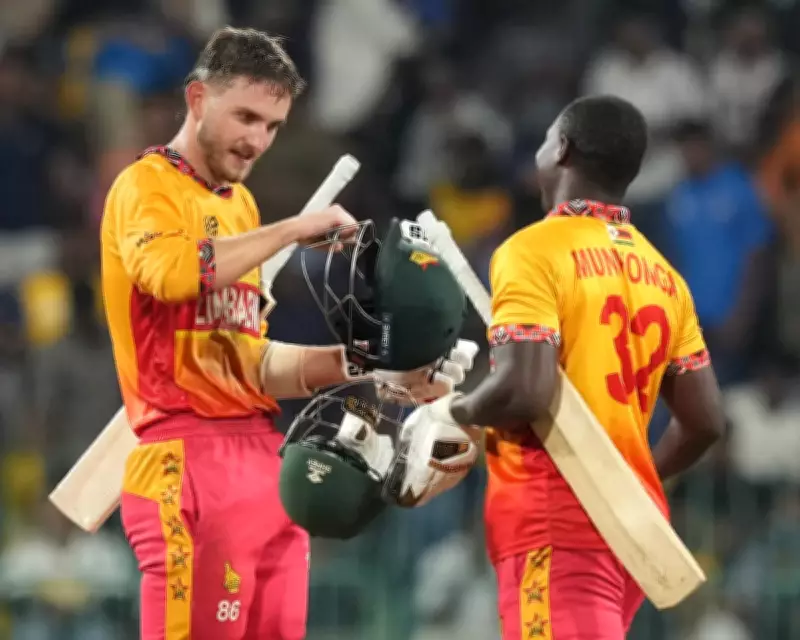
Zimbabwe's Tony Munyonga and Brian Bennett celebrated jubilantly after their team secured a victory against Sri Lanka in the T20 World Cup cricket match, capturing the hearts of a swelling fanbase. This moment symbolizes a remarkable turnaround for Zimbabwean cricket, which has defied expectations in the competition, with fans rejoicing in what many are calling a renaissance for the sport in the nation.
A New Era of Inclusivity and Support
Dean du Plessis, a veteran broadcaster born blind, has observed a profound shift in Zimbabwean cricket through the sounds of the crowd. He recalls that in his youth, cricket was predominantly supported by white fans, with a distinct energy in their applause and chants. However, during the 2018 World Cup qualifiers, he noticed a change: crowds chanting in Shona and dancing, indicating that the team was finally gaining the love of the majority of the country. "It feels like cricket is now a sport for everyone," Du Plessis says, highlighting how the sport has become more inclusive and reflective of Zimbabwe's diverse population.
From Rock Bottom to Rising Heights
Zimbabwe's journey to this point has been fraught with challenges. Just seven years ago, they failed to qualify for the 2019 World Cup, and in 2023, they hit a nadir by missing out on both the 50-over World Cup and the T20 World Cup after a loss to Uganda. Despite these setbacks, Du Plessis remained hopeful, noting that Zimbabweans often balance optimism and pessimism. "You never fully accept that things will come right for good. But you also never fully lose hope," he explains, touching on the nation's turbulent history.

Hope alone, however, does not win matches. Zimbabwe has invested in player development, playing 55 T20 internationals between the Uganda defeat and this World Cup—more than cricketing giants like New Zealand, South Africa, Australia, and England. Captain Sikandar Raza emphasized responsibility, stating, "We got Zimbabwe in this mess. So to take Zimbabwe to new cricketing heights, it's our job." Key players like Tadiwanashe Marumani, Ryan Burl, and Blessing Muzarabani have stepped up, with Muzarabani taking 11 wickets at an average of 10.27 in the tournament.
Emerging Stars and Fan Connections
New talent has also shone brightly. Brian Bennett, a 22-year-old opener, has been a revelation with unbeaten scores of 48, 64, and 63 before his dismissal by the West Indies. Meanwhile, 39-year-old Graeme Cremer returned after a seven-year hiatus to contribute with leg-spin. After securing top spot in the preliminary round with a win over Sri Lanka, players invited travelling fans, known as Castle Corner, into the dressing room to celebrate. Raza highlighted the deep personal connections, saying, "We know them on a personal level... It's a two-way street now, because our fans have started a new tradition of travelling by spending from their own pocket."
Future Prospects and Global Cricket Challenges
Looking ahead, Zimbabwe will host the Under-19 World Cup later this year and share the 2027 men's 50-over World Cup with South Africa and Namibia. While there are signs of a rise, Du Plessis cautions against complacency, noting that Zimbabweans have been through too much to relax. "It's great to feel something other than shame for this team. I hope that this can catapult them forward," he adds.
The World Cup has also highlighted broader issues in cricket. With the Super Eights stage losing many participants, the sport risks losing its global feel. Dean du Plessis suggests that bigger teams should schedule warm-up games against Associate nations to foster growth. "If a team like India travels to England, it's very possible to schedule a single warm-up game against, say, the Netherlands or Italy," he proposes, pointing to a lack of will rather than feasibility.
Altruism is scarce in cricket, with the Board of Control for Cricket in India receiving nearly 40% of ICC earnings, sparking debates over fairness. Du Plessis advocates for initiatives like a European Cup to promote inclusivity. The early World Cup matches showcased cricket's potential for global appeal, but the Super Eights reveal its entrenched elitism.

In other news, England's Harry Brook expressed opposition to boycotting Pakistan players in The Hundred, while Sachin Tendulkar's historic double-century in ODI cricket remains a memorable moment. As Zimbabwe continues to sing through victories and defeats, change is often heard before it is seen, marking a hopeful chapter for the nation's cricket.