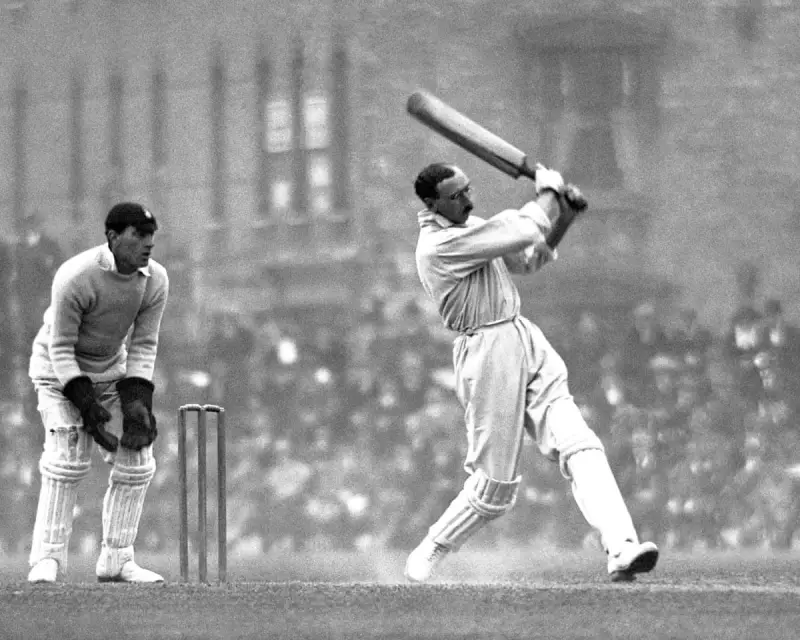
A century-old secret, one of English cricket's most enduring mysteries, has finally been uncovered, revealing how the brilliant Surrey captain Percy Fender was blackmailed out of leading the England national team.
The Shrewdest Captain Never to Lead England
For decades, it baffled cricket historians why Percy Fender, hailed by Wisden as ‘the shrewdest county captain of his generation’, was never appointed England captain. Now, private family archives being used for a new documentary film provide the shocking answer: he was the victim of a corrupt official's attempted blackmail.
In a private audio recording made shortly before his death in 1985 at age 92, Fender detailed the extraordinary encounter that cost him the leadership. In May 1924, he was visited at his Adelphi flat by a "gentleman very well known in the cricket world". Over two half-bottles of champagne, the man offered Fender the England captaincy for the upcoming 1924-25 Ashes tour in Australia.

A Corrupt Proposition Over Champagne
As an amateur cricketer who worked as a wine merchant, Fender needed someone to manage his business during the six-month tour. The official volunteered, but when Fender asked about payment, the proposition turned sinister. The man stated he could not accept a salary or commission, but suggested "there's nothing to prevent me a dividend on shares" in Fender's business.
Fender, initially agreeable, suggested a blank share transfer to be reversed after the dividend was paid. The official corrected him, making it clear he wanted a permanent stake. "I finished up by telling him quite bluntly that while I was perfectly prepared to pay him for any work he did... I was not prepared to bribe him by giving him that share in my business for all time," Fender recalled. The official left abruptly, and Fender knew his chance to captain England had vanished.
He played two Tests in June 1924 but was then dropped until a single final appearance in 1929. While Fender never named the blackmailer, his influence points to a member of the MCC selection committee for that Ashes tour. The committee included county figures like Peter Perrin, John Daniell, and Jack Sharp, as well as MCC grandees Sir Pelham Warner and Lord Harris, the latter a known adversary of Fender's meritocratic views on amateur-professional relations.
A Cricketing Maverick and Adventurer
On the field, Fender was a revolutionary force. He still holds the record for the fastest first-class century ever scored, off just 35 minutes. He was a fiercely creative captain, with the film recounting a match against Essex where only two Surrey players arrived on time; Fender and a teammate played 20 minutes of championship cricket alone, taking turns to bowl and keep wicket.
Off the field, his life was equally dramatic: a World War One fighter pilot and adventurer who survived multiple near-death experiences.
The Lasting Legacy: From Omission to Bodyline
His omission from the 1924-25 tour had profound historical consequences. Not playing, Fender instead covered the 1928-29 Ashes as a journalist, where he first saw a young Donald Bradman. While he never led England against Bradman, his protégé, Douglas Jardine, did.
The archives confirm Fender's pivotal role in the infamous Bodyline strategy of 1932-33. He received letters from Australian journalist friends warning that Australia's senior batters planned to counter England's fast bowlers by standing in front of their stumps and playing short balls to the leg-side. Fender showed these letters to Jardine before the tour.
Fender argued that Jardine's notorious leg-side field placements were a direct tactical response to this Australian plan. Days before the first Test, Jardine wrote to Fender stating he was "already forced to have five men on the leg-side" and might need "the whole lot" there. As Jardine noted, those who stood in front of their wickets usually got hit. Fender forgave the cricket establishment for his treatment but never apologised for Bodyline, believing he and Jardine had done nothing wrong.

The documentary, supported by Surrey County Cricket Club, is seeking final investment. The story, hidden for 100 years, reshapes our understanding of one of cricket's most innovative minds and a pivotal, controversial chapter in Ashes history.