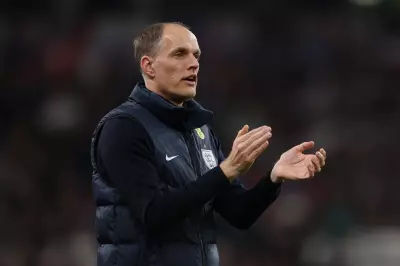
In a seismic move that has sent shockwaves through the world of college football, the University of Kentucky has parted ways with its long-serving head football coach, Mark Stoops. The decision brings an abrupt end to Stoops's 12-year tenure at the helm of the Wildcats programme, a period marked by significant rebuilding and notable, if inconsistent, success.
The End of an Era in Lexington
Mark Stoops, who was appointed in November 2012, was the longest-tenured coach in the competitive Southeastern Conference (SEC). His departure was confirmed by the university's athletic department, though specific details regarding the immediate circumstances of his exit or the terms of any financial settlement were not fully disclosed. His current contract, which was extended in 2022, was set to run through the 2031 season.
Stoops's legacy at Kentucky is complex. He inherited a programme that was struggling and is widely credited with engineering a remarkable turnaround. He steadily improved the team's fortunes, culminating in a series of successful seasons that included four consecutive bowl victories between 2018 and 2021. Under his leadership, Kentucky achieved rare 10-win seasons in 2018 and 2021, feats that cemented his reputation as the most successful Wildcats coach in decades.

However, recent performance appears to have triggered this decisive action. The 2023 season concluded with a disappointing 7-6 record, and the early stages of the 2024 campaign have reportedly fallen short of internal expectations. This dip in form, against a backdrop of high investment in facilities and staff, seems to have led athletics director Mitch Barnhart and other decision-makers to seek a new direction.
Search for a Successor and Programme Implications
The immediate focus now shifts to a high-stakes search for Stoops's replacement. Finding a coach who can build upon the foundation laid over the past decade while elevating the programme to compete consistently with SEC powerhouses will be the paramount challenge for the Kentucky administration. The pressure is on to make an appointment that energises the fanbase and recruiting landscape.
The firing has significant implications for the current Wildcats squad. Players who were recruited by and committed to playing for Stoops now face an uncertain future, with the incoming coach likely to implement new systems and philosophies. The timing, mid-season, adds a layer of disruption, leaving assistant coaches to guide the team on an interim basis while the search for a permanent leader is conducted.
The financial commitment to football at Kentucky has grown substantially in recent years. Major investments have been made in the Kroger Field stadium and the Joe Craft Football Training Facility, signalling an ambition to compete at the highest level. This decision underscores the expectation that the on-field results must match that level of institutional investment.
Stoops's Legacy and the Road Ahead
Evaluating Mark Stoops's time at Kentucky requires a balanced perspective. He undoubtedly leaves the programme in a far stronger position than he found it. He brought stability, respectability, and memorable victories to Lexington, changing the perception of Kentucky football from an SEC also-ran to a programme capable of challenging the conference's elite on its day.
Yet, the ultimate goal of winning an SEC Championship remained elusive. The inability to break through against the very top tier of the conference, combined with the recent downturn, ultimately defined the end of his reign. For the University of Kentucky, this bold move represents a gamble—a bet that a new voice can translate the improved infrastructure and talent base into the sustained, championship-level success that has so far been just out of reach.
The coming weeks will be crucial as the Wildcats navigate this major transition. The eyes of the college football world, particularly within the fiercely competitive SEC, will be fixed on Lexington to see who steps into one of the most challenging yet promising jobs in the sport.