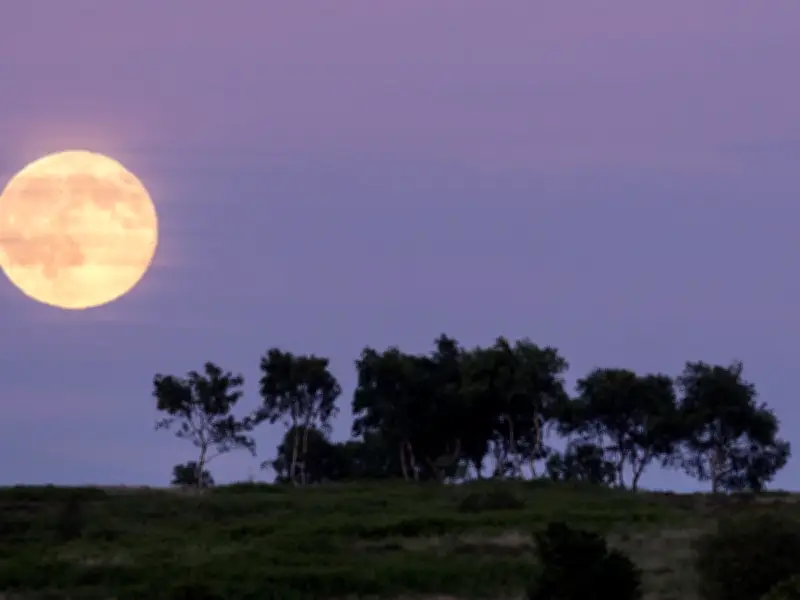
When to See the Strawberry Moon in 2026
The Strawberry Moon, the seventh full moon of 2026 due to a Blue Moon in May, will reach its peak on Tuesday, June 30, at approximately 12:57 a.m. BST, according to the Royal Observatory Greenwich. However, the exact timing may vary depending on the viewer's location across the United Kingdom. The moon will also appear fully illuminated on the evening of Monday, June 29, and the following night.
This year's Strawberry Moon is a micromoon, meaning it occurs when the moon is at the farthest point in its orbit from Earth. As a result, it will appear slightly smaller in the sky. However, because it sits low on the horizon, it may still look larger than usual due to an optical illusion known as the moon illusion.
Where to Get the Best View
To observe the Strawberry Moon, stargazers should find a location with a clear, unobstructed view of the south-eastern horizon. The moon will begin to rise at sunset and will be most visible late in the evening. The Royal Observatory Greenwich advises positioning oneself away from tall buildings, trees, or other blockages to maximize the view.
Why Is It Called the Strawberry Moon?
The name Strawberry Moon originates from North America, where it was used by Native American tribes, particularly the Algonquin, to mark the time of year when strawberries were ready for harvest. European colonists later brought the name to the UK. In European traditions, the June full moon is also known as the Rose Moon, Honey Moon, or Mead Moon, and sometimes the Hot Moon due to the start of summer warmth.
Why Does the Strawberry Moon Appear Reddish?
The Strawberry Moon often takes on a coppery, orange, or pinkish hue due to its low position in the sky. This phenomenon is caused by Rayleigh scattering: when the moon is near the horizon, its light travels through a thicker layer of Earth's atmosphere. Shorter wavelengths (blue, green, violet) are scattered more easily by molecules of nitrogen and oxygen, while longer wavelengths (red, orange) reach the observer's eyes, giving the moon its warm color. Additionally, pollutants, dust, and water vapor in the atmosphere can further enhance the reddish appearance by absorbing and scattering more short-wavelength light.
Full Moon Names for 2026
Each full moon throughout the year has a traditional nickname. The full moons of 2026 are:
- January – Wolf Moon
- February – Snow Moon
- March – Worm Moon
- April – Pink Moon
- May – Flower Moon
- Second May Full Moon – Blue Moon
- June – Strawberry Moon
- July – Buck Moon
- August – Sturgeon Moon
- September – Corn Moon
- October – Hunter's Moon
- November – Beaver Moon
- December – Cold Moon