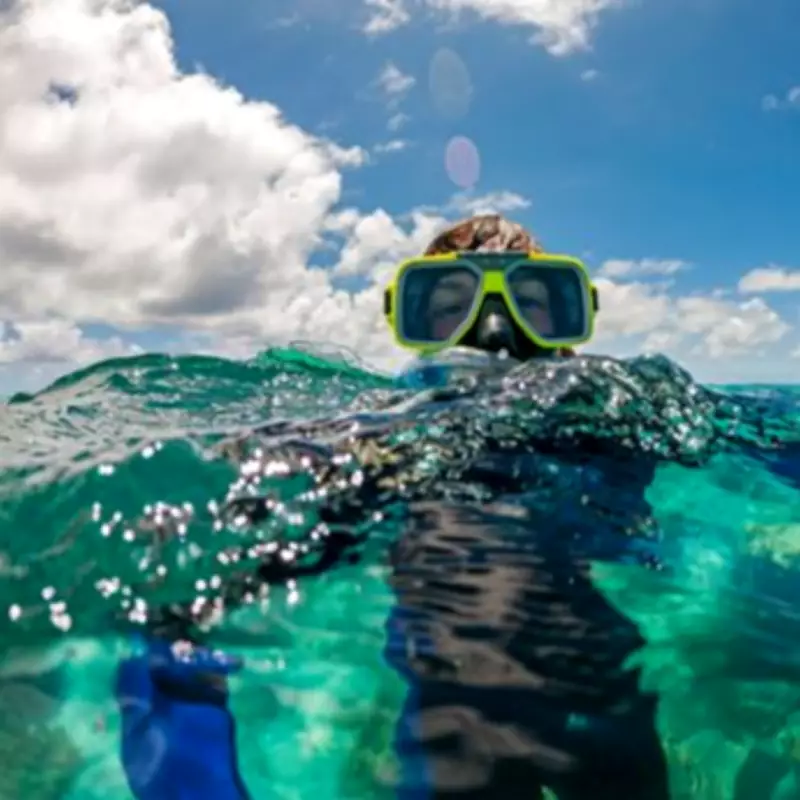
A scuba diver exploring rockpools along the UK coastline was astonished to encounter what he described as one of the 'prettiest' and 'coolest species' in British waters. Gio Prince, who shares his underwater adventures on Instagram as @giosdiving, filmed the remarkable moment in Cornwall where he witnessed a candy-striped flatworm preying on light-bulb sea squirts.
Unexpected Encounter in a Rockpool
While filming tiny light-bulb sea squirts in a rockpool, Prince was surprised when a candy-striped flatworm appeared and began feeding on the squirts. 'I was just in the rockpools, and I was filming these really cool, tiny Light-bulb sea squirts, and all of a sudden, one of my favourite animals, the Candy-striped flatworm, which is also one of the prettiest animals that you can find in UK waters, just came out of nowhere and started eating some of the sea squirts,' he said.
The footage, accelerated to four times the normal speed, shows the flatworm consuming its prey. Prince wrote alongside the video: 'Candy-striped flatworms are one of the coolest species we get in our waters! Their diet consists of sea squirts, and today I saw one feed on some Lightbulb sea squirts for the first time!'

Marvels of Marine Life
The light-bulb sea squirt is a common colonial tunicate found in British waters, named for its translucent body and white internal markings that resemble an illuminated bulb. These filter feeders grow in clusters on rocky substrates, jetties, and boats, typically at depths of up to 50 metres. The candy-striped flatworm, a striking marine polyclad flatworm, usually measures about 5 centimetres in length and features a cream-coloured body with bold longitudinal black stripes. Often mistaken for nudibranchs, these carnivorous worms inhabit rocky, shallow waters, particularly around British and Irish coastlines.
Viewers React
Social media users were amazed by the footage. One commented: 'How cool is this! Top video, mate.' Another said: 'Great video! I've never heard of either of those before. Amazing! Thanks for sharing.' A third asked: 'What beaches do you find these animals in the UK?' Prince confirmed the sighting occurred at a Cornish beach, but noted they can be found 'in many of our beaches.' Another viewer remarked: 'Hard to believe something so small can be so beautiful,' to which Prince replied: 'So many beautiful tiny creatures in these rockpools!'
Common Rockpool Inhabitants
British rockpools are home to a variety of creatures. Shore crabs and small juvenile crabs are frequently seen, along with tiny fish such as blennies and gobies that hide under ledges and among seaweed. Sea anemones, especially beadlet anemones and, in some areas, snakelocks anemones, are also common. Under stones, starfish and brittle stars can be found, alongside prawns or shrimps darting in shallow water. Periwinkle snails, limpets, and dog whelks often inhabit the rocks, while barnacles cover exposed surfaces. Small mussels and bristleworms are also present, and in western and southern locations, sea urchins and occasional sea slugs may appear.