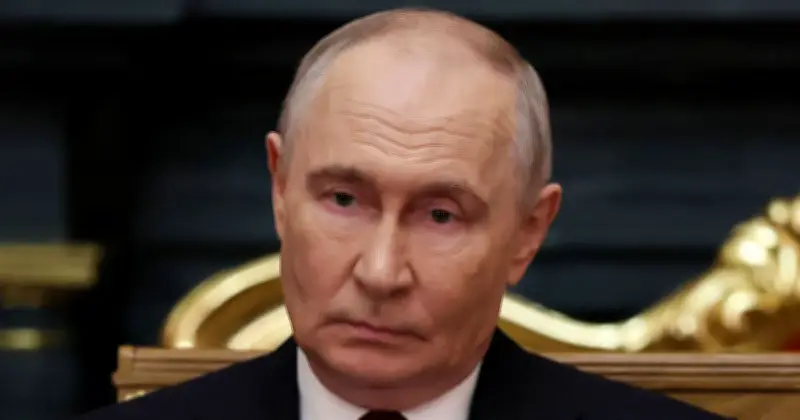
Russia has threatened a "harsh and painful" retaliation against NATO member Hungary after Budapest expelled 10 members of Russia's diplomatic mission. The Kremlin responded swiftly following Hungarian Foreign Minister Anita Orbán's announcement on Tuesday (September 8) that the diplomats were being expelled for activities "unacceptable for diplomats" under the Vienna Convention.
Moscow's Response
Responding via Kremlin-aligned news agency TASS, the Russian Foreign Ministry confirmed incoming retaliation, while spokesperson Maria Zakharova delivered a direct warning: "The response to the Russophobic lobby in Budapest will be harsh and painful."
The expulsion marks a dramatic foreign-policy pivot following Hungary's spring election in April, in which long-standing Putin ally Prime Minister Viktor Orbán was ousted after 16 years in power.

New Leadership's Stance
His successor, Péter Magyar, promised to repair frayed ties with the EU and NATO while actively distancing Hungary from Moscow. Under Mr Orbán, Hungary was uniquely accommodating towards Moscow, regularly blocking or delaying EU sanctions against Russia. Under Mr Magyar and Foreign Minister Anita Orbán, Hungary recently officially classified Russia as a national security threat.
Mr Magyar defended Tuesday's expulsion, declaring that the nation was actively protecting its sovereignty. Ms Orbán clarified that while the expulsion is firm, Hungary intends to maintain basic diplomatic channels with Moscow.
Diplomatic Protocol
"Activities unacceptable for diplomats" is standard diplomatic code for undercover espionage. In international relations, governments invoke Article 41 of the Vienna Convention, which forbids envoys from breaking local laws or interfering in domestic affairs, to quietly expel agents whose intelligence cover has been blown.
Framing espionage as a technical protocol breach allows host nations to neutralise threats to their sovereignty while avoiding a public crisis or the total severing of diplomatic ties. The confrontation follows a quiet incident in May when Hungary expelled a Russian intelligence officer who had been operating under diplomatic cover to infiltrate think tanks close to Mr Orbán's former administration.