Two former high-ranking officials at the Global Engagement Center (GEC), a US state department office created to counter foreign propaganda that lost its funding in 2024 and was disbanded in 2025, say leaked documents provided by a Trump administration official to a conservative online personality show no evidence of domestic censorship.
The files, released by Sarah Rogers, the state department's undersecretary for public diplomacy, were supposed to prove that the GEC had secretly become a tool for domestic censorship. Rogers provided the so-called 'GEC files' to Jennica Pounds, a rightwing online data analyst known as DataRepublican, who claimed earlier this month she was leaked the documents as part of a bid to 'entrap' her. Rogers denied this claim and published the files herself, saying officials inside the center 'betrayed their stated mission'.
Former officials dispute claims
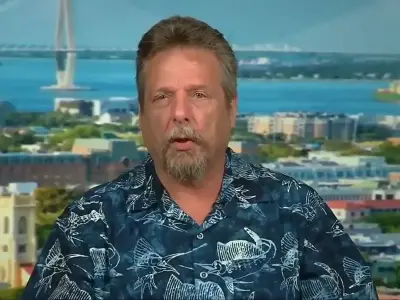
Daniel Kimmage, who served as the center's principal deputy coordinator and acting coordinator from its founding in 2017 until its dissolution in 2025, said the documents show nothing of the kind. 'These guys have consistently misrepresented what the GEC did, and this was a great example of that,' he said. His own congressional testimony was included in the leaked files.

Carrie Goux, a Joe Biden appointee and the center's former acting deputy coordinator, echoed this view. 'If the smoking gun was a gendered disinformation report, that feels like they came up short,' she said. 'There seems to be absolutely nothing here.' The files included a 2022 GEC report on 'gendered disinformation', a flashpoint in the culture wars.
Long-running political fight
The dispute is the latest chapter in a years-long campaign by conservatives to portray the GEC as part of a broader effort by the US government and technology companies to suppress rightwing speech. Republican congressmen including Michael McCaul, former chair of the House foreign affairs committee, argued in a July 2024 letter that the GEC was 'at best indifferent to, and at worst complicit in' stretching the definition of disinformation to 'censor' conservative speech in the US.
Much of that campaign centered on how the GEC had funded the Global Disinformation Index (GDI), a UK-based non-profit that rates media outlets by how likely they are to spread disinformation. In 2022, the GDI separately published its own study of the US media market that rated several conservative outlets, including Newsmax, One America News and the New York Post, as high-risk.
Kimmage said his own congressional testimony, which Rogers included in the leak, had been selectively read. 'If you look at the transcript, [the question was], 'Does GEC take positions on US outlets?' And I said, 'No, it didn't,'' he said. Rogers 'tried to twist that into something that it wasn't', according to Kimmage. 'For people who talk a lot about weaponization of government, this seems a lot closer to the weaponization of government and psy-opping of the American people than anything that the emails from the Global Engagement Center show.'
GEC's record and current state department plans
Both former officials draw a sharp line between the accusations and what the center actually did. 'We were not ever looking at Americans,' Goux said. 'We were looking at the foreign actors and what their [tactics, techniques and procedures] … are doing overseas.' Kimmage added that the GEC 'did what its congressional mandate charged it to do, which is to fight foreign [misinformation and] disinformation. This allegation that it's censoring Americans is false.'
During its existence, the center published eight detailed public reports on Russian and Chinese information operations and ran four major exposures of Russian disinformation campaigns. In January 2024, it helped broker an international pact on countering foreign state disinformation that drew more than two dozen government signatories.

The state department is now resuming some of this work in other parts of its operation, including plans, laid out in a proposal reviewed by the Guardian, to pay social media influencers across south-east Asia as part of an $11m campaign to counter Chinese propaganda. The project would pay up to 30 online influencers across 11 countries $2,500 apiece and includes a $5m messaging campaign, a $3m program training influencers and journalists, and a $3m trip bringing about 180 participants to studios in Washington and Houston.
A state department official said: 'Undersecretary Rogers has been clear that the department will continue to confront censorship, anti-American propaganda and coercive influence directly while demonstrating the enduring advantages of freedom, accountability and open communication.'
Goux put the broader cost in plainer terms. 'The US has lost their seat at the table to do that, and that's unfortunate,' she said. 'I hope we can gain it back, but we're losing trust too, and that's significant.'