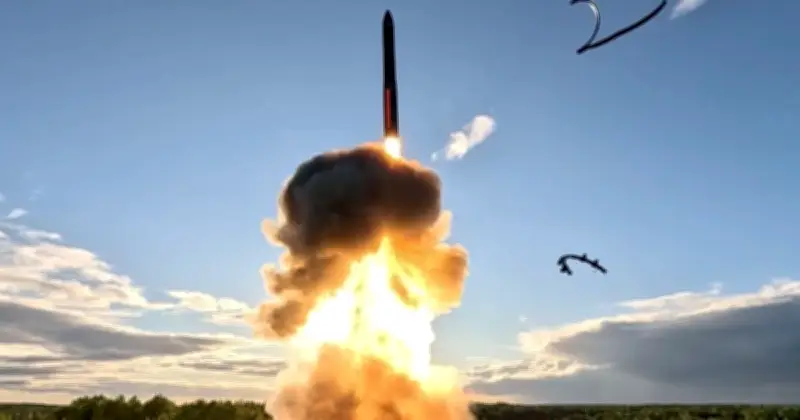
Russia's Defence Ministry announced on Friday (August 28) that it had succeeded in launching a solid fuel intercontinental ballistic missile (ICBM) in a combat training exercise at Plesetsk. The missile travelled 4,160 miles (6,700km) east to Russia's Kamchatka Peninsula, according to the Ministry, which said the ICBM kept a "flawless trajectory".
Launch follows CIA warning
The launch comes just days after CIA Director John Ratcliffe flew to Moscow, where he is reported to have warned the Kremlin against attacking a NATO country. Other reports suggest he pushed the Kremlin to pursue a peace deal with Ukraine, giving a bleak assessment of Russia's war on Ukraine.
Russian media reported that the missile launch was carried out to confirm its performance and monitor its flight characteristics. The Defence Ministry did not identify the missile used in the launch, but it is reported to have launched the RS-24 Yars system from Plesetsk to Kura as part of exercises in May, The Moscow Times reports.

Western officials play down conflict prospects
Western officials this week sought to play down the prospect of a conflict between Russia and NATO after repeated threats from the Kremlin. Senior figures in Moscow have accused Ukraine's allies, including the UK, of "playing with fire".
The threats follow Andy Burnham's visit to Kyiv on Monday, during which he announced the UK would provide Ukraine with blueprints for long-range Scalp missiles. Former Russian foreign minister Andrei Fedorov said he could not 100% exclude the prospect of semi-military action against Britain in retaliation, raising the prospect of so-called hybrid attacks.
Vigilance urged amid hybrid threats
Western officials on Friday said there was a need for vigilance about hybrid threats, but added: "Our assessment remains that Russia isn't seeking direct confrontation with NATO."
In June, then-prime minister Sir Keir Starmer warned Britain and other NATO countries believed Russia could launch an attack on the alliance as soon as 2030. Meanwhile, Putin faces domestic pressure as a result of Kyiv's own strikes against Russian fuel refineries and battlefield losses which are believed to outstrip recruitment by 6,000 troops per month.