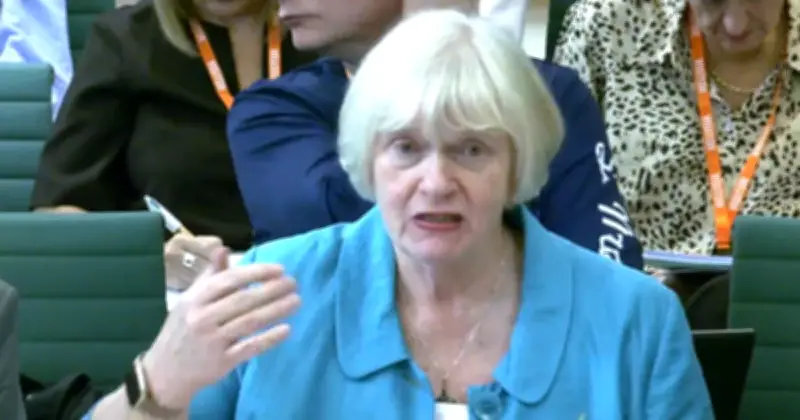
Senior Department for Work and Pensions (DWP) officials have described how they are intensifying enforcement powers, including measures to deduct money directly from a person's bank account, in cases of unpaid child maintenance.
A DWP minister told MPs that an "escalated enforcement" process is used to target people who are not compliant. Representatives from the department recently appeared before the Work and Pensions Committee to discuss the work of the Child Maintenance Service (CMS), which manages payments from one parent to another for the upkeep of a child where the parents do not live together.
Faster intervention
The committee asked officials about efforts to "speed up and use enforcement powers more effectively" when a parent fails to pay. DWP minister Baroness Sherlock told the committee: "The ideal with enforcement is you never want to get there. So really what you want is early visibility when a payment is not there, jumping (in) quickly, getting it back on track before it ever escalates to the stage where you have to engage with enforcement."
Parents can choose to pay through Direct Pay, where funds are sent directly to the receiving parent, or through Collect and Pay, where the CMS collects the cash and transfers it. Baroness Sherlock noted a change in this area: "If somebody is not paying under Direct Pay, we've made it much quicker to be able to transfer that into Collect and Pay." Once moved to the collection system, the DWP has several options to recover the funds.
Taking funds from bank accounts
The minister explained: "If someone doesn't pay, we can move in quickly and for example, if necessary, take the money out of somebody's wages, or look at other ways to get it from them. Only if that fails do you then move into the escalated enforcement."
Lucy Appleton, deputy director of enforcement at the CMS, provided further detail. She said that for the "vast majority" of cases, enforcement powers are not needed to arrange payments. She added: "We have powers, as the minister referred to there, to be able to deduct from earnings, and also to be able to take money directly out of bank accounts. Then we move into our more legal our legal power route, by issuing a liability order, which obviously we need to go to the courts for."
Court action
A liability order is a formal legal order issued by a magistrates' court in England and Wales, giving an authority special powers to recover a debt, such as council tax arrears or a child support payment. Ms Appleton said the department is "really making improvements" in reaching this stage more quickly.
She explained: "We have negotiated with HMCTS [HM Courts and Tribunal Service] additional court slots, and we are already starting to see the real benefit from that in actually being able to speed up the process of getting those liability orders into court. So, that's one of the initial things that that we have done already, and hopefully, our customers will will start to see the benefits of that."
The DWP is also improving its data checks to identify potential payment issues. Ms Appleton said: "There are other things that we are doing around the use of predictive analytics, for example. Our early enforcement team, our early intervention team, was launched last year in 2025. We use predictive analytics there to look for patterns in customer behaviors that imply that somebody might be about to go non-compliant. Then our team can reach out to those customers and say, 'What can we do to help you?' So far, it's really quite successful."
DWP response
A DWP spokesperson said: "Our top priority is ensuring children receive the support they are entitled to. In the vast majority of the 820,000 cases we handle, enforcement action is not necessary, and we will only take it where evidence shows child maintenance has not been paid and arrears are owed. Where a paying parent disagrees with a decision, they can challenge it."
The department has had powers since 2009 to recover funds in various ways, including deductions directly from earnings, benefits, and bank accounts. A paying parent can dispute a decision through the mandatory reconsideration process and can appeal if still unhappy with the outcome.