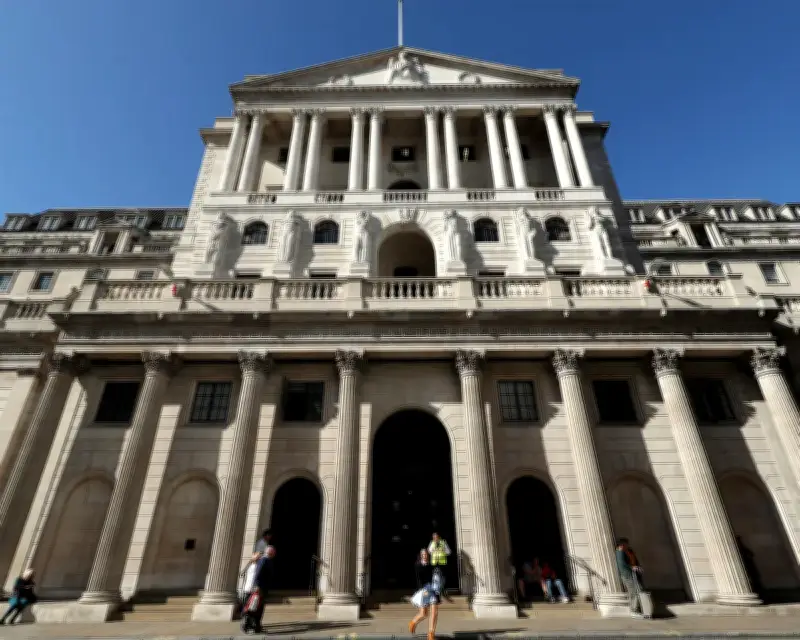
The Bank of England's operational independence is facing renewed scrutiny as MPs launch a fresh inquiry, with leading economists making the case for rethinking one of Britain's most powerful institutions.
Interest rate announcements were once largely unnoticed, with rates not climbing above 1% for 13 years until May 2022. Now, with rates stuck at 3.75% and predicted to climb again, the Bank's decisions are closely watched by jobseekers and mortgage holders, who face higher unemployment and ramped-up repayments.
Rates are reviewed eight times per year by the Bank's Monetary Policy Committee, whose nine unelected members are independent and unaccountable to government. Parliament's influential Treasury Committee has launched an inquiry into this relationship.
How the current setup works
The Bank of England has had operational independence since 1997, after 300 years in which interest rates were decided by the Chancellor. Gordon Brown believed this led to perceptions that short-term political ambition, not the country's long-term interests, directed monetary policy. By the 1990s, central bank independence had become the global norm.
The Bank is tasked with promoting monetary and financial stability. The government dictates a target inflation rate of 2%, and the Bank sets interest rates to help achieve this. Since 2009, the Bank has also been in charge of quantitative easing and tightening.
The pitch for independence was to limit the influence of MPs and leave inflation to the experts. In the early independent years, inflation averaged 2.5% compared to 7.3% between 1967 and 1997, though similar rates were seen in France, Germany and the Netherlands. During the early 2022 economic crisis, the UK faced the highest inflation levels in the G7, and inflation has remained above target for most of the last five years.
Economists argue for change
In 2023, the House of Lords produced a report recommending reforms, such as limiting the Bank's remit and increasing scrutiny. A growing chorus of left-wing economists are calling for the government to go further and curtail independence to overhaul the Bank's mandate.
Costas Lapavitsas, professor of economics at SOAS and co-author of Reindustrialise Britain, argues that the Bank currently serves the interests of the City. Between 2009 and 2021, it kept interest rates at rock bottom and created money to buy £895bn of bonds, propping up the financial system by inflating house and share prices. In 2022, inflation reached 11.1%, and the Bank raised rates 14 times, squeezing households and businesses. The Treasury picked up a bill of more than £36bn in 2024-25 for QE losses, while Starmer imposed tight budgets.
Lapavitsas proposes scrapping the Bank's independence and putting it to work on rebuilding industrial capacity, with the Bank and Treasury working with a new public investment bank to provide long-term finance for industry. "Money is a public good," he says.
James Meadway, director of the Verdant thinktank and former economic adviser to Shadow Chancellor John McDonnell, argues that low inflation post-1997 had more to do with China's industrialisation than central banker wisdom. He calls for coordinated responses, including central banks changing their ratesetting to account for the sources of inflation, governments supporting households and businesses with strategic price controls, and investment in supply chains and domestic production.
Ann Pettifor, economist and author, says it "makes no sense" for the Bank to raise rates higher when inflation is imported. She proposes abandoning the 2% inflation target, setting up an Inflation Control Office, targeting lower interest rates, and adopting targeted longer-term refinancing operations to give commercial banks the chance to lock in lower interest rates on loans to customers.
The arguments will play out in front of the Treasury select committee over the coming months.