
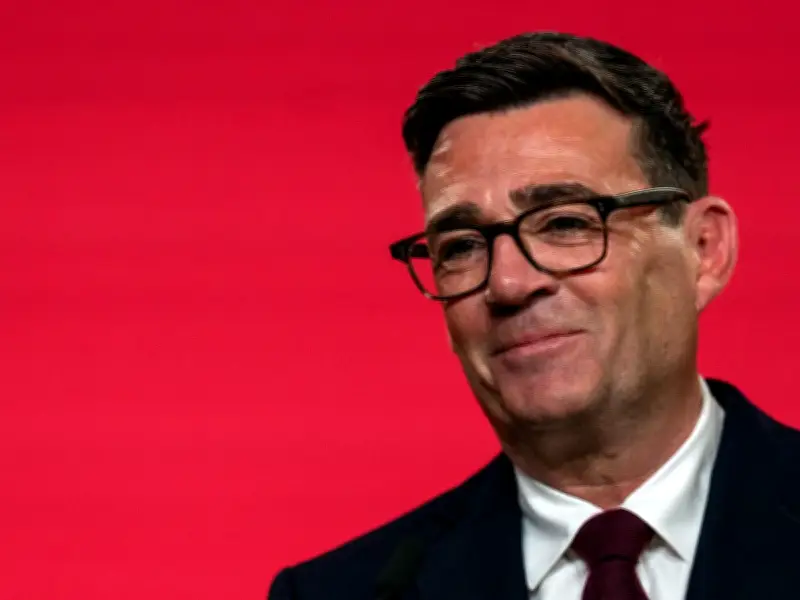
Andy Burnham will enter No10 for the first time as Prime Minister on Monday, setting out his vision for the country during his first address to the nation. After walking through the famous black door, he will be welcomed by officials and receive congratulatory calls from world leaders. He will also announce his Cabinet and receive briefings on national security and his economic inheritance. However, he faces several key moments, thorny issues, and headaches left over from the old regime that require close attention.
1. Cabinet Announcements
In the minutes and hours after his first speech, a flurry of announcements from Downing Street is expected as Burnham assembles his top team. Westminster has been awash with speculation, particularly over the role of Chancellor, but the new leader has kept Cabinet roles closely guarded. Current Cabinet ministers including Ed Miliband, Shabana Mahmood, and Yvette Cooper are expected to retain roles. Senior Labour figures like ex-Deputy PM Angela Rayner and Louise Haigh, a close ally of Burnham, are also tipped for Cabinet positions. The new Prime Minister will hold his first full Cabinet meeting likely on Tuesday. However, assembling Cabinets risks alienating colleagues, as many may be left disappointed, including Keir Starmer’s allies who could be left without a role.
2. Measures to Combat Cost of Living Crisis
Burnham will emphasize giving people breathing space as the cost of living continues to bite in his first address. Allies have said he will seek early policy wins to ease the cost-of-living squeeze. Burnham adviser Miatta Fahnbulleh said: "Everyone recognises that people are under pressure, living standards have not risen and we have to grip that. And that means dealing with the cost of living in the short term to give people some respite." This issue consistently ranks at the top of voters’ concerns and is one of the biggest challenges the new government faces. There is speculation he is considering plans to cut bills by £130 per year, which would be a welcome respite for many households.
3. Crisis-Hit Thames Water
Thames Water could be a first major test for the incoming PM. Environment Secretary Emma Reynolds recently warned she did not believe the plan to relieve the stricken utility goes far enough to protect customers. There were claims over the weekend that Burnham’s new government could act quickly to push the firm into a special form of administration. Burnham recently said public ownership of water companies should "absolutely be an option" on the table for the government. His deputy, Lucy Powell, also made clear that "privatisation of water hasn't worked" with bills going up and a lack of competition in the market.
4. Labour Conference
A key moment for the new PM will come towards the end of September at Labour's annual conference in Liverpool. It will be an opportunity for Burnham to set out his vision, but with activists and ambitious MPs gathered, there are many possible pitfalls. Last year, the gathering was dominated by speculation about the PM's leadership, partly fuelled by an interview Burnham gave. A year on, he will return to Liverpool not only as Labour leader but as Prime Minister. The summer recess, where Burnham will embark on a listening tour across the UK, will be used to prepare for conference season and the return of Parliament in September. Tactics for his sparring sessions with Kemi Badenoch at Prime Minister's Questions will be thrashed out before his Labour leader speech at conference.
5. Global Volatility – and Donald Trump
Global volatility and Donald Trump were a constant headache for Keir Starmer. The relationship between the two world leaders became increasingly tense, especially after the White House went to war with Iran, hitting the cost of living at home. Trump recently described Burnham as the "mayor of a town." The new Downing Street regime will want to establish a relationship rapidly, with a call expected possibly hours after Burnham enters No10. The incoming PM will also have to reschedule a major UK-EU summit recently postponed due to political instability at home.
6. Welfare and NEETS Crisis
The new leader must grapple with the cost of sickness and disability benefits but has made clear he wants to avoid the approach taken by Starmer’s government. Starmer was forced to rip up controversial plans to slash £5 billion from Personal Independence Payments (PIP) last year after a massive Labour rebellion. Earlier this month, Burnham ruled out what he described as "cruel cuts." He will closely examine the results in the autumn of a review into PIP by Sir Stephen Timms on how to reform the system. Another top item is supporting over a million young people not in education, employment, or training (NEETs). Former Labour Cabinet minister Alan Milburn, leading a review on the "urgent national crisis," will report back with recommendations in the autumn, which Downing Street will pay close attention to, though there may be a cost to the Treasury.
7. Manchester Mayoral By-Election – and Reform
The first major electoral test for the new Prime Minister will come just 10 days after he enters Downing Street. Around two million voters are eligible to cast a ballot in the Greater Manchester Mayoral by-election on July 30, triggered by Burnham’s resignation from the post. Nigel Farage's Reform UK had hoped to cause a major headache by pouring resources into the seat. However, Reform HQ is now distracted by Farage's Clacton by-election, and recent polls suggest Labour’s candidate, Bev Craig, is set to beat Reform’s candidate by a healthy margin. If the Greater Manchester mayoralty falls to another party, it would be an early personal blow to Burnham, but current polls offer an early sigh of relief in Downing Street.
8. First Budget
The first Budget under a Burnham government in the autumn will be a major moment. While immediate measures on the cost of living are expected this summer, the new Chancellor’s attention will rapidly turn to the Budget. One job at the top of the list will be filling a £4.7 billion hole in the defence investment plan left behind by Keir Starmer’s government. There will also be major questions over tax and spending, but Burnham has committed to Labour’s manifesto pledge not to increase the three main taxes—income tax, national insurance, and VAT—on working people. Just last week, Burnham refused to rule out a wealth tax and admitted people might be asked for a "little more." He also previously expressed an interest in raising taxes on speculative landlords who leave high street properties continually empty and taxing the warehouses of firms like Amazon.
9. Labour Party Management
The incoming PM has said he wants to eradicate "in-fighting" and the "insidious briefing culture" within the Labour party. It is an ambitious pledge, but it will be no easy task with 400 Labour MPs sitting on the Commons benches, as Keir Starmer found. A problem already hurtling towards Burnham is disagreement over Home Secretary Shabana Mahmood's hardline immigration reforms. Nearly 80 Labour MPs earlier this month signed a letter calling on him to change course over the plans, with MPs particularly concerned about changes to indefinite leave to remain applying retrospectively. The choices he makes for his Cabinet could also land him in hot water before he has already started the job.
10. Oil and Gas Licences
Pressure is coming from all directions on new drilling for oil and gas in the North Sea. The Government will soon have to decide whether to give the go-ahead to two oil fields, Rosebank and Jackdaw. Unions representing workers in the industry last week sent Burnham a letter calling on him to back North Sea oil and gas. But other campaigners, such as the End Fuel Poverty Coalition, warn him not to bow to "Donald Trump’s fossil fuel agenda" and argue the move will "do nothing to bring down people’s energy bills." Reports this week suggest Burnham is preparing to announce new drilling for oil and gas in the North Sea. While the decision itself is a hurdle, a backlash from his own MPs over the issue could prove one of the first major flashpoints of his premiership.




