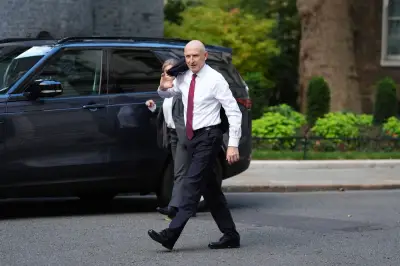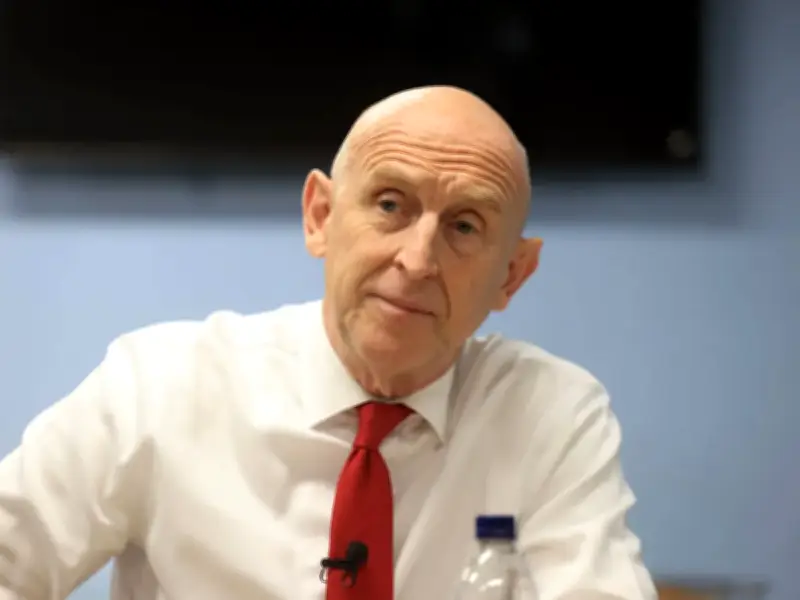
Chancellor of the Exchequer John Healey is set to deliver his first Budget today, Wednesday, October 28. The annual statement will take place at the House of Commons at 12.30pm following Prime Minister's Questions.
Mr Healey has been a long-standing member of Parliament since he was first elected as an MP for Wentworth in 1997. He is a well-known figure in the Labour Party and was recognised by Andy Burnham in his decision to appoint him as Chancellor of the Exchequer back in July this year. He was previously Secretary of State for Defence from July 5, 2024 to June 11, 2026.
His role as Chancellor means he is the chief financial minister and is responsible for growing the UK economy, raising revenue through taxation or borrowing and for controlling public spending.
Appointment and responsibilities
Mr Healey has overall responsibility for the work of the Treasury and is in charge of several areas including UK growth and productivity, economic and fiscal policy (annual Budget), capital markets and listing and international defence.
He was appointed Chancellor on July 20, 2026 following Andy Burnham becoming Prime Minister. After his appointment, Burnham told NATO Secretary General Mark Rutte that appointing a former Defence Secretary as Chancellor of the Exchequer was "a signal of intent" to send a "strong signal of unity to the world in such volatile times".
Early life and entry into politics
John Healey was born in Wakefield on February 13, 1960. He attended Lady Lumley's School and St Peter's School, York before studying at Christ's College in Cambridge. He received a Bachelor of Arts degree in social and political science.
After university, he worked as a journalist for The House, the internal magazine of the Palace of Westminster, and then as a disability rights campaigner. Mr Healey's first attempt to enter Parliament was as candidate for Ryedale at the 1992 general election, where he finished third with 13.8% of the vote behind the incumbent Conservative MP John Greenway and the Liberal Democrat Elizabeth Shields.
In 1997, Mr Healey was elected to Parliament as MP for Wentworth. He served under Tony Blair as Parliamentary Under-Secretary of State for Adult Skills from 2001 to 2002, as Economic Secretary to the Treasury from 2002 to 2005 and as Financial Secretary to the Treasury from 2005 to 2007. Under Gordon Brown, he served as Minister of State for Local Government from 2007 to 2009, and then in a cabinet role as Minister of State for Housing and Planning from 2009 to 2010.
Defence role and the Budget for Liverpool
When Sir Keir Starmer was elected as leader of the Labour Party, Mr Healey was appointed Shadow Secretary of State for Defence in 2020. During this time he stressed his support for Ukraine after Russia's invasion in 2022, endorsed the UK's support for Ukraine, and committed to continue Britain's support for Ukraine in any future Labour government. In April 2024, Mr Healey committed to raising Britain's defence spending to 2.5% of Britain's GDP by 2030 and commissioning a strategic review of the threats to Britain and its capabilities.
Ahead of John Healey's first budget on Wednesday, the Chancellor has pledged to unlock growth across Britain by putting communities in control of their economic future. He and Prime Minister Andy Burnham said in the Budget he will put a 'downpayment' on this plan, confirming the introduction of Good Growth funding for local leaders - including Liverpool City Region Mayor Steve Rotheram - giving them the flexibility and authority to invest in what they deem the local priorities for growth without permission from Whitehall.
Chancellor of the Exchequer John Healey said: "Local people have the right to decide their own future. The North West is full of potential – but it has gone untapped and wasted while money and power has been held in Westminster. Mayors and local leaders know what their communities need to grow, which is why we are giving them more money, more power and more capacity to get projects moving, build homes and make the right decisions for their areas. By putting more power and funding into local hands, we can unlock growth, create opportunity and restore hope for the future in the North West."