

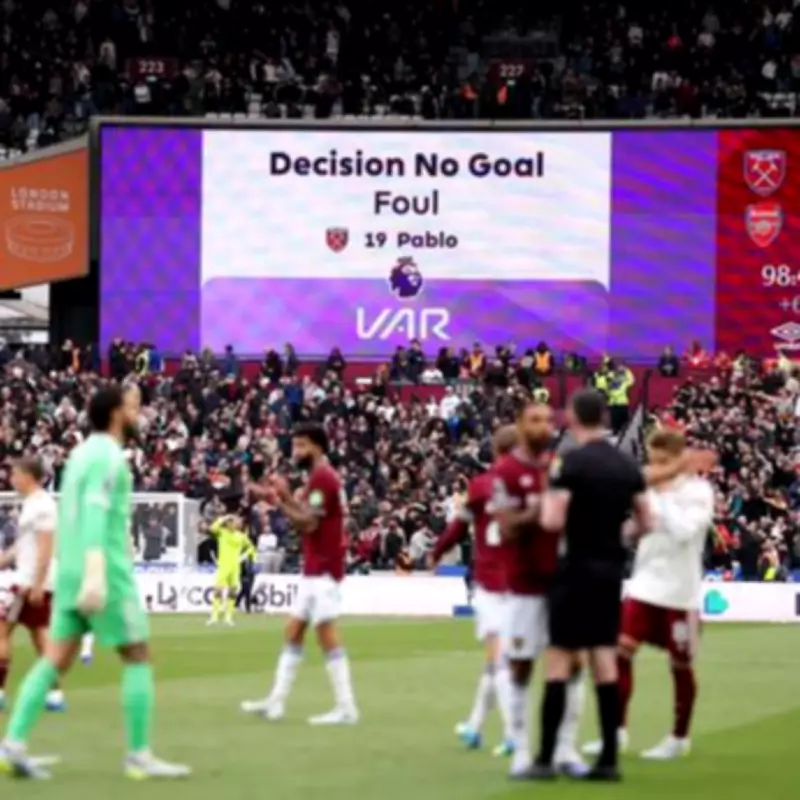
Premier League grounds are currently full, but the expansion of VAR at the 2026 World Cup threatens to make football unwatchable. Video assistant referees will now adjudicate corner-kick awards and second yellow cards, leading to fears of even longer delays.
World Cup VAR Expansion
If you think VAR has been particularly torturous of late, then wait until the World Cup kicks off. Corners and second yellow cards are being added to the VAR system’s remit. Throw in hydration breaks, and some games might not end on the day they began.
Seriously, prepare yourself for laborious viewing over the five weeks of the 2026 tournament. If you wanted to be optimistic about the flow of matches, you could cling to the hope that other leagues use VAR more slickly than England and Scotland. But even so, adjudicating on corners and second yellow cards will only add to the delays.

Delays Turning VAR into a Scourge
Those delays are turning VAR from what it should be—a help to fairness—into a scourge, particularly on these shores. The recent workings of VAR have been so poor that they are beating even strong advocates like myself into submission. Enthusiasm for its existence has been well and truly dampened.
Two high-profile incidents in England and Scotland last week were billboards for how VAR has become painfully out of control. The time it took to rule out Callum Wilson’s effort for West Ham against Arsenal last Sunday—including time for Chris Kavanagh at the monitor—was over four minutes. That cannot tally with the philosophy of VAR correcting obvious errors.
Need for Time Constraints
Perhaps there is an unwritten time constraint elsewhere, but a written one is needed. If you cannot come to a decision inside, say, 90 seconds, then there is no decision to be made. Try looking at something for 90 seconds—it is long enough. The overarching principle should be looking for the very obvious mistake, not the slightest shred of illegality.
And there could only have been the very slightest shred of illegality when Sam Nicholson was adjudged to have handled the ball inside the Motherwell box against Celtic. Gary Lineker said: “This might be the worst VAR decision I’ve seen (and there’s a lot of competition).” He was right. That decision ultimately resulted in Celtic winning the title, and Hearts going without.
VAR Going Beyond Its Remit
A couple of days after the West Ham-Arsenal game, Howard Webb said: “It takes a bit of time because they go through a process diligently. Because they really respect the game.” But so much of what VAR does is not going through a process—it is going beyond its original remit from seven Premier League seasons ago. And they will go further beyond at the World Cup.
No matter what the Premier League says, when that is done, it will come here at some stage. There has to be kick-back. Premier League grounds are, mostly, still full, and TV deals are still very lucrative. But taking those things for granted is dangerous. People are still watching the increasingly unwatchable, but there will come a time when they turn off. And that time will not be too far off if VAR is allowed to get more and more out of control.






