Vatican Clash: Vance's 'Popesplaining' Ignites Debate Over Just War and Iran
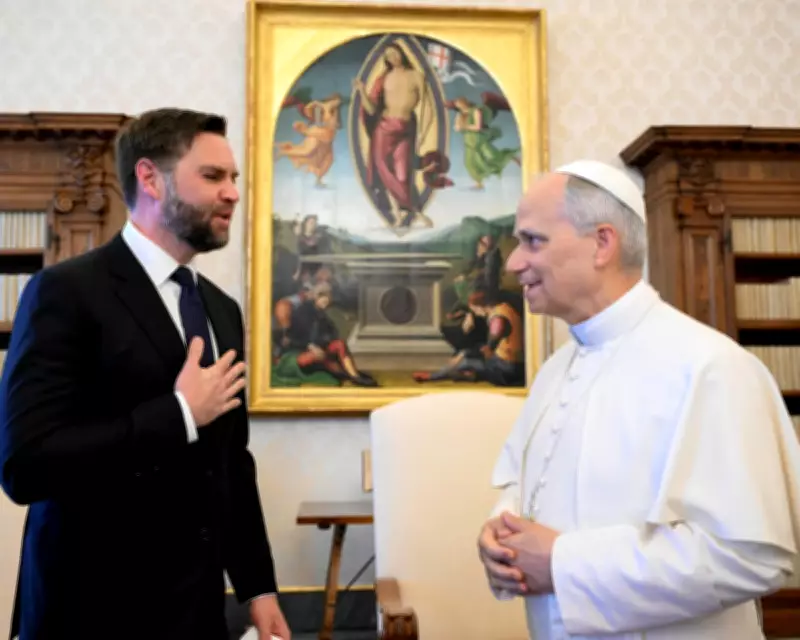
The meeting between US Vice-President JD Vance and Pope Leo XIV at the Vatican in May 2025 highlighted a stark contrast in theological expertise, sparking a heated dispute over the concept of a "just war" in the context of the Trump administration's conflict with Iran. Vance, a recent adult convert to Catholicism with no academic background in church history, faced accusations of "popesplaining" after challenging the pontiff's stance on war and theology.
Divergent Paths: A Pope and a Vice-President
On one side stands Pope Leo XIV, the first North American to lead the Catholic Church and a member of the Augustinian order. His lifelong intellectual journey culminated in a visit to the modern Algerian city where Saint Augustine once lived, reflecting his deep scholarly engagement, including a doctoral thesis on Augustine's ideas. On the other side is JD Vance, whose conversion to Catholicism is recent, lacking formal training in the church's historical doctrines.
The Core Dispute: Augustine's Just War Theory
At the heart of their disagreement is Saint Augustine's fourth-century framework for a "just war," which emerged after early Christian traditions rejected violence, even in self-defence. This concept has been a cornerstone of Western thought, debated by philosophers, jurists, and theologians for centuries. The current controversy stems from the Trump administration's efforts to infuse the US war against Iran with a Christian militancy, often described as incoherent.

In a bizarre move, President Trump posted an AI-generated image on social media depicting himself as a Christ-like figure healing the sick under flying jets and armed supernatural beings, later deleted. Meanwhile, US Defence Secretary Pete Hegseth has adopted a crusader-like persona, advocating for righteous violence.
Pontiff's Pronouncements and Vance's Rebuttal
Pope Leo XIV has been vocal in rejecting war, stating that Christ's teachings oppose it and that God "does not listen to the prayers of those who wage war, but rejects them." He criticised Trump's threat on 7 April that "a whole civilisation will die tonight" unless Iran made a deal, calling it "truly unacceptable" and a violation of international law.
Vance responded at a Turning Point USA event at the University of Georgia on 14 April, citing the over 1,000-year tradition of just-war theory. He questioned how the pope could claim God is never on the side of those who wield the sword, referencing US troops who liberated France from the Nazis and freed Holocaust prisoners. Vance urged the pope to be careful when opining on theology, drawing widespread criticism on social media for "popesplaining."
Augustine's Principles and Modern Applications
Augustine argued that a just war is the state's responsibility, justified only with the "right intention" to restore peace. Leaders must act like Christian judges, protect the innocent, and avoid motives like revenge or greed. These principles continue to guide conflict law today.
Cardinal Robert McElroy of Washington DC, in a March interview, asserted that the US and Israeli attack on Iran failed just-war criteria due to a lack of clear intention. Bishop James Massa, chair of the US Conference of Catholic Bishops' committee on doctrine, clarified that Leo's comments reflect official Catholic teaching, not personal opinion, emphasising that war is only justifiable in self-defence after peace efforts fail.
Political Reactions and Broader Implications
The row has drawn in Trump's allies, such as House Speaker Mike Johnson, a Southern Baptist, who defended political responses to the pope's statements. Conservative Catholic columnist Ross Douthat noted the administration's inconsistent justifications for the Iran war, questioning its coherence. This debate underscores tensions between political agendas and religious doctrines, with Vance's inexperience highlighting the complexities of applying ancient theology to modern conflicts.