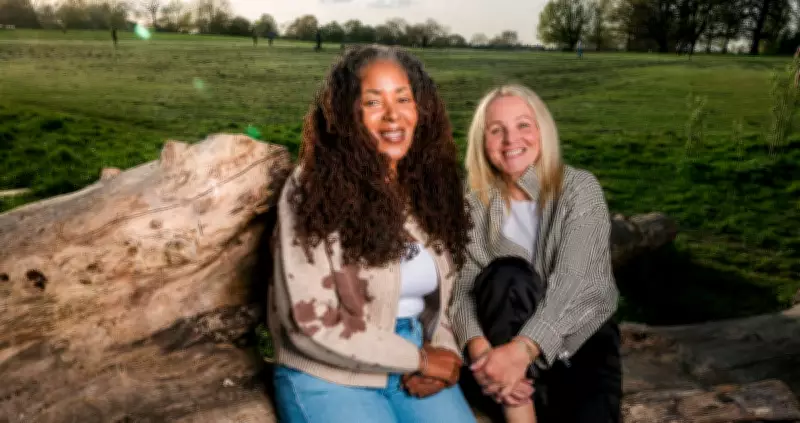
From single mothers to fathers of autistic children and fellow adoptees, some relationships come along just when you need them the most. These are the stories of people who found profound connection in the most unexpected places.
The Single Mothers Who Met in the Staffroom
Lucy Crowe and Mikayla Jolley, both teaching assistants at a London school in 2011, formed an instant bond. Mikayla describes an automatic trust between them, instinctive and immediate. Both had survived difficult relationships, and Lucy had been rehoused with her four children. They were the older staff members, sharing a similar work ethic and understanding of their environment.
When Mikayla discovered her partner was cheating, she confided in Lucy, something she wouldn't have done with anyone else. Lucy reassured her, offering optimism in contrast to Mikayla's pessimism. Lucy also relied on Mikayla during a late-night crisis with an ex, knowing she would be safe. Mikayla drove over without hesitation, recognising the seriousness of the call.

Lucy, now a child protection chair and grandmother, saw resilience in Mikayla. Both wanted better lives and refused to take the easy path. Neither had another friend who shared their experiences, though their pasts weren't central to their daily friendship. Details emerged gradually, with both dropping curveballs that the other would acknowledge with understanding. They processed life in similar ways, compartmentalising their struggles.
Emotional safety became the cornerstone of their bond. As single mothers, they supported each other's children without judgment, going out during school holidays and offering emotional backup. Lucy recalls that Mikayla never judged her parenting difficulties, which was significant for someone who felt constantly judged. One of Mikayla's sons adores Lucy, seeing her as the only person who can correct him. For Mikayla, having that support as a single mum was powerful.
When Lucy returned to university in 2014 to study social work, everyone said it was too much, but Mikayla encouraged her to go for it. Mikayla, now a quality assurance officer, says Lucy similarly pulled her along at work. Five years ago, Lucy suffered a stroke, losing use of one arm. She collapsed and told her son she wanted Mikayla. Her friend supported her through rehabilitation and now acts as her personal assistant when they go out. They live just four minutes apart, shopping, attending gigs, and holidaying together. Lucy jokes that she has benefited 70% from Mikayla, while Mikayla has benefited 30% from her. They ground each other and advise on relationships, though Lucy laughs that it's like the blind leading the blind. Their friendship is characterised by dark humour, with Mikayla calling in tears but ending up laughing. They are close like sisters, speaking most days but not living in each other's pockets. For the first time since meeting, their lives are heading in different directions: Lucy plans to move to Ghana, and Mikayla is in a new relationship. Regardless, Lucy sees no time when she won't be close with her. Mikayla agrees, noting Lucy's loyalty and honesty. Because of her, she knows what to look for in a friendship and relationship. Lucy reflects that Mikayla is consistent, dependable, and more than a friend: she is family.
The Fathers to Autistic Children Who Bonded Through Running
Gaz Hitchin and Andy Williams first met at Birmingham airport on their way to run the Paris marathon last year. Their flight wasn't until 5am, so they arrived early and spent hours at Costa, unloading their emotions. It felt like therapy. Both are fathers to profoundly autistic children: Andy to Lydia, five, and Gaz to Thomas, six. They had struck up a conversation online a few months earlier, and it was, they agree, a meeting of minds.

Gaz, a digital marketing manager, had been posting on Instagram about his parenting experiences and celebrating Thomas's milestones. But with less time to socialise and less common ground with other parents, it was a very lonely place. He notes that men tend to bottle things up. Andy, an HR manager, could relate: his life was surviving on two hours' sleep, trying to function as an adult, go to work, and sustain a relationship. He felt cut off, living in a weird bubble. Lydia's mother knew Gaz from school and showed Andy his posts. Andy felt an immediate recognition and sent messages appreciating what Gaz was doing and asking about his child.
Gaz wasn't used to receiving such messages. When someone acknowledges your experience, you notice. They had only exchanged a handful of messages when Andy suggested signing up for the marathon for the charity Ambitious about Autism. He booked it and said, 'Let's go.' From their airport meeting, they didn't stop talking. Andy describes it as an unshackling: starting with small talk, then sharing experiences that the other immediately understood. He realised he wasn't alone.
Gaz recalls that when you can laugh about things you were crying about six months ago, and the other person can laugh with you, it's funny. Andy agrees: you miss that as a bloke. It's a relief to feel back in the normal world. Gaz was two years ahead in his parenting journey, guiding Andy through what to expect and how to deal with it. In Paris, they walked, talked, ate, and ran together. They returned and kept messaging. Inspired by the feeling of opening up, two months later they launched a podcast, Autism Dadcast, and supported the Disabled Children's Partnership. They also have a WhatsApp group full of autism dads and catch up daily. Andy says Gaz is probably the person he hears from more than anyone else in the world. This friendship is stronger, closer, and more meaningful than those he had before. Gaz reflects that there are three types of friend: the ride-or-die who'll kick someone's door in; the person you'd call at 3am; and the person you can be vulnerable with. If you have one person who is all three, you're laughing.
The Ex-Church Members Who Left Religion Behind and Found Each Other
Jonathan Kraft and Alicia Arthur met at a Pride event in Tennessee in summer 2024. Both had left their religious communities after experiencing a mismatch between teachings and actions. Alicia, 37, was raised as a missionary kid and attended religious boarding school. Her grandfather was a pastor, and religion wasn't a choice for her. In 2021, her belief system crumbled, and she decided to leave the church. It was destabilising, traumatic, and scary, as all her friendships were in that community. Nobody reached out; she ceased to exist to them. Jonathan, 44, grew up in a charismatic evangelical church. Around 2019, he saw a major shift between what he was taught about caring for the widow, orphan, and foreigner, and the church's actions. After the pandemic, he and his wife Jenna pulled away. Around the same time, their child came out as non-binary, leading them to attend their local town's Pride event.
Alicia had recently come out as bisexual and was there with her husband. She walked into a coffee shop bookstore feeling unsure and saw Jonathan and his family in the back corner. She recognised Jenna from an online community for people who had left the church but had never spoken. The four instantly connected, swapped numbers, and went for dinner. They had game nights with the kids, and Jonathan recalls that it was clear Alicia and he had a lot of common interests, building a deeper bond than anyone else. Both are passionate about mental health and have been in therapy. Both have a drive to always be learning and growing. They became sounding boards for each other, holding on to things loosely and discussing everything, unlike their previous environments where things had to be a certain way.
It was new to both in a friend. Alicia says they have stretched each other. Both have wounds from how they were raised, and it has been healing to have a friend who is accepting and not judgmental. They have multiple message threads, sending video messages, memes, and playing online games. They live 30 minutes apart and don't get to hang out in person often, but sometimes Jenna and the kids come over. Coming from church, there was often the idea that men and women can't be friends. Alicia says it has been beautiful to expand that. Jonathan adds that men and women can learn a lot from each other. Meeting Alicia has changed his view on what a friend is, giving him a healthier view of himself, what he deserves, and what he has to give. It has set the bar.
The Dog-Walkers Who Became Like Family
Jude Davis and Maureen Anderson met four years ago while walking their dogs in a London park. Maureen, 59, recalls that their dogs met first. Jude, 43, remembers walking a loop of the park and seeing Maureen as the first other Black person he'd seen with a dog. The connection was immediate. As children of the Windrush generation, having dogs as pets was not encouraged; in the Caribbean, they are yard dogs. But their cavapoo Simba and bichon frise Mutya are their babies. They stopped to talk, and Maureen's warm and inviting nature made Jude feel comfortable. From then on, whenever Maureen saw Mutya, she would stop and walk with Jude.
While the dogs brought them together, it was their life experiences, particularly of grief, that bonded them. As they had longer conversations and walks, they realised they had so much in common. In 2024, when Jude started training to run the London marathon for Lupus UK, he told Maureen about his younger sister Rachael, who died from the disease when she was 16 and Jude 18. It was really tough and he had held it in for some time. Maureen had lost her parents within four weeks of each other from Covid complications in 2020 and had contributed to a book on Black grief and healing. Jude thought what she went through was awful. No one experiences grief in the same way, but it was nice to have someone to listen and really understand. Maureen created a safe space where he felt comfortable talking about his sister's horrific death.
That Christmas, Jude invited Maureen to join his family. She had been happy having Christmas alone since her parents died, with her son living abroad and her family in Birmingham. But being welcomed by another Jamaican family meant a lot. As she ate, she could taste home. They also found common ground in work: Jude had left a corporate job after 12 years, and Maureen had worked for local authorities. Both are involved in advocacy: Jude runs the Bop Black Opportunities Platform, and Maureen is involved in racial equality and hosts the MAMM menopause support network. They discussed experiences for Black individuals in workplaces. Jude had been there to support others but didn't have that outlet himself. Now, he hears from Maureen every day. It's so different from his other friendships; she has more experience and is easier to talk to. He always has that support from her. Maureen agrees, describing Jude as a son, nephew, and brother. She will look out for him, and he will look out for her. When she had a cold recently, he brought her soup. Jude reflects that you can have a community with two people, and that's what they've managed to create.
The Adoptees With a Shared Backstory
Sue Jardine and Debbie Cook met 16 years ago through the Hong Kong Adoptees Network. Both were found as babies in Hong Kong stairwells and later adopted by British families. Debbie, 67, recalls an understanding of how and why they felt certain things that a normal person doesn't quite get. Sue, 63, felt a trust and a feeling they could share things that had always felt risky about their experiences and upbringings. Another leveller was their height: Debbie is 1.45 metres and Sue 1.55 metres, so they could look each other in the eyes. It was like having a mirror image looking back, deeper than just surface level.
Their backstories were instantly recognisable. Debbie was brought to Manchester in September 1961 as a toddler by an adoptive Chinese father and British mother, whose mixed marriage made them low priority for domestic adoption. There had been an influx of Chinese families moving to Hong Kong for a better life, and lots of baby girls were abandoned at roadsides, stairwells, or public toilets. Debbie was approximated to be 10 days old. She was taken to Fan Ling Babies' Home, as was Sue two years later, after being found in a first-floor stairwell on Hong Kong Island at between two and four days old. Sue's parents answered a radio appeal for adoptive families, bringing her to Hatfield in 1963.
Their childhood experiences resonated. Growing up surrounded by nobody who looks like you, you know you're different but can't articulate or comprehend it. Sue discovered adoption papers aged 10 but remained colour blind to her own difference. She didn't discuss it with friends. Debbie didn't want to process that something wasn't quite right. She grew up in a very white village in the 60s, where the only Chinese person was her father. Both experienced name-calling and neither knew other girls like them existed. Meeting each other brought relief. Debbie had established the Hong Kong Adoptees Network a year earlier; Sue had corresponded by email before joining a Manchester meet-up. They just got on well. Debbie found Sue sweet, understanding, and thoughtful, and they became good friends.
They travelled with adoptee friends, including to San Francisco in 2013, when Debbie was grieving her father's death. She got the news just before flying out, but her father would have wanted her to go. It meant Sue was there to talk with. When Sue's mother moved to Carlisle and then became ill, they would meet for meals or walks, and Debbie would come to the care home with her. A 2015 trip to Hong Kong was particularly poignant. They visited the babies' home together and went to the stairwell where Sue was found. It's hard to know what you'll feel, but to have someone who understood the enormity helped. Debbie had done the same in 2010. There's a lot they don't need to talk about; it's unspoken because they come from the same background. Sue delights in being able to say things to one another without having to explain. Debbie agrees: finding someone she can identify and bond with has made her life more fulfilling.
The Neighbours Who Became Best Friends
Trillia Robinson and Lyn McGrath met in 2014 when Trillia moved into a house across the road from Lyn in New South Wales. Trillia, 73, wanted to make a garden but only had a gravel patch and some strips of grass. Lyn offered gardening books and then cuttings every time Trillia walked by. Lyn, 84, took her in as Trillia didn't know anyone else in the area. They became confidantes and established a routine of sitting in the guest suite under Lyn's home beside the Tweed River, talking for hours and drinking coffee. One day Lyn asked if Trillia liked doing jigsaws, and that became their thing, almost every day with a gold KitKat.
Trillia was caring for her terminally ill husband Peter, with whom she had moved from Cornwall to Australia years earlier. Lyn's husband Bill had long since retired, so it was respite for both in different ways, a break. The friendship started and continued through that. They laughed at the same things and could talk about their lives knowing it wouldn't go any further. They were just two ladies who thought they knew anything and could solve all the world's problems. When Peter died in 2020, Trillia made plans to move to New Zealand to be closer to her son and grandsons. She spent six months putting everything in place, but then Covid closed New Zealand's borders. Enter friend Lyn! Trillia ended up living in Lyn's guest suite for nine months. It was wonderful; they lived in their own parts of the house, still did jigsaws in the afternoon, but retained their own lives and cooked for themselves.
When Trillia finally moved, it was with a heavy heart. Their friendship was not something she expected. When you're older, it's harder to make friends. You're not waiting at the school gate, going to work, or going out as much. You have many transitional friendships but not ones that actually matter. Lyn says they remain very close even though they don't see each other anymore. They email a couple of times a week, when there's something to say and even when there isn't. Trillia believes there is a small group of people in your life who, when something happens, good or bad, are on the list. Lyn is one of those.