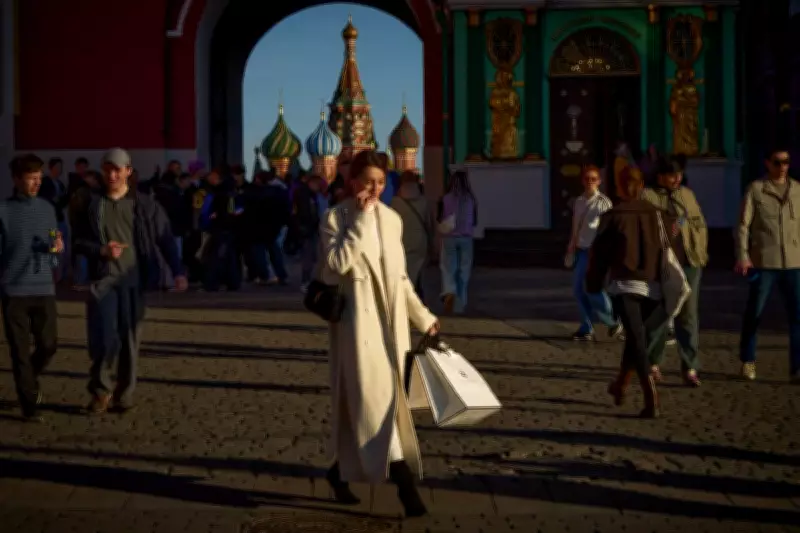
It is becoming increasingly difficult for officials in the Kremlin to portray the war in Ukraine—now in its fifth year—as a distant conflict that does not affect the daily lives of Russian civilians. From disruptive internet outages to a scaled-down Victory Day parade and a massive weekend aerial assault on the Moscow region that claimed three lives, Russia's full-scale war no longer feels remote.
Zelensky Calls Attack Just Retribution
Ukrainian President Volodymyr Zelensky framed the attack on Moscow's suburbs as just retribution for relentless Russian missile and drone strikes on Kyiv and other cities the previous week. These assaults come just days after President Vladimir Putin and US President Donald Trump both suggested the war was nearing its end.
One of Ukraine's Largest Drone Attacks
The Russian Defence Ministry reported on Sunday that its air defences had downed 1,054 Ukrainian drones in the preceding 24 hours, one of the highest tallies yet. Moscow Mayor Sergei Sobyanin reported that 81 drones were intercepted over the capital from late Saturday to early Sunday. The attacks killed three people near Moscow, injured 12 others, damaged multiple apartment buildings, and destroyed several private homes.

One drone struck the grounds of a Moscow refinery but did not disrupt production, according to Sobyanin. Another hit an oil tank at a storage facility, sparking a blaze that blanketed the area in black smoke. Several Moscow airports suspended operations, causing dozens of flight delays or diversions. A Ukrainian drone fell on the premises of Sheremetyevo Airport but caused no damage, authorities said.
Ukraine's Growing Drone Arsenal
Ukraine's ability to penetrate Moscow's dense air defence network reflects both an increase in its drone numbers and improved tactics. Kyiv has steadily intensified its drone raids, targeting energy facilities and arms factories, but the capital has been a more challenging target. Zelensky noted in a national address, “The Moscow region is the most heavily saturated with Russian air defence systems,” adding that “our long-range capabilities are significantly changing the situation—and, more broadly, the world’s perception of Russia’s war.” He described the weekend attack as a justified response to “Russia’s prolongation of the war and attacks on our cities and communities.” In a social media post, he declared, “We are clearly telling the Russians: Their state must end its war.”
The deadliest attack in Ukraine last week saw 24 people killed when a Russian missile levelled a nine-storey apartment building in Kyiv.
Scaled-Back Victory Day
The attacks followed a brief US-brokered three-day ceasefire that failed to halt the fighting but paused long-range strikes, allowing Moscow to hold its annual 9 May military parade commemorating the defeat of Nazi Germany. Concern over Ukraine's longer-range drone attacks led Russian authorities to scale down the parade. Unlike previous years, no tanks, missiles, or other hardware rolled through Red Square.
After the parade, Putin stated that the war in Ukraine was nearing its end, though he offered no explanation or timetable. He continues to insist on maximalist demands, including that Ukraine withdraw troops from four regions Moscow has annexed but never fully captured—a demand Kyiv rejects. Trump also claimed last week that the war's end was “getting very close,” despite US mediation efforts stalling since the start of its conflict in Iran.
Growing Domestic Discontent in Russia
The Moscow attacks occur amid rising tensions in Russia over the war's mounting costs and increasingly restrictive government policies, which have dented Putin's traditionally high popularity. Some military bloggers and social media influencers, once loyal to the Kremlin, have begun openly questioning government policies.

Authorities have restricted cellphone internet and blocked popular messaging apps, citing the need to thwart Ukrainian drone attacks that rely on mobile networks for targeting. These measures have caused massive business losses and disrupted daily life for millions, triggering public outrage. Critics denounce the shutdowns as yet another move to tighten control over the internet. Frustration has led to petitions to the presidential administration and attempts to organise protests, which were swiftly blocked.
As tensions mount, Putin on Tuesday begins a two-day visit to China.
Controlling the Message and Threatening Retaliation
State television sought to downplay the Moscow attacks, giving them only brief mentions in some newscasts, instead focusing on a successful test of a new intercontinental ballistic missile intended to be a key part of Russia's nuclear forces. Several war bloggers said the weekend attack exposed vulnerabilities in air defences that must be fixed quickly, urging the Kremlin to ramp up attacks on Ukraine and target its government.
Alexander Kots of the daily Komsomolskaya Pravda wrote, “The time has come to hit the decision-making centres.” Pro-Kremlin political commentator Sergei Markov said he woke to the sound of explosions as air defences engaged attacking drones, blaming Kyiv's allies for boosting Ukraine's drone output and alleging “it was Europe that tried to hit Moscow.” He added, “As long as Europe believes it’s safe, such attempts will continue.”
Russian hawks have long urged the Kremlin to retaliate against Ukrainian attacks by striking Kyiv's European allies. Last month, the Defence Ministry published a list of European factories it claimed were involved in producing drones and components for Ukraine, warning that attacks on Russia involving European-made drones could have “unpredictable consequences.” When asked by a state TV commentator why Moscow tolerates being “bitten” like this, Kremlin spokesman Dmitry Peskov responded that Russia's nuclear deterrent is meant to fend off threats to its existence.