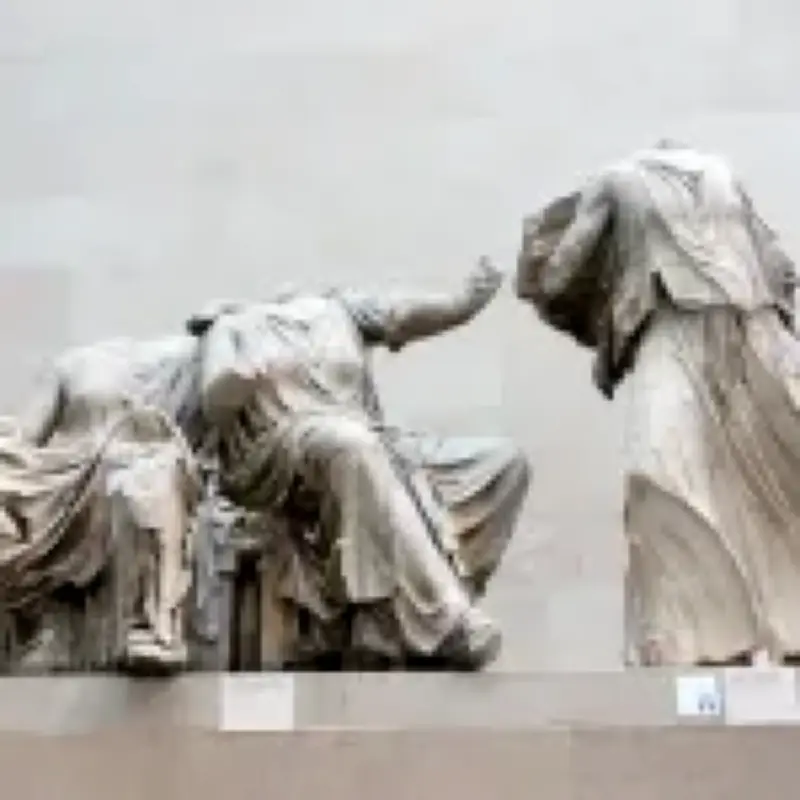
The UK government has said it has "no plans" to change legislation that could allow the Elgin Marbles to be permanently returned to Greece, while the British Museum continues negotiations over a long-term loan arrangement.
Culture minister Baroness Twycross told the House of Lords on Tuesday that the government is open to discussing a loan of the Parthenon sculptures, but indicated that a change in the law to permit their permanent return is unlikely.
Government position on the sculptures
Speaking in the House of Lords, Twycross said the government and the British Museum recognise "the strength of feeling on this" and would "consider a loan request for the sculpture, should that be agreeable." She noted that it is unlikely there will be a change in legislation that would "permit the Parthenon sculptures to be returned permanently."
The British Museum Act 1963 currently prevents the museum from disposing of items in its collection, with limited exceptions for duplicates and objects not fit for retention, such as objects taken during the Nazi era and human remains less than 1,000 years old.
Twycross also referenced the Bayeux Tapestry, the 11th-century French work being loaned temporarily to Britain, as a possible model for an agreement over the Marbles, calling the tapestry loan a "huge success story."
George Osborne, chair of the British Museum and former Tory chancellor, is reportedly negotiating a long-term loan of the Marbles in exchange for exhibitions and artworks.
Calls for return continue
Greece has long asked the UK to return the 5th-century BC Marbles, claiming they were taken illegally from the Athens acropolis during the Ottoman Empire in the 19th century. The sculptures are named after Thomas Bruce, the 7th Earl of Elgin, who oversaw their removal from Ottoman Greece in the early 1800s, claiming Ottoman officials permitted him to do so.
Greek prime minister Kyriakos Mitsotakis has compared the sculptures' location in the UK to "cutting the Mona Lisa in half." Labour former shadow attorney general Baroness Chakrabarti questioned: "If some of the crown jewels had been pinched, I don't think that we would be so glad of a loan agreement."
Green Party peer Baroness Jones of Moulsecoomb, a former archaeologist, said she has "some sympathy with the Greek government," which "argues that the sculptures were actually bought from the Ottoman Empire and not from the Greek Empire." She cited "a strong argument for returning them," noting that when she visited the Parthenon, there were some "quite naked bits where the sculptures ought to fit back."
Liberal Democrat peer Baroness Hussein-Ece called the Marbles an "integral part" of Greece's cultural heritage, adding that a purpose-built museum "has been built near the site of the Parthenon, where it was originally displayed for 2,000 years." She also noted that the British Museum holds artefacts from around the world, many of which are not displayed and are kept in basement vaults, suggesting "maybe it'd be an opportunity to bring some of those out if they return the Parthenon marbles to Greece."