Former Prime Minister Liz Truss has defended her 2022 mini-Budget, attributing the fallout that led to her resignation after 49 days in office to the Bank of England and Treasury civil servants rather than her own fiscal plans.
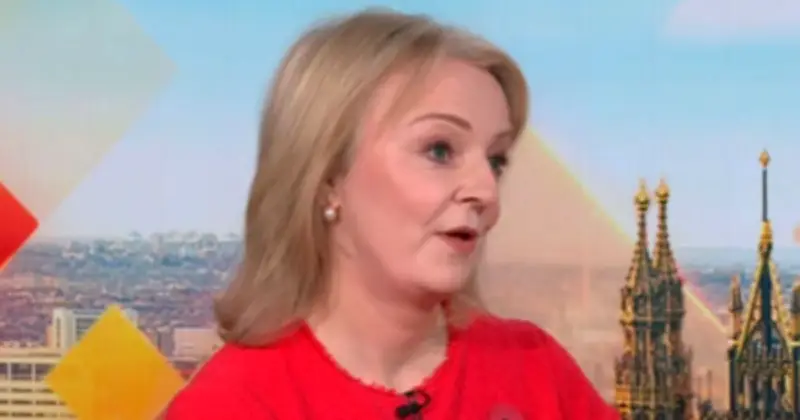
Appearing on Sky News on Tuesday morning, Truss insisted that the mini-Budget itself was not the cause of the turmoil. She said: "It wasn't the mini budget that went wrong. I think this is very important. What was there was a spike in the gilt market. That's what led to the chain of events that ultimately led to my resignation."
Her September 2022 mini-Budget included £45 billion in tax cuts, which were widely blamed for triggering financial market panic.
Attack on Andy Burnham and Gogglebox
Truss also criticised Andy Burnham, the Mayor of Greater Manchester, for appearing on Channel 4's Gogglebox instead of focusing on economic issues. In the episode, Burnham is shown drinking a pint of beer alongside his close friend, Liverpool City Region Mayor Steve Rotheram, as they sat on a sofa and attempted to solve a puzzle.
Truss said: "So you've got a institutional set which believes in these progressive policies that haven't worked, and you've got a political class and a political discussion that wants to talk about Googlebox or Gogglebox, is it doesn't want to talk about what is actually going on in the economy. I find that very depressing."
Criticism of economic institutions
Speaking on the eve of Chancellor John Healey's maiden Budget, Truss argued that Britain's economic system is dysfunctional. She said: "We have a system now in Britain that doesn't work. We have a Bank of England that is divorced from the political process that essentially decides monetary policy and through that decides fiscal policy. In fact, recently the government attacked the Bank of England for interfering in fiscal policy. You've also got the OBR, which is an arm's length forecasting body. It does mean the Chancellor is not able to really direct his ideas about the impact the budget will have."
She added: "We have this absurd notion of headroom and the public would assume that headroom meant there was a gap between what we have coming in and what we have going out. No, this is a gap in five years time of what we might need to do to get the debt falling. So we're still massively in debt. We still are running a deficit every year. And the way that we talk about economics, the way the structures work, make it very difficult, I believe, for a chancellor to actually change things."
The Government on Tuesday announced a series of "everyday fixes" to help people with the cost-of-living crisis, which are expected to feature in Wednesday's Budget.