The US Supreme Court is deliberating whether broad warrants for smartphone location data infringe on Americans' privacy rights and violate the Constitution. The case, Chatrie v United States, heard on Monday, centers on law enforcement's use of so-called "geofence warrants" in difficult investigations.
Background of the Case
The case was brought by Okello Chatrie, whose phone location data helped police in Richmond, Virginia, track him down after he robbed a bank at gunpoint and escaped with $195,000 in 2019. Chatrie pleaded guilty to armed robbery and was sentenced to 12 years in prison, but his lawyers argue that none of the evidence against him should have been admissible in court.
Arguments from the Department of Justice
A lawyer for the US Department of Justice argued that nearly any actions taken in public while in possession of a smartphone afford no expectation of privacy. The US solicitor general, a high-ranking lawyer for Donald Trump's administration, stated in legal filings that "an individual has no reasonable expectation of privacy in movements that anyone could see, that he has opted to allow a third party to analyze for its own purposes."

Geofence Warrants Explained
Law enforcement increasingly demands that tech companies hand over sensitive phone location data on people at or near a site where a suspected crime occurred. These geofence warrants, rather than specifying targets, compel tech companies to provide data on every electronic device in a particular place at a given time.
Privacy Concerns
Privacy advocates and some legal experts view geofence searches as a dragnet that sweeps up innocent bystanders. Paul Ohm, a law professor at Georgetown University, who submitted an amicus brief, said, "Just because you have a cell phone, should you be subjected to all sorts of law enforcement investigations because of crimes that may have happened in your vicinity?" He added that these warrants can lead to an individual's data being shared simply because they were "in the wrong place at the wrong time, or even worse – you weren't, but your phone thought you were."
Law Enforcement Perspective
Law enforcement officers and prosecutors say geofence warrants help solve crimes after reaching dead ends. Justice Brett Kavanaugh expressed concerns about "the practical consequences of not being able to solve murders."
Details of Chatrie's Case
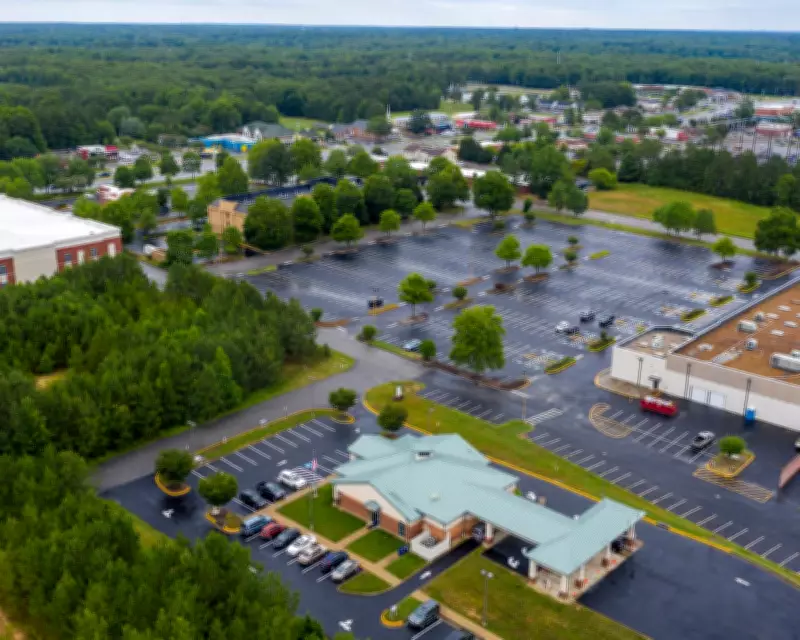
Chatrie had enabled an optional Google "location history" feature that recorded his location every few minutes. The government noted that only about one-third of active Google account holders opted into the service, but Chatrie's lawyers pointed out that this amounted to over 500 million users. After officers interviewed witnesses and reviewed security footage, they had no leads. A geofence warrant requested Google to provide phone location data for a 30-minute period before and after the robbery from all cellphones within 150 meters of the bank, yielding 19 other accounts. The detective requested more data on all individuals, but Google pushed back, and eventually only nine were pursued. Ultimately, three devices were identified, including Chatrie's, with an email address containing his name.
Google's Policy Changes
Since Chatrie's arrest, Google has changed some geofencing policies, transferring location data off its servers and onto users' phones, making it unable to comply with geofencing warrants in the same way, according to Matthew Tokson, a law professor at the University of Utah. However, the government is increasingly trying to obtain this information directly from cell phone providers and other companies. The case still affects "privacy protections for data stored in cloud services and collected by consumer apps," the Electronic Privacy Information Center noted.
Broader Implications
Privacy advocates warn that implications extend beyond suspected criminals. Tokson said, "If the government doesn’t need to get a warrant or link something to a crime, it could monitor a protest or an abortion clinic or a gun range or a church or an AA meeting or a doctor’s office." Some justices expressed similar concerns.

If the court rules that a geofence warrant does not constitute a search, Ohm said, "our privacy rights might be completely eviscerated. It would lead to a lot of unregulated police activity." The Fourth Amendment protects against "unreasonable search and seizure." Both Ohm and Tokson sensed from Monday's remarks that at least some justices seemed likely to find these warrants count as a search, offering relief to privacy advocates.
Justice Sotomayor's Remarks
Justice Sonia Sotomayor suggested she was unconvinced by the government's argument that short-term location information reveals little. She noted how people take phones everywhere, from the bathroom to a cannabis shop to a brothel. "It really doesn’t matter … whether it’s a minute that you’re searching for or six weeks, it’s not the time that’s an issue – it’s whether or not private information in which you have a reasonable expectation of privacy will be sought," she said.