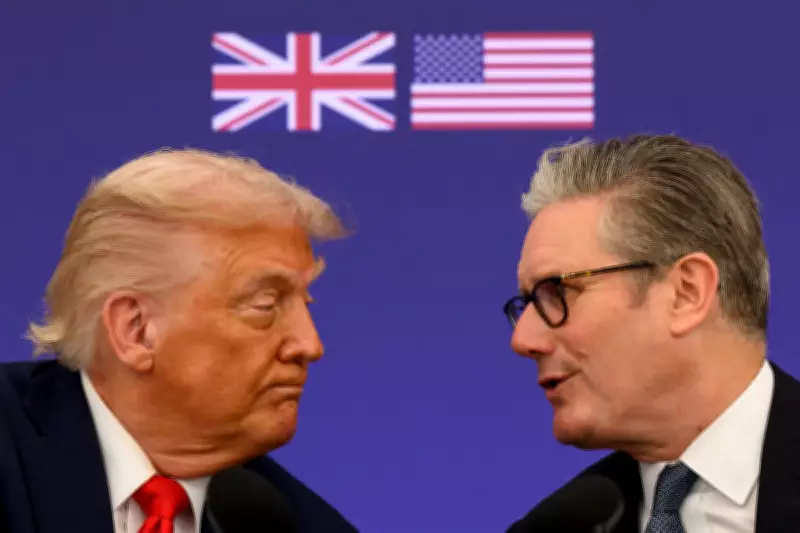
Starmer's Popularity Surges Following Iran War Disagreement with Trump
New polling data reveals a significant boost in Prime Minister Sir Keir Starmer's approval ratings following his public rift with US President Donald Trump over the Iran conflict. According to a JL Partners survey conducted for The Independent, Starmer's personal approval rating increases by a remarkable 26 points when voters are reminded of his stance against Trump's military actions.
Polling Methodology Reveals Dramatic Shift
The survey employed a split-sample approach, questioning 1,500 UK adults online between March 14-16. One group was asked about their view of Starmer without context, while another was informed about his refusal to allow US forces to use British bases for attacking Iran, Trump's criticism of Starmer as "no Churchill," and the president's comments about the weakened Anglo-American special relationship.
Among respondents who weren't reminded of the Iran dispute, 57% held negative views of Starmer compared to just 17% with positive opinions, resulting in a net rating of minus 40. However, when voters were informed about Starmer's opposition to Trump's Iran policy, negative views dropped to 42% while positive opinions rose to 28%, creating a net rating of minus 14 - a 26-point improvement.

Political Context and Leadership Challenges
Starmer's defiant position has created clear political divisions within British politics. Conservative Party leader Kemi Badenoch and Reform's Nigel Farage both initially criticized Starmer's refusal to support Trump's military actions, though both have since backtracked on their positions. The prime minister has seized on this reversal, arguing that their initial support for military action demonstrates they are unfit to lead the country.
Tom Lubbock, co-founder of JL Partners, analyzed the findings: "If you're just looking at the cold electoral politics, there is a major reputational premium to be gained for the prime minister positioning himself in opposition to the US president on the Iran conflict. The survey suggests that the more people are aware of the prime minister's disagreement with the US president, the more his standing improves."
Transatlantic Tensions and Personal Attacks
The policy disagreement has escalated into personal attacks from the American president. Trump has repeatedly criticized Starmer and the UK's position on Iran, recently describing British aircraft carriers as "toys" and mocking Starmer as a "coward" during a Saturday Night Live sketch. The president's most cutting remark suggested Starmer was "no Churchill" in his leadership approach.
Starmer has remained defiant in response to these attacks, stating he would not "hang on the president's latest words" and that he understands the pressure tactics being employed. He emphasized that his unwavering position has "served [him] well in recent weeks," a clear reference to the polling data showing public support for his stance.
Contrasting Political Fortunes
While Starmer's ratings have improved due to the Iran dispute, Trump's standing has suffered both domestically and internationally. A separate Reuters/Ipsos poll indicates that 61% of Americans disapprove of the attacks on Iran, with only 35% approving. This represents a significant shift from Trump's pre-election pledge to end "stupid wars" in the Middle East.
Trump's overall approval rating in the United States has declined substantially during the conflict. When he began his second term last year, he held a positive net rating of plus six (47% approval, 41% disapproval). The recent polling shows his disapproval has soared to 62% with approval falling to 36%, creating a negative net rating of minus 26.
Strategic Implications for British Politics
The polling data arrives at a crucial political moment for Starmer, whose Labour Party faces challenging local elections in May. His supporters hope that his cautious approach to Trump's Iran policy may help him avoid potential leadership challenges if the party performs poorly in these elections.

The prime minister's refusal to endorse Trump's declaration of war on Iran represents a significant departure from traditional Anglo-American military cooperation and has tested the historic special relationship between the two nations. As the conflict continues to unfold, Starmer's handling of the situation appears to be resonating with British voters who value independent foreign policy decision-making.