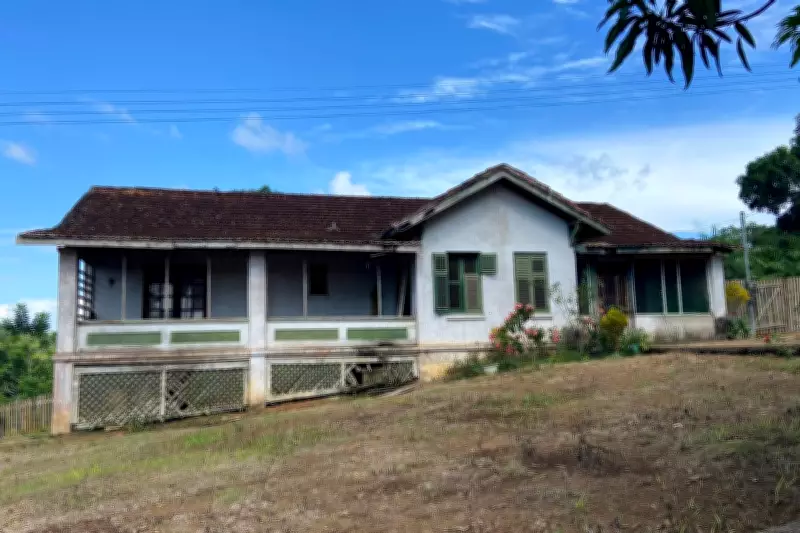
A Brazilian court has issued a landmark ruling ordering federal and local authorities to restore and preserve Fordlandia, the ambitious Amazonian city founded nearly a century ago by U.S. industrialist Henry Ford. The decision, announced on Friday, marks the culmination of a lengthy legal battle that began in 2015.
The Rise and Fall of Fordlandia
Fordlandia was established in 1927 by the Ford Motor Company in Brazil's northern state of Pará. Conceived as a rubber-tapping metropolis, it was designed to secure a steady supply of natural rubber for tires and to mimic an idyllic American suburb. At its peak, it was the third-largest settlement in the Amazon. However, the venture ultimately failed as disease ravaged the rubber tree plantations, leading to its abandonment. The Brazilian government acquired the site in 1945.
Legal Battle for Preservation
The legal struggle for Fordlandia's preservation began in 2015 when Brazil's federal prosecutors' office sued the national architectural heritage agency and the city of Aveiro for failing to protect the site. The prosecutors highlighted its significance as a landmark in global industry. After more than a decade of proceedings, the court ruled that Fordlandia possesses historical, cultural, and architectural significance, mandating that the government and municipality develop and implement a recovery plan. Potential financial penalties loom for noncompliance.

The ruling underscores the enduring legacy of one of the most ambitious industrial projects in the Amazon, which now stands as a ghost town deep in the rainforest. The restoration order aims to preserve this unique chapter in both Brazilian and global industrial history.