
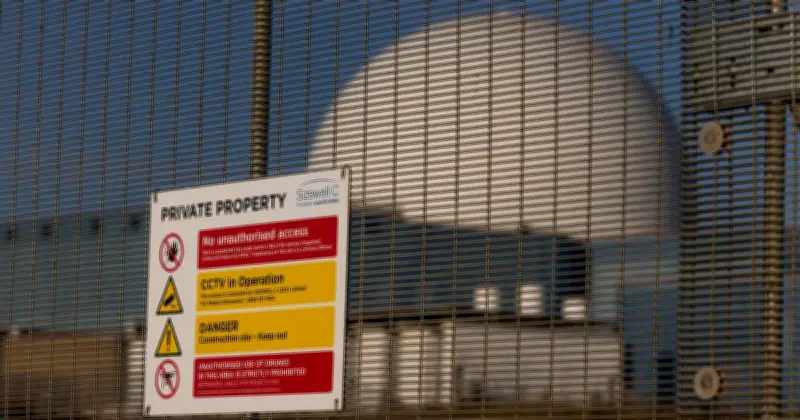
MPs have raised the alarm about the funding arrangements for the Sizewell C nuclear project, branding the deal a "terrible deal" for taxpayers.
Senior parliamentarians on the Commons' Public Accounts Committee (PAC) said the scheme's investors are set to cash in and leave taxpayers to foot the costs, including through higher energy bills.
Concerns over cost overruns
The PAC is "deeply concerned" that if costs exceed projections, private investors will only have to provide an additional £30 million compared to an additional £9.8 billion paid by consumers during construction.
A further £12 billion will be paid over the 60-year operating contract through higher energy bills, according to the MPs' report.
Project details and risks
Sizewell C, a 3.2GW nuclear power station under construction on the Suffolk coast, will cost up to £47.7 billion and is expected to finish construction by 2043.
Sir Geoffrey Clifton-Brown MP, chair of the Public Accounts Committee, said: "The high level of risk borne by taxpayers and consumers for the construction of Sizewell C is extraordinary. Private investors look set for significant returns on their investments, while customers are likely to be saddled with higher energy bills."
He added: "The government must focus on the successful delivery of this project, not just of a new nuclear power station, but of a commercially derisked nuclear sector for a taxpayer that should never be put in this position again."
Comparisons and government response
Sizewell C's design has previously been used in France, Finland and China and is currently being used in the UK for the construction at Hinkley Point C, a nuclear power station under construction in Somerset. However, no comparable nuclear power station anywhere in the world has been built on time and to budget.
Sir Geoffrey said: "The history of the Sizewell C deal risks being one of missed opportunities for the taxpayer; for example, the mapping of the Hinkley designs onto the current project the point is they did it rather than going out into the world to see if there was a better cheaper design."
This is the latest high-risk mega project in terms of ballooning costs. HS2, the Elizabeth Line and the Lower Thames Crossing have all been plagued by budget overruns.
A Department for Energy Security and Net Zero spokesperson said: "This report completely ignores that investors are incentivised to complete construction as cheaply and quickly as possible.
"We need to build new nuclear to move the country off expensive fossil fuels and onto clean, homegrown energy we control.
"Once operational, Sizewell C could save £2 billion a year across the energy system, cutting costs for families up and down the country, and the project is already making good progress with over 2,000 workers on site."




