
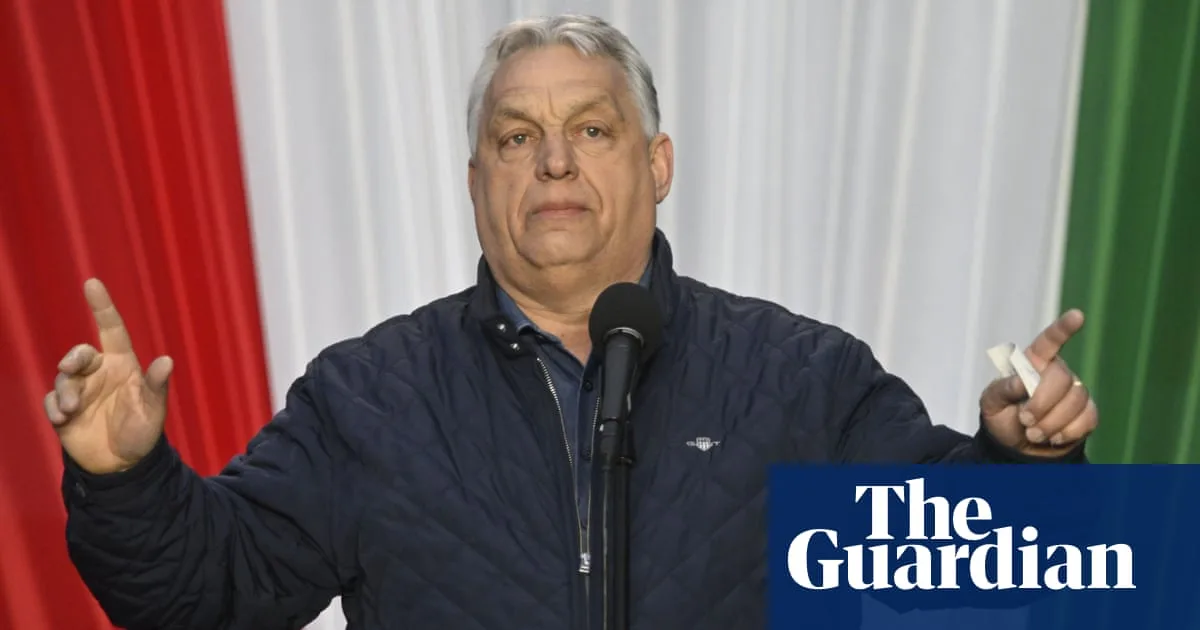
Hungarians are voting in a landmark parliamentary election that could end Viktor Orbán's 16-year grip on power. The prime minister, the EU's longest-serving leader, trails in the polls behind Péter Magyar, a former Fidesz insider who has mounted an unprecedented challenge from the centre-right.
The contest has drawn international attention, with US Vice-President JD Vance visiting Budapest this week to back Orbán, and Donald Trump vowing on Friday to bring American "economic might" to Hungary if he is re-elected. Italian Prime Minister Giorgia Meloni and Israel's Benjamin Netanyahu have also signalled their support for the incumbent.
Orbán has sought to frame the election as a choice between peace and the war in Ukraine, while Magyar has focused on domestic corruption, repairing ties with the EU, and reviving public services. Turnout by midday hit a record 37.98%, about 876,000 more voters than at the same point in 2022.
Magyar, 45, said Hungarians were choosing between "east or west, propaganda or honest public discourse, corruption or clean public life". Orbán, 62, who has won four consecutive elections, urged unity to resist "approaching crises". Most polls put Magyar's Tisza party ahead, though analysts caution that undecided voters, Hungarians abroad, and alleged vote-buying could sway the result.
Critics point to Orbán's rewriting of electoral laws, loyalist control of an estimated 80% of the media, and claims of Russian interference, including leaked audio purportedly showing a minister sharing EU secrets. Analysts see three possible outcomes: a Magyar majority that Orbán accepts, one he does not, or an Orbán victory. A two-thirds super-majority for Tisza would allow constitutional changes and unlock EU funds, but Fidesz's gerrymandering means Magyar needs around 5% more votes to secure a majority.




