
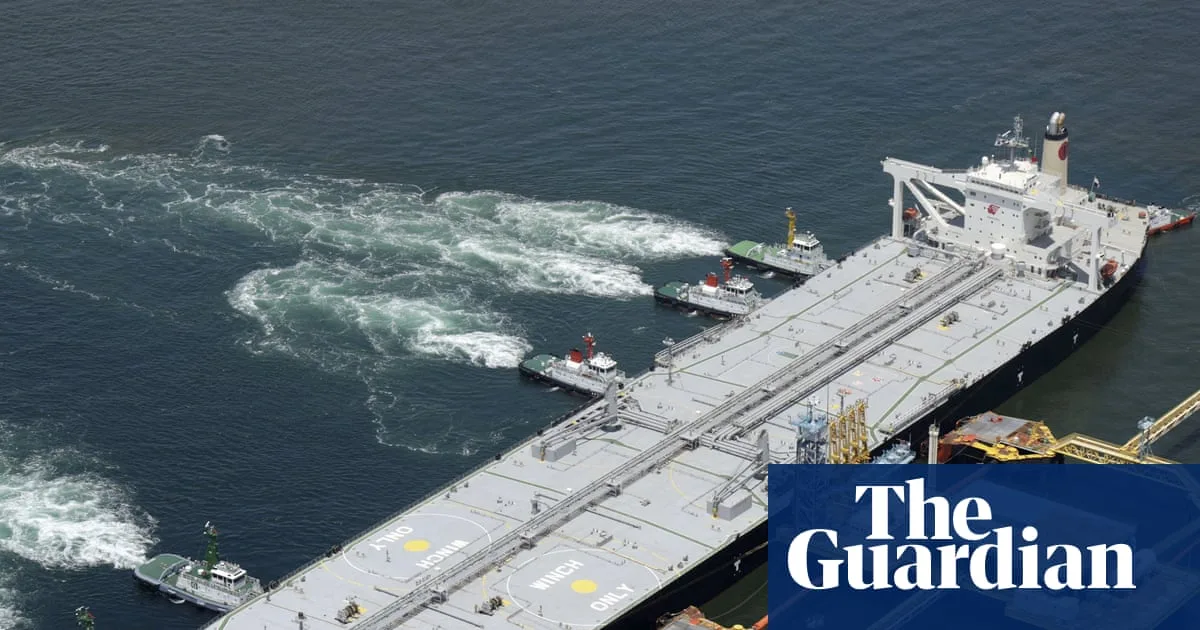
Oil prices are heading for their largest monthly decline since 2020, driven by growing optimism over a potential peace deal between the US and Iran. Brent crude futures fell 1.3% on Friday to around $92 a barrel, marking a 19% drop since the end of April.
The decline follows reports that former US President Donald Trump circulated a draft peace agreement among allies to end the war in Iran. The US news site Axios reported that the US and Iran had reached a tentative deal to extend a ceasefire by 60 days, though Trump has yet to agree to the terms. US Vice-President JD Vance said a deal was “not there yet” but “very close”.
The conflict, which has lasted 90 days, disrupted global oil supplies after Iran closed the Strait of Hormuz to shipping, cutting off a large proportion of Gulf exports. While the US initially sought regime change in Iran, its ambitions have reportedly been scaled back to reopening the strait and preventing Iran from developing a nuclear bomb.
Henry Allen of Deutsche Bank said markets showed “mounting optimism about an end to the conflict”. He added: “With oil prices coming down, that’s meant investors have started to price out the more stagflationary outcomes for the global economy, with a clear rally across multiple asset classes.”
Stock markets rallied on the news. In Asia, Japan’s Nikkei 225 rose 2.5%, South Korea’s Kospi gained 3.9%, and Hong Kong’s Hang Seng index added 0.7%, though mainland China’s Shanghai CSI 300 fell 0.45%. In Europe, the UK’s FTSE 100 was up 0.3% and the Stoxx Europe 600 gained 0.2%. On Wall Street, the S&P 500 rose 0.2%, the Dow Jones added 0.6%, and the Nasdaq was roughly flat.




