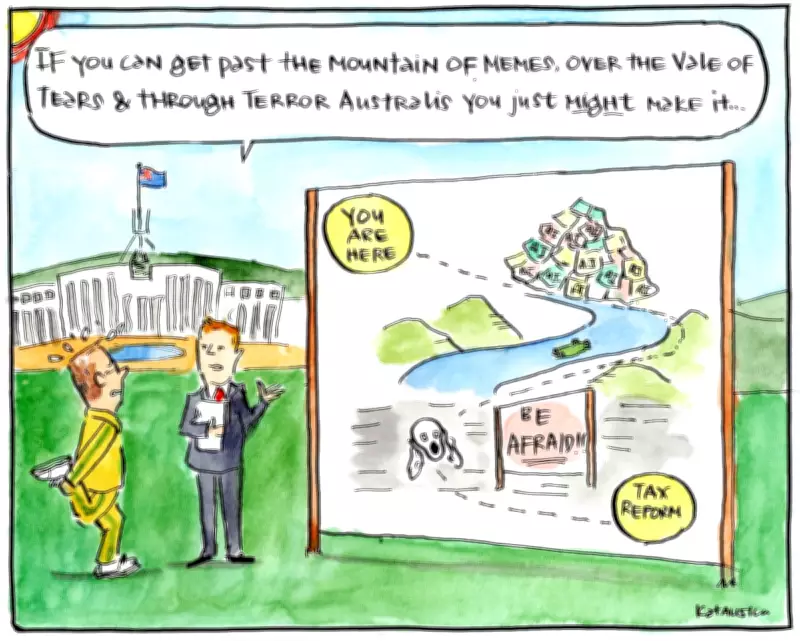
Anthony Albanese, the Australian Prime Minister, finds himself at a critical juncture as he attempts to steer the nation through a treacherous political landscape. The path to reform is fraught with challenges, from internal party dissent to external pressures from opposition parties and interest groups. Albanese's ability to navigate these obstacles will determine the success of his legislative agenda and his legacy as a leader.
The Political Landscape
Australia's political environment is characterized by a highly competitive two-party system, with the Labor Party and the Liberal-National Coalition vying for power. Albanese's Labor government, elected in 2022, holds a slim majority, making every vote crucial. The opposition, led by Peter Dutton, has been aggressive in its criticism, particularly on economic management and national security. Additionally, crossbenchers and minor parties hold significant sway in the Senate, where the government lacks a majority, necessitating negotiation and compromise.
Internal Party Dynamics
Within the Labor Party, factions vie for influence, and Albanese must balance the demands of the left and right wings. Key issues such as climate policy, housing affordability, and Indigenous recognition have the potential to cause internal divisions. The prime minister's leadership style, which emphasizes consensus-building, has been tested by these tensions. To succeed, he must maintain party unity while pushing forward with bold reforms.

Key Reform Areas
Albanese has outlined several priority areas for reform, including climate action, housing, and industrial relations. Each of these areas presents unique challenges and opportunities.
Climate and Energy Policy
Australia has committed to reducing emissions by 43% by 2030, a target that requires significant changes in the energy sector. The government's plan includes expanding renewable energy, investing in green hydrogen, and supporting coal communities in transition. However, the fossil fuel industry and some Coalition MPs have resisted these measures, arguing they will harm the economy. Albanese must navigate this opposition while ensuring a just transition for workers.
Housing Affordability
The housing crisis is a major concern for many Australians, particularly young people and low-income families. The government has introduced measures such as the Housing Australia Future Fund and shared equity schemes, but critics argue these are insufficient. The opposition has proposed its own solutions, creating a political battleground. Albanese will need to work with states, territories, and the private sector to increase supply and improve affordability.
Industrial Relations
Labor's industrial relations agenda, including the Secure Jobs, Better Pay bill, aims to strengthen collective bargaining and close loopholes in the gig economy. Business groups have opposed these changes, warning of increased costs and reduced flexibility. The government has made some concessions to secure passage, but further reforms may be contentious.
External Pressures
Beyond domestic politics, Albanese must contend with global economic uncertainty, geopolitical tensions, and the ongoing impacts of the COVID-19 pandemic. Inflation and rising interest rates have put pressure on household budgets, limiting the government's fiscal room for maneuver. Meanwhile, Australia's relationship with China remains tense, affecting trade and investment. Albanese's diplomatic skills will be crucial in managing these external challenges.
Public Opinion
Public support is essential for any government seeking to implement reform. Albanese's approval ratings have fluctuated, and the government has faced criticism over its handling of cost-of-living pressures. To maintain public trust, Albanese must communicate the benefits of reform clearly and deliver tangible improvements in people's lives.
Strategies for Success
To navigate the perilous road to reform, Albanese can employ several strategies. First, building broad coalitions of support, including with business, unions, and civil society, can help overcome opposition. Second, incremental reforms may be more achievable than sweeping changes, allowing the government to demonstrate progress. Third, effective communication and transparency can build public understanding and support.

The Role of Leadership
Ultimately, Albanese's leadership will be the deciding factor. His experience as a former minister and his reputation as a pragmatic negotiator are assets. However, he must also show vision and determination to push through difficult reforms. The next few years will test his abilities, but if successful, he could leave a lasting legacy of progressive change in Australia.