
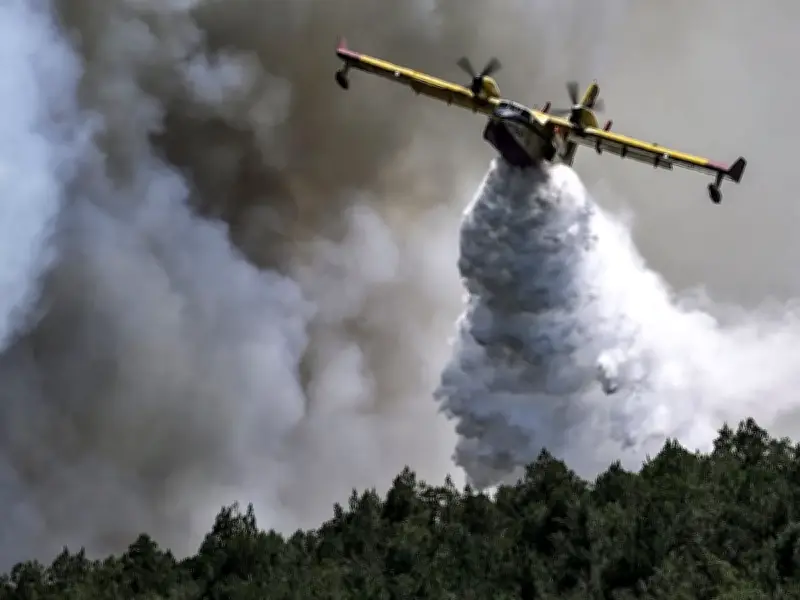
MPs have called for Britain to strengthen its wildfire defences, including the introduction of firefighting planes and temporary bans on disposable barbecues, following one of the most severe fire seasons on record. The Environment, Food and Rural Affairs (EFRA) Committee warned that “wildfire is part of our new reality” and urged ministers to act before another devastating season.
Record wildfire season prompts urgent calls
Fire crews in England and Wales attended 1,132 wildfires by August 16, more than during the whole of 2025. The destruction reached communities across the country, with 19 homes lost in Stourbridge alone. Major fires also affected Northern Ireland’s Mourne Mountains, Scotland’s Cairngorms, the Rhinogydd mountains and South Wales, and England’s Dunwich Heath and New Forest.
Widespread drought accompanied the UK’s hottest summer on record in 2026. On August 14, an emergency alert was sent to mobile phones across England and Wales, warning of a very high national wildfire risk.
Committee demands new aerial capability
The committee wants plans for new aerial firefighting capability by January 2027. Britain currently has no dedicated firefighting aircraft, and this year’s blazes exposed problems getting equipment and water to where crews needed them. Committee chairman Alistair Carmichael described new planes as a “minimum requirement”.
He said: “Two consecutive, record-breaking years of wildfires should be ringing alarm bells in Westminster. We need to see Government preparing for 2027 now.” He added: “Failure to do so will leave us all exposed to more of the same next year and every year until it is taken seriously. This report offers a catalogue of actions the Government must prioritise as we adapt to a changing climate, but it also tells the story of how these terrifying incidents leave deep scars, not just on our landscapes, but in the minds of rural communities whose voices tend to be excluded.”
Prevention and community support
The committee described evacuations, disruption to businesses and the destruction of habitats and landscapes “in a matter of hours”. Residents and land managers helped defend their communities by rescuing livestock, providing equipment, tackling flames and clearing fire breaks. MPs said that contribution deserved recognition, alongside the lasting emotional and physical impact of facing such fires.
They also called for better support for exhausted fire crews, noting that in rural areas the response can depend on volunteers and firefighters working beyond paid hours. The report argued that strengthening the emergency response would only address part of the problem, as human activity starts most wildfires and understanding of the dangers “remained limited”.
Mr Carmichael emphasised that “prevention is vital”. He said: “Britain needs a cultural shift that puts us in step with fire-savvy nations such as Australia.” MPs want wildfire warnings to become part of weather forecasts, backed by a Government-funded “national wildfire prevention campaign”. They also called for temporary national restrictions on disposable barbecues when the risk is high.
Government response and next steps
The report said people should regard lighting campfires, using disposable barbecues and discarding cigarettes during dangerous conditions as “socially unacceptable”. Unattended fires, litter and deliberate fire-setting were among the causes highlighted. Mr Carmichael also called for funding for fire wardens in vulnerable areas, where landowners and managers currently carry out much of the work voluntarily, describing them as “unsung heroes”.
The committee rejected the idea that one method of managing land would work everywhere. Instead, it urged ministers to help land managers choose from an evidence-based “toolbox” suited to their surroundings, including restoring peatland, rewetting drained ground, or managing vegetation through grazing, cutting and prescribed burning where appropriate.
Responding to the findings, a Government spokesperson said improving preparedness was a major priority. The spokesperson said: “That’s why this week we are holding a summit with Government ministers, fire and rescue leaders, land managers and other partners to understand how we can strengthen the response to this increasing risk.” They added: “This will build on the action we’ve already taken, including launching a new pilot with six teams of specialist firefighters ready to respond to wildfires across the country, and making almost £1.95 billion available for fire and rescue authorities to keep their communities safe.”




