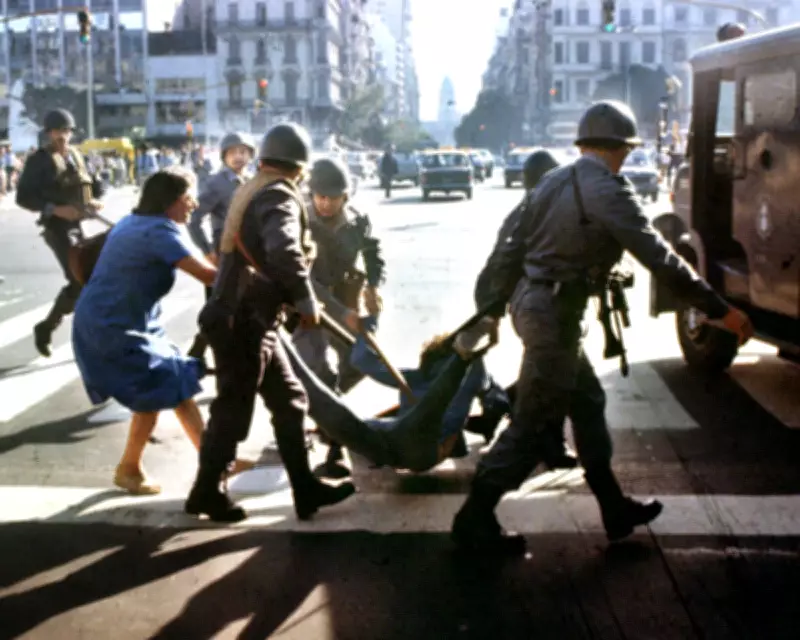
As Argentina commemorates the 50th anniversary of the military coup that initiated its last dictatorship in 1976, the nation's longstanding democratic consensus faces unprecedented challenges. For decades, this date has served as a powerful civic ritual, with tens of thousands of Argentinians marching annually to honour victims of state terror and reaffirm commitments to memory, truth, and justice. However, under President Javier Milei, this moral framework is under direct assault, threatening to dismantle the hard-won agreements over the country's dirty war legacy.
Milei's Controversial Stance on Dictatorship Atrocities
President Javier Milei has consistently flouted taboos surrounding Argentina's democratic consensus, openly questioning the scale of atrocities committed during the dictatorship. He has celebrated military figures and derided human rights activists as corrupt opportunists, marking each coup anniversary with controversial videos that challenge victim counts or equate state repression with violence by leftist guerrilla groups. Rumours now suggest Milei may pardon military officers convicted in landmark crimes against humanity trials, a move that would shatter a central pillar of Argentina's post-dictatorship settlement.
The Fragile Nature of Argentina's Post-Dictatorship Consensus
From the outset of the democratic transition in 1983, debates over past violence have divided Argentina. Initial accountability efforts, such as the Nunca Más report and the Trial of the Juntas under former president Raúl Alfonsín, were quickly followed by laws limiting further trials due to pressure from armed forces. The "theory of the two demons" became a dominant interpretive lens, minimising systematic state terror by framing the period as a conflict between government and guerrilla groups. Yet, through persistent activism by relatives of victims, a broad moral framework gradually consolidated, recognising dictatorship crimes as uniquely illegitimate and embedding human rights into the national narrative.

Fractures in the Consensus and Milei's Escalation
Between 2003 and 2015, leaders like Néstor Kirchner and Cristina Fernández de Kirchner overturned amnesty laws, enabling prosecutions of hundreds of dictatorship-era crimes and integrating human rights language into school curriculums and public commemorations. However, critics perceived this as an ideological project, appropriating historical memory for political legitimacy. Milei's government has taken denialism further than any predecessor, slashing funding for human rights bodies, labelling education about the dictatorship as "indoctrination," and promoting the discredited "two demons" narrative. UN experts warn of "alarming setbacks" in Argentina's commitment to memory, truth, and justice.
Generational Shifts and Democratic Failures
Milei's electoral victory reflects a generational shift, with many supporters having no personal memory of the dictatorship but experiencing economic instability, declining living standards, and a dysfunctional political elite. The failure of leaders to reject Milei in the name of democracy in 2023 suggests the democratic consensus has become associated with a failed establishment. Despite this, Argentina's human rights movement has achieved extraordinary successes, including trials of military officials, recovery of stolen children by the Grandmothers of Plaza de Mayo, and transformation of torture centres into memorials.
Public Backlash and Enduring Boundaries
Milei's provocations should not be mistaken for a complete collapse of Argentina's human rights culture. When lawmakers aligned with Milei visited imprisoned dictatorship-era officers in 2024, backlash was swift and overwhelming. Similarly, in 2017, when the supreme court moved to reduce sentences for human rights violators, tens of thousands protested, leading congress to reverse the decision within days. Polls show 70% of Argentinians hold a negative opinion of the dictatorship, indicating broad support for remembering and punishing crimes, even as political meanings become contested.

The Political Strategy Behind Milei's Rhetoric
Rumours about pardoning convicted officers likely serve a political function rather than legislative intent. Milei's rhetoric around the dictatorship is designed to provoke opponents, keep them mobilised and off-balance, and signal to his base a willingness to challenge norms. This channels political energy into cultural battles while his government implements painful austerity measures. As slogans of memory, truth, and justice echo through streets on 24 March, the march no longer expresses a settled national story but returns to its origins as an activist struggle over Argentina's past, present, and future narrative.