
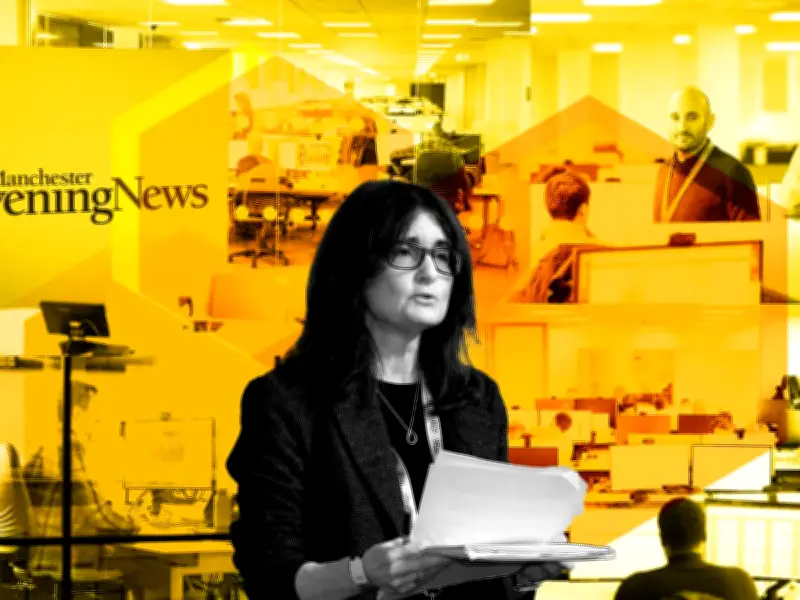
Manchester Evening News Editor-in-Chief Sarah Lester has warned MPs that local journalism is in a perilous position and that Britain risks losing something fundamental to its democracy unless action is taken to protect it.
Speaking at a parliamentary reception in Westminster on Monday (November 2), organised by the News Media Association to mark its Journalism Matters campaign, she highlighted the growing power of global technology companies, the threat posed by AI and the consequences of allowing trusted local news to decline.
Journalism that changes lives
Drawing on the MEN's investigations and campaigns, as well as the work of regional newsrooms across the country, Lester argued that journalism's future was a matter for the whole of society, not simply the newspaper industry.
At the Manchester Evening News, she said, the team has investigated turmoil at Oldham council, a sex scandal and cover up at Salford Council, far right activities, sex offenders living near a playground, and more. The newsroom has campaigned for free bus fares for homeless children and fought for safer nurseries for babies through the campaign for Gigi.
She also highlighted the work of other regional editors, including Steve Graves at the Liverpool Echo and its campaign for Gabe's Law, which pushes for a structural change to car parks to prevent people taking their own lives by jumping off them. Helen Dalby at the Newcastle Chronicle campaigned for child killers to be excluded from the early release scheme, focusing on the case of Archie York, a seven-year-old killed in an explosion caused by drug dealers making cannabis sweets.
Threat from AI and tech platforms
Lester said that Googling these stories often brings up an AI-generated summary, meaning users never need to click on the original reporting. She argued that AI licensing deals do little to compensate for revenue lost as Google uses publishers' work to keep people on its own platform.
During last year's attack on Heaton Park Synagogue, the MEN had 28 journalists working across all platforms. Yet coverage was buried on page eight of Google search results, with international outlets carrying agency copy outranking the journalists who were actually there, despite more than 10,000 websites linking to the original reporting.
She also raised concerns about the BBC expanding further into the local news market, saying stories are regularly lifted and published without credit. While Ofcom said the BBC strategy would have a 1-2% impact on local news, the MEN estimates it is costing the local news industry around £12m a year. Data suggests 70 per cent of stories covered by the BBC have already been reported by a local publisher.
Fact-checking and misinformation
Lester said local journalism is also about countering misinformation. During riots a few years ago, social media was full of claims about violence across Greater Manchester, but MEN reporters were able to show that areas were peaceful. Recently, rumours that veterans were being moved out of a care home for asylum seekers were fact-checked and found to be untrue.
She noted that senior police and council leaders regularly say that reporting has calmed communities and helped prevent disorder. She also highlighted the consequences of anyone claiming to be a journalist without accepting responsibilities, citing self-styled auditors filming Nicola Bulley's body being pulled from the river and livestreaming grieving relatives at the synagogue attack.
Call for government action
Lester said the MEN has adapted enormously, with hundreds of thousands of followers on TikTok, Instagram and X, millions on Facebook, and seven million visitors a month to its website and app. She keeps breaking news and stories of public interest free, even though that costs subscribers.
She called for a fairer relationship between publishers and digital platforms, protection of public notices, and action against strategic lawsuits against public participation (SLAPPs) designed to silence public-interest reporting.
"If strong local journalism is diminished, we lose more than the news. We lose scrutiny. We lose accountability. We lose a vital part of the connection between people and the places they live," she said. "Once that is gone, it will be extraordinarily difficult to get back. Maybe impossible."




