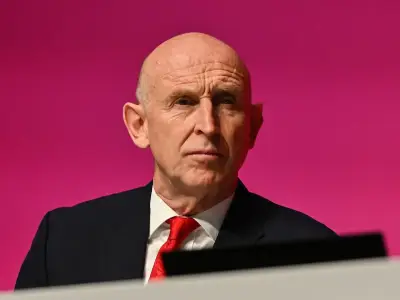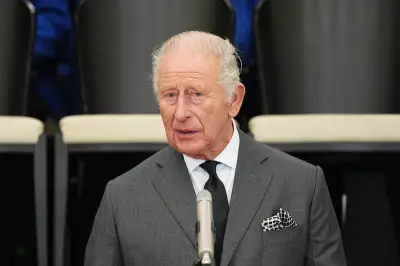
Millionaire investor Wolfgang Douglas has warned that Labour's Budget policies feel like 'wave after wave of Zulu warriors' attacking entrepreneurs trying to grow the British economy. The Mayfair-based founder of the Wolf Mindset Business Academy said the Budget represents 'Keir Starmer 2.0' rather than a change of direction under Andy Burnham.
Rorke's Drift comparison
Mr Douglas compared businesses to the small garrison of just 140 British soldiers who held off thousands of Zulu warriors during the 1879 battle of Rorke's Drift supply depot in South Africa. Despite overwhelming odds, the soldiers successfully defended the depot, earning 11 Victoria Crosses, a record for a regiment in a single action. The conflict was made famous by the 1964 film Zulu, starring Michael Caine.
He said: "I am in Mayfair surrounded by people who are pro-business minded, but we feel like the British soldiers at Rorke's Drift at the moment, being attacked by wave after wave of bad Labour economic policies which are like the Zulus."
Millionaires leaving the UK
Referencing a famous Sun headline against Labour leader Neil Kinnock during the 1992 General Election campaign, Mr Douglas added: "It feels like will the last millionaire leaving the country please turn out the light."
He noted that the highest income 1% account for more than a quarter, 26.6% projected by HMRC for 26/27, of all projected Income Tax. "Britain has a clear interest in keeping these successful entrepreneurs building businesses and investing here, that's where we have been failing the most," he said.
"But my concern is that the Chancellor's initiatives to build, employ or re-invest remain too weak, and my expectations are that entrepreneurs will continue to move abroad."
Tax concerns
Mr Douglas highlighted concerns over higher bank surcharges rising from 3% to 6%, saying: "Higher bank surcharges from 3% to 6% can affect business finance, my concern is whether taxing lenders more will make it harder for businesses to get finance and make it more expensive for businesses to grow."
He also addressed Corporation Tax, which he described as "an existing pressure on retained profits." He said: "The main rate is 25%, at that rate £100,000 of taxable profit produces £25,000 of Corporation Tax…that's the Labour way."
Despite Chancellor John Healey raising the rate relief threshold from £12,000 to £18,000 for hospitality, retail and leisure businesses, Mr Douglas said the real-world costs of running a small firm were still rocketing. Healey also announced a 3.9% above inflation increase in the minimum wage, extending to young workers aged between 18 and 20.
"For an employer with 10-staff, the minimum wage increases will add almost £11,000 to their annual cost in wages and employer National Insurance," Mr Douglas said. "If the adult legal minimum hourly rate is up to £13.20 from £12.71, that's 49p more per hour. For 10 affected employees paid for 37.5 hours an average week over 52 weeks a year, that adds up to £9,555 in wages, or approximately £11,000, including the employers, national insurance, at the current rate of 15%."
Business Asset Disposal relief
Mr Douglas also pointed to potential problems with the Chancellor going after the banks, repeating his concern about bank surcharges. He noted that the Business Asset Disposal (BAD) relief has been kept at 18%, raised last year by his predecessor Rachel Reeves.
He said: "The reward for building and selling businesses has been reduced. An entrepreneur can spend years risking their own money and building businesses. The business asset disposal relief is now 18% compared with 10% before the last Budget. If you put that on £1,000,000 business, it means that person selling that business is paying £180,000 in tax, instead of £100,000."