A defence expert has warned that Britain faces "immediate vulnerabilities" in its domestic security that amount to a "national scandal", and that increased defence spending announced in Wednesday's Budget does not "credibly guarantee protection against a coordinated drone attack on its civilian infrastructure".
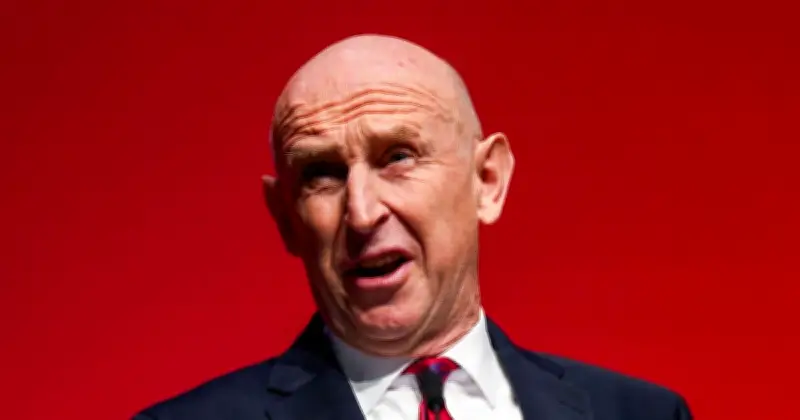
Andriy Dovbenko, founder of the UK-Ukraine Tech Exchange, made the comments after Chancellor John Healey announced plans to spend 3% of economic output on defence by 2030, rising to 3.5% by 2035. The move was criticised by the Conservatives as a "plan to have a plan".
Spending targets vs real threats
Mr Dovbenko said general spending targets should be secondary to "addressing the threats Britain actually faces", including whether its "legal framework and restrictions on counter-drone measures" could leave authorities powerless in the face of an attack from hostile powers such as Russia.
"Today's budget addresses the financial pressures facing defence, while leaving some of the most immediate vulnerabilities in Britain's domestic security dangerously unresolved," he said.
He suggested that "fragmented responsibilities" could leave UK authorities "unable to intervene effectively" in a theoretical attack from small FPV drones "before lives are lost".
Counter-drone defence concerns
"The priority is not simply to stockpile cheap interceptors," Mr Dovbenko added. "Effective counter-drone defence begins with persistent, passive detection, reliable identification and the ability to act immediately. Technology is of little use if the people responsible for protecting the public cannot legally employ it when needed."
He warned that without ensuring Britain "has the laws, institutions and operational readiness to defend its own population", greater spending "risks creating the appearance of security" without delivering actual protection.
Powers to intercept drones over civilian infrastructure, including airports, are largely reserved to the police, which could slow the response if an incident outpaced their ability to act.
Context of Russian activity
The warning comes amid reports that Moscow is running a campaign of sabotage and disruption in the West, including with the use of drones, with the aim of undermining support for Ukraine and destabilising European nations.
An explosive-laden drone was found at Leipzig airport in Germany last year, for which German authorities pinned the blame on Moscow, which denied involvement. Other drone incursions have been reported this month in the exclusive economic zones of Romania and Bulgaria, both NATO and European Union members.
Retired NATO commander Curtis Scaparrotti also warned in early October that Russia may already see itself as at war with the alliance.
"Those things that we typically put on the peace side, like these hybrid activities, something short of a large physical attack of some kind ... that's all part of their spectrum of war, unlike us. If you looked at it from their spectrum, we're at war with Russia today, within the alliance, because they're taking actions that are intended to undermine individual countries' capability to support warfare, undermine their civilians' confidence in their own government or within NATO, and to break NATO," he said.
"We should take seriously the fact that this isn't just spurious activities on the Russians' part," he added. "You can count on it that it has a plan behind it, that it's strategic, that it's long-term, and that we should take seriously the protection of our infrastructure."
The Ministry of Defence has been contacted for comment.