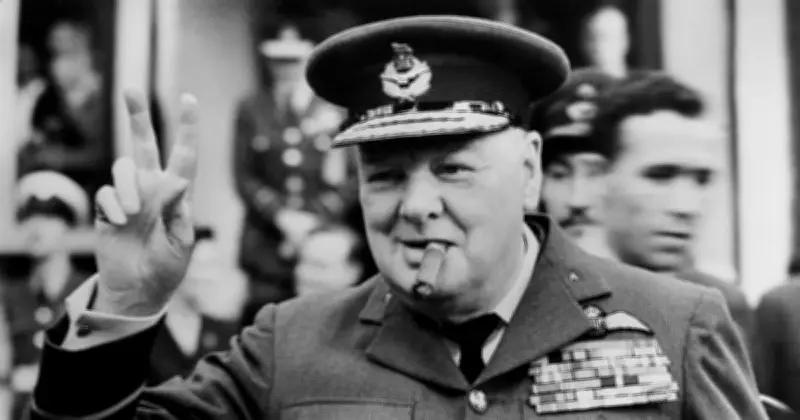
A Labour minister has said keeping Britain in the European Convention on Human Rights (ECHR) defends "Churchill's legacy", despite 21,000 serious foreign criminals remaining in the UK.
Border Security Minister Anna Turley made the remarks in response to criticism from Shadow Home Office Minister Blake Stephenson, who accused the Government of making the Immigration and Asylum Bill "softer on the worst offenders than current law".
Minister's response to criticism
Mr Stephenson asked Ms Turley: "There are 21,000 serious foreign criminals still in the UK. Today, a foreign criminal jailed for four years or more cannot use family or long residence exceptions to avoid deportation.
"Last week, the Government voted down our amendments in Committee to keep that rule and extend it to terrorists, making the Immigration and Asylum Bill softer on the worst offenders than current law. Will the Home Secretary admit that only leaving the ECHR will guarantee us that foreign criminals are deported?"
Ms Turley hit back: "It is sad to see the Conservative party so spooked by the far right that they are trashing some of the finest work of their greatest Prime Minister, Winston Churchill.
"When he said, 'Never again,' and led the way in building a European convention on human rights, he knew the protection it gave everyone from tyrants, despots, torture and death.
"This Government will defend Churchill's legacy - even if the Conservatives will not - by reforming both the ECHR, internationally, through co-operation with our European neighbours, and its domestic application through the forthcoming Bill, to ensure that its protections and principles are fit for the modern world."
Planned reforms to the ECHR
Labour has vowed to overhaul the right to a family life – Article 8 of the ECHR. Home Secretary Shabana Mahmood has told asylum officials that "no weight" should be given to Article 8 claims when the family unit was established when an applicant was living in the UK illegally.
New legislation will place a greater burden on relatives living together. A foreign criminal, failed asylum seeker or immigration offender will have to prove they have a "genuine and subsisting relationship". Courts will have to consider "how long" and "how often" a foreign criminal or failed asylum seeker has been in contact with their child.
Migrants will be barred from moving back into their family home to hoodwink officials. Migrants who file last-minute human rights claims will also be deemed unreliable, as officials are concerned lawyers are waiting as late as possible to remove their clients from deportation flights.
International efforts to change the convention
Labour wants to work with other European nations to overhaul Article 3 – the right to prohibition from torture. However, this is an "absolute" right, prompting critics to warn that any reforms will be limited.
The UK, and 26 other nations, have vowed to try and overhaul Articles 3 and 8 of the ECHR. Diplomats believe "the scope of inhuman and degrading treatment" under Article 3 should be "constrained to the most serious cases" amid fears it is abused by criminals and failed asylum seekers and overinterpreted by judges.
Foreign criminals have successfully argued they would be mistreated in overseas prisons and that their family lives would suffer if they were deported.
The communique declared: "The clear starting point is that a State Party can expel foreigners convicted of serious crimes even though they have acquired ties to their host Country, e.g. if they have established a family life there.
"In line with the principles in this statement, it is vital that the balance between individual rights and legitimate aims as per Article 8 of the Convention is adjusted so that more weight is put on the nature and seriousness of the offence committed and less weight is put on the foreign criminal's social, cultural, and family ties with the host Country and with the Country of destination.
"The purpose of such a rebalancing is to ensure that we no longer see instances where foreigners convicted of serious crime, including serious violent crime, sexual assault, organised crime and human and drug trafficking, cannot be expelled.
"The scope of 'inhuman and degrading treatment' under Article 3, which is an absolute right, should be constrained to the most serious issues in a manner which does not prevent State Parties from taking proportionate decisions on the expulsion of foreign criminals, or in removal or extradition cases, including in cases raising issues concerning healthcare and prison conditions."