
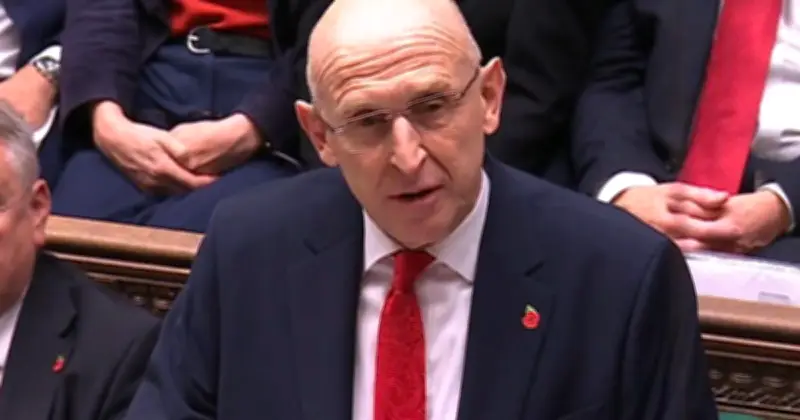
Chancellor John Healey has been accused of "putting benefits before bullets" after failing to set out a plan to reach 3% of GDP on defence spending by 2030 in his Budget. The Government will instead detail how it intends to hit the target at next year's spending review.
Mr Healey told the Commons: "At the spending review next year, I confirm that I will set out the details of how we will meet our NATO commitment to spend 3.5% of GDP on defence by 2035, with a target date for 3% in 2030. And today I am getting work under way to get there in a fiscally sustainable way."
Former defence secretary criticises Labour
Former defence secretary Sir Ben Wallace criticised the party for "risking the lives" of soldiers while the welfare bill soars. He told the Daily Express: "Labour are putting benefits before bullets and, in doing so, risking the lives of our men and women of our armed forces.
"Defending this nation is not a game to be carried out by press release and empty promises. The Chancellor confirmed that our armed forces are going to see a real-term cut to their day-to-day funding next year that means less maintenance, less training, less ammunition and less operations at a time of very, very dangerous world."
Mr Healey, who quit as Sir Keir Starmer's defence secretary in a row over military funding, hinted that reaching the 3% commitment could come at the cost of spending elsewhere.
Political reaction to the Budget
Tory leader Kemi Badenoch said: "He should have set out a plan for 3% today. So now he is the man who is increasing risk to personnel on operations, he is the man who is making our country less safe, he has failed his own test.
"This is on him, and no one will ever forget. If he had any decency, he would resign again today.
"What he's done is he's given himself a bit of breathing space until next year. Instead, what we have is a plan to have a plan. I bet Putin's really scared now."
Reform UK's Robert Jenrick added: "John Healey resigned as defence secretary and demanded 3% of GDP is spent on our armed forces by 2030. He is now Chancellor and won't say how he will find the money. He has failed his own test. He should resign again."
Former defence minister and ex-soldier Tobias Ellwood said that "an opportunity to improve security has been ignored in favour of an election strategy to pay for welfare".
He said: "Burnham's whole strategic approach is to woo a slice of the electorate that will certainly reward him at the ballot box for greater spending on all matters connected with welfare.
"What Burnham is doing is setting up an election-winning Budget, an election-winning strategy that targets your typical voters, your typical socialist voters. The old red wall seats he's targeting, rather than putting Britain first."
Committee chair warns of 'cost to inaction'
Labour MP Tan Dhesi, who chairs the defence committee, warned there is a "cost to inaction". He said: "Investment in our nation's defence and security cannot be kicked into the long grass. Our adversaries are not bound by fiscal years and spending cycles.
"We need to urgently rebuild our capabilities now, or we risk leaving ourselves seriously vulnerable in the event of a major conflict. It will take more than promises for the Government to transform its ambitions into reality."
Reaching the 3% target by the end of the decade is estimated by the Office for Budget Responsibility to cost an extra £17.3billion in 2029-30.
Ahead of the Budget, Ukrainian president Volodymyr Zelensky urged the Chancellor not to delay hiking defence spending. The wartime leader told The Sun: "Can the United Kingdom trust Russia or not? If not, defence needs to be 100% the priority.
"My advice to John is don't delay. Sorry, John … but it's important to be direct."
Mr Healey's announcement was welcomed by Defence Secretary Wes Streeting and NATO chief Mark Rutte. Mr Streeting said: "This Labour Chancellor is investing in our defence – a Britain ready to fight and a country worth fighting for."
Mr Rutte said it would put Britain "on a credible path" towards meeting its NATO commitments. The NATO secretary general said: "Good news on the new Budget from Mr Healey with a strong commitment on defence.
"The UK role in transatlantic security is vital, and I welcome this move to put Britain on a credible path towards meeting the commitment made by all NATO allies in The Hague – to ensure we're all investing what's needed to remain ready (and) able to deter aggression, and defend our freedom and security."
Former NATO secretary general and author of the strategic defence review (SDR), Lord Robertson of Port Ellen, said: "John Healey is acting in the national interest – and has done exactly what he said was needed for defence in his resignation letter, by setting a headmark for 3% in 2030.
"I am strongly in favour of innovative ways of financing defence – and this is a credible route to get more into UK defence. Today's announcements strengthen UK leadership in NATO once again."




