
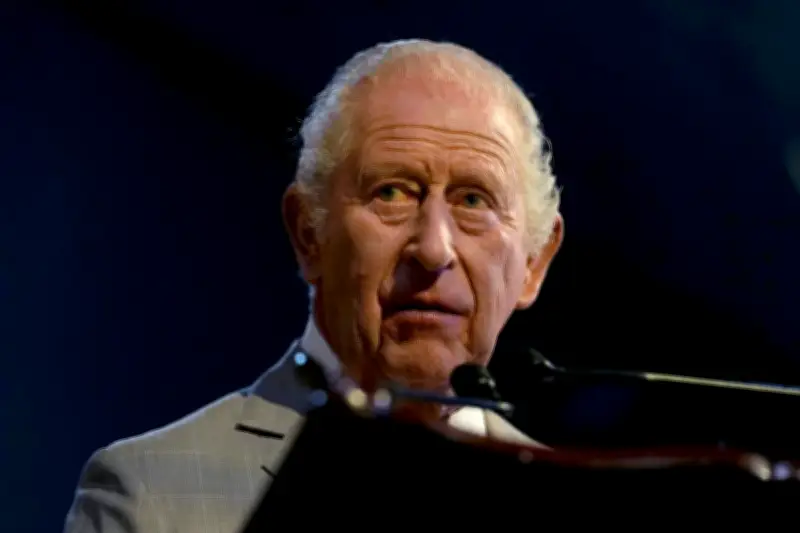
King Charles has told Commonwealth leaders that the transatlantic slave trade “fills my heart with horror and my soul with the most profound personal sorrow,” but he did not offer an apology during his address at the Commonwealth Heads of Government Meeting (Chogm) in Antigua.
In his speech to presidents and prime ministers, the King said his commitment was growing to find ways to “address the wrongs of the past with action for the future.” His remarks came against the background of Prime Minister Andy Burnham announcing a change in long-established Government policy and offering talks on a slavery apology, but not financial reparations.
King's Address to Commonwealth Leaders
Speaking to leaders of the Commonwealth’s 56 member states, the King said: “Our history inspires us, can appal us, yet it can always teach us. We cannot change the actions of those who came before us. We can, however, learn from the past.”
He added: “The transatlantic trade in enslaved persons still casts a shadow over these islands and other members of our Commonwealth. As I have said before, that shameful chapter of history is one that fills my heart with horror and my soul with the most profound personal sorrow.”
The King also noted that “evil need not have the last word” and that “character and courage can combine to overcome the most monstrous injustice,” citing the determination to end the international trade in enslaved people, in which the Royal Navy played a leading role.
Growing Calls for Apology and Reparations
Calls for an apology and reparations from the UK have been growing in recent years. St Lucia’s Prime Minister Philip J Pierre, chairman of the 15-member Caribbean Community (Caricom), has reportedly said the bloc was “ready to engage” in the structured dialogue offered by Mr Burnham.
The British Prime Minister said the UK wanted to “work closely with you to make sure we get that right” as he met Ghana’s President John Dramani Mahama for one-to-one talks on the sidelines of the summit. Mr Mahama said Britain had shown a “shift in some very strong positions” and is now “more open to interacting with the rest of the world” and the Commonwealth.
After the last Chogm in 2024, when Downing Street was resistant to discussions about reparations, the Ghanaian leader said the new Prime Minister’s approach “creates a first step for us to continue to work to see how we can put this whole issue of transatlantic slave trade and colonialism behind us.”
Protests and Historical Context
The area around the opening ceremony was locked down for security, with roads closed. At the perimeter, a small protest took place, with activists holding placards reading “You say you regret so apologise” and “Apologise for the greatest crime against humanity and let’s have reparatory justice.”
In his speech, which lasted around 15 minutes, Charles gave examples of how the Commonwealth can “address the wrongs of the past,” including improving access to education, investing in jobs and opportunities, encouraging intra-Commonwealth trade, and inspiring climate resilience measures. He said: “I have always tried to play my part in doing just that.”
The King also noted that “all around us, trust between nations is under critical strain” and that “brutal conflict stalks our world,” but he said the family of nations offered an “unparalleled opportunity to work together” and drew on the “collective ingenuity of a third of humanity” to address challenges. Mr Burnham later told the King his speech was “perfect,” and Canadian Prime Minister Mark Carney echoed his words, saying the address was “very good.”




