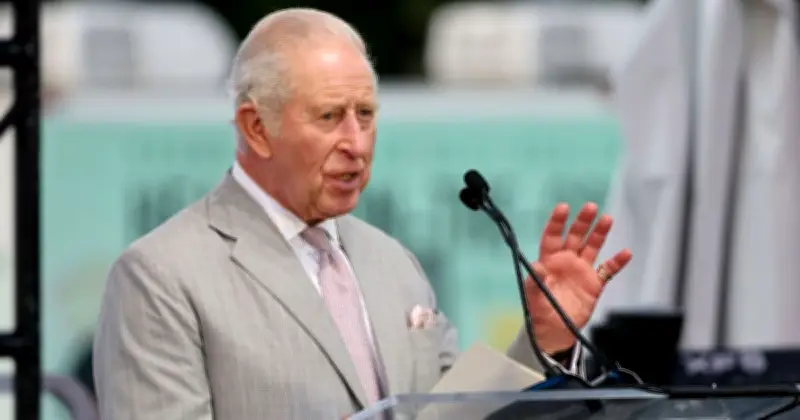
King Charles will speak about slavery with “unflinching honesty” and “sincere sorrow” in his opening address at the Commonwealth Heads of Government Meeting (CHOGM) in Antigua and Barbuda. His address has been moved to the front of the agenda after Prime Minister Andy Burnham offered Commonwealth nations the opportunity to discuss a slavery apology from Britain.
As head of the Commonwealth, the King’s words at the summit will mainly focus on encouraging solutions to global challenges and opportunities facing the “family of nations”, and are not expected to reference the change in Government policy.
Government position on apology
Foreign Secretary Ed Miliband, who is in Antigua and Barbuda for CHOGM, appeared to double down on the Government’s change in policy. He said Britain “is self-confident enough to have this conversation”, adding: “The question of a formal apology will be a major part of the dialogue we are establishing.”
Charles’s role as head of state means he is above party politics, and any apology for Britain’s role in the transatlantic slave trade will be an issue for the Government. Much of the King’s speech will reflect themes he has championed throughout his life, including nature restoration, climate resilience, sustainable finance and partnership between governments, business and civil society.
Palace on the King's role
A Buckingham Palace spokesperson said: “As Head of the Commonwealth, His Majesty's contribution is best understood as one of inspiring and convening rather than policy-making: helping bring people together from both the public and private sectors across the whole family of 56 nations, encouraging practical collaboration and creating momentum behind ideas that are now moving through Commonwealth channels.”
The spokesperson added: “You will be aware that the motto for CHOGM 2026 is ‘Accelerating Partnerships and Investment for a Prosperous Commonwealth’. Indeed, the recurring theme of the CHOGM agenda is that governments cannot solve today's challenges alone.”
Caribbean leaders call for reparations
While the Palace want the focus to be on wider areas of opportunity and challenge for all 56 Commonwealth nations, the issue of slavery is set to dominate the talks. Some Caribbean nations made renewed calls for Britain to apologise for its role in selling enslaved people for profit, and for reparations, before the King left the UK for a nine-day tour of the Caribbean, including a state visit to Guyana and a trip to the Bahamas.
Barbados Prime Minister Mia Mottley led a group of Caribbean leaders who launched a new slavery reparations manifesto during a reparations conference in Ghana in June. On Sunday, after meeting the King and Queen at church, Antiguan Prime Minister Gaston Browne urged Mr Burnham to go further than an apology, warning there could be a repeat of the past “atrocities” in the future if reparations are not paid.
He told ITV News: “I understand the politics in the UK, in which it may be a difficult proposition for him to agree to any form of reparations, but that just does not negate the need for reparations. If there’s no compensation, there’s likely to be a repeat of those atrocities sometime in the future, and you can see what is happening globally already.”
Mr Browne’s views echo those of fellow Caribbean leaders, with St Lucia’s Prime Minister Philip J Pierre, chairman of the 15-member Caribbean Community (Caricom), reportedly saying the bloc was “ready to engage” in the structured dialogue Mr Burnham offered. Mr Miliband added to the Prime Minister’s remarks over the weekend, saying: “Transatlantic slavery was a horrific chapter in our history. It was a brutal and barbaric violation of the humanity of millions, the legacy of which is still felt by so many today. We can't change the past, but we can face it with honesty.”
He continued: “That's why the Prime Minister has committed to establishing a formal, structured dialogue with Caribbean and African partners, overseas territories, and affected communities in Britain. This will allow us to discuss the history and ongoing legacy of transatlantic slavery, including the question of a formal apology, which we, the British government, are open to.”