
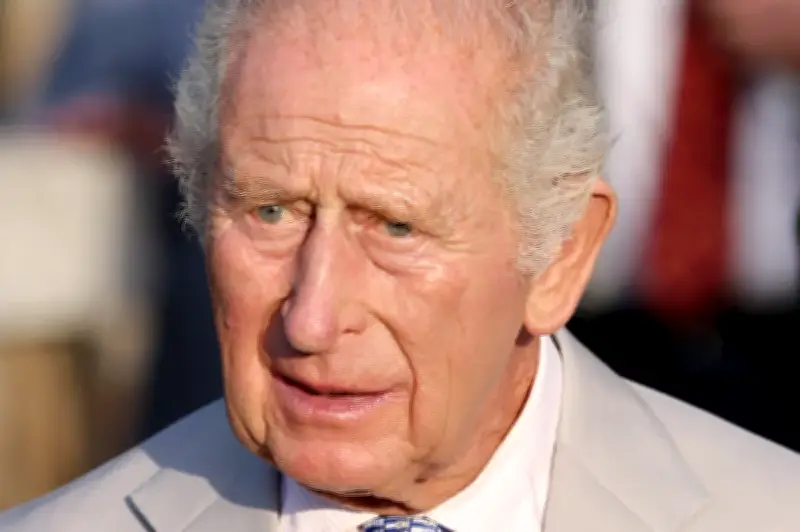
The King has told Commonwealth leaders that the transatlantic slave trade “fills my heart with horror and my soul with the most profound personal sorrow”, but he did not offer an apology.
In his address to presidents and prime ministers, Charles said his commitment was growing to find ways to “address the wrongs of the past with action for the future”.
He delivered the speech against the background of Prime Minister Andy Burnham announcing a change in long-established Government policy and making an offer of talks on a slavery apology but not financial reparations.
Address to Commonwealth leaders
The King told the leaders of the Commonwealth’s 56 member states meeting in Antigua: “Our history inspires us, can appal us, yet it can always teach us. We cannot change the actions of those who came before us. We can, however, learn from the past.
“The transatlantic trade in enslaved persons still casts a shadow over these islands and other members of our Commonwealth. As I have said before, that shameful chapter of history is one that fills my heart with horror and my soul with the most profound personal sorrow.
“And yet history also teaches us that evil need not have the last word; that character and courage can combine to overcome the most monstrous injustice, as they did with the determination to end international trade in enslaved people, in which the Royal Navy played such a leading role.
“The more I have furthered my own understanding of the issues, through listening, learning and looking, the more committed I have become to finding ways for us to work in modern partnership to address the wrongs of the past with action for the future.”
History and its legacy
Charles also told the gathering of world leaders: “None of us, of course, would be here today were it not for our history, which has shaped us in myriad ways.
“History is not ours to choose or to change. It is bequeathed to us in complex synthesis by forebears we can never know.
“Our inheritance includes both their achievements and their failures – the good they did as well as the wrongs.”
Growing calls for reparations
Calls for an apology and reparations from the UK have been growing in recent years and St Lucia’s Prime Minister Philip J Pierre, chairman of the 15-member Caribbean Community (CARICOM), has reportedly said the economic and political bloc was “ready to engage” in the structured dialogue Mr Burnham offered.
The area around the Commonwealth Heads of Government Meeting (Chogm) opening ceremony was locked down for security with roads closed. At the perimeter was a small protest, with activists holding placards which read “You say you regret so apologise”, and “Apologise for the greatest crime against humanity and let’s have reparatory justice”.
Britain’s royal family has a long association with the transportation and selling of enslaved people for profit. Elizabeth I backed the lucrative dealings of John Hawkins, one of Britain’s first slave traders, and Charles II encouraged the expansion of the enterprise. As the slavery abolitionists campaigned against the trade, they were opposed by the Duke of Clarence, George III’s son, later to become William IV.




