
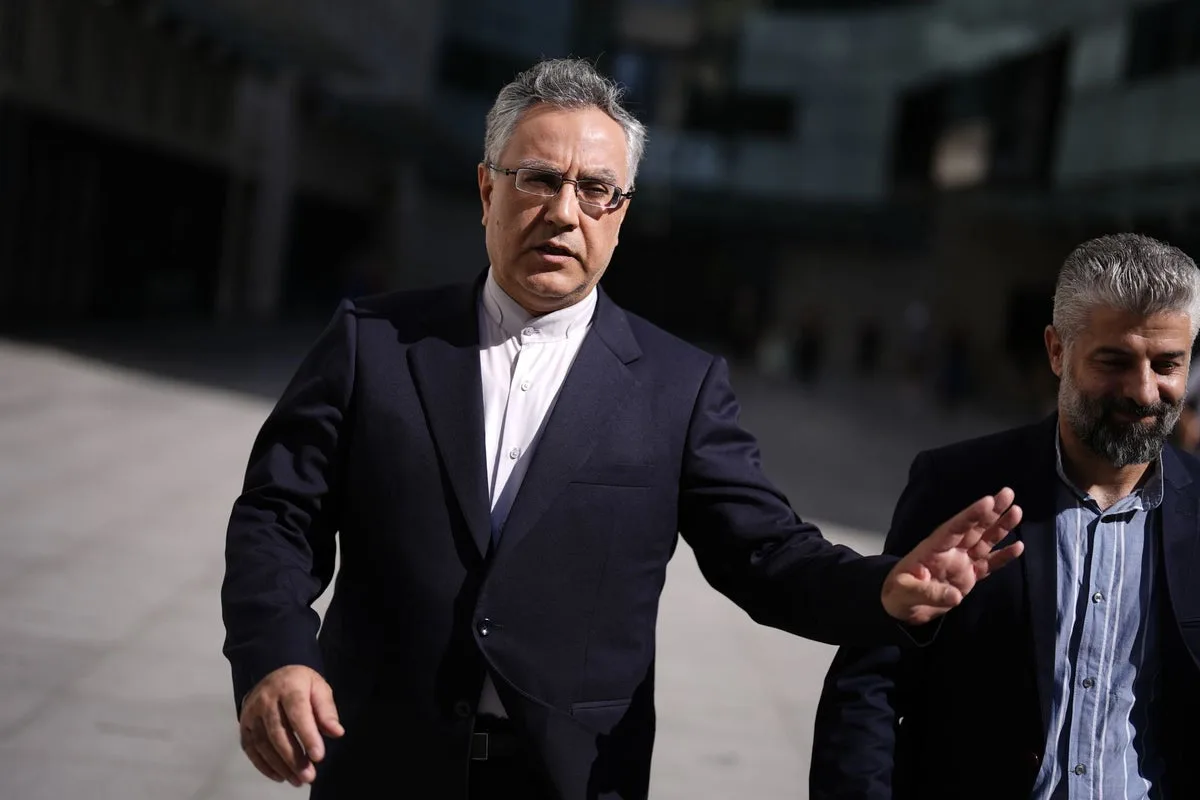
Iran’s ambassador to the UK, Seyed Ali Mousavi, has been summoned to the Foreign Office after the embassy posted what officials described as “unacceptable and inflammatory comments” on social media. Middle East minister Hamish Falconer condemned the posts during the diplomatic exchange.
The intervention followed a report of a message on the embassy’s Telegram channel that appeared to urge Iranian expatriates to “sacrifice their lives for the homeland” and “lay down our lives” to “defend Iranian land”. The post concluded: “Let us all, one and all, give our lives in battle. Rather than surrender our country to the enemy.”
The embassy’s X profile also posted comments about US-Israeli attacks on Iran, including a suggestion that Israel was a “fake country” and that Iran’s salt dome “overcomes the iron dome of fake countries”. The Foreign Office said the minister made clear these actions were “completely unacceptable” and that the embassy must cease any communications that could encourage violence.
Meanwhile, Prime Minister Sir Keir Starmer chaired a meeting of the Middle East Response Committee to consider contingency plans for the Iran war’s impact on the economy, public services and domestic security. Iran’s control over the Strait of Hormuz has pushed up prices and sparked concerns about supplies of chemicals and fertiliser.
Chancellor Rachel Reeves told the committee that any support for households must be “targeted” and avoid a lasting impact on interest rates, learning lessons from the previous government’s response to the 2022 energy crisis. The Prime Minister’s spokesman said planning is being ramped up for different potential impacts on the UK economy and consumers.




