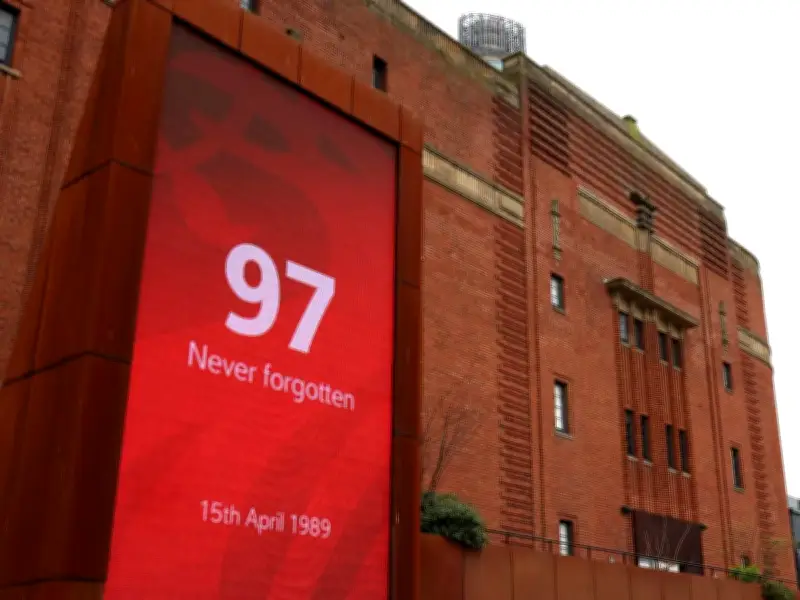
The Public Office (Accountability) Bill, widely known as the Hillsborough Law, has cleared its committee stage in the House of Lords. The legislation would require public officials and authorities to act with candour and transparency during investigations and public inquiries. The Bill is named after the 1989 Hillsborough disaster in Sheffield, where 97 Liverpool supporters died in a crush during an FA Cup semi-final between Liverpool and Nottingham Forest.
Peers raise concerns over paramedics
During the committee stage, peers raised concerns over how the Bill's provisions would apply to emergency services. Baroness Levitt, a former justice minister, argued that a new offence of seriously improper conduct did not apply to paramedics, calling on Parliament to fix that oversight.
She cited a case in which she appeared for the prosecution, involving a paramedic accused of engaging in serious sexual misconduct towards a vulnerable patient. Baroness Levitt said: "The issue was whether a paramedic responding to an emergency was a public officer for the purposes of the common law offence of misconduct in public office. The court concluded that a paramedic did not come within that definition, and as a consequence, the conviction could not be upheld."
Concerns over duty to prevent death or injury
Baroness Levitt also noted that when a paramedic responds to an emergency, members of the public are often at their most vulnerable and must be able to trust whoever has arrived to help. She continued: "Yet, paramedics are not included. The consequence is not merely theoretical. If behaviour of the sort I have described were to occur again, a prosecution for seriously improper conduct would still not be possible."
She also argued that the Bill failed to address a new offence regarding breaches of duty to prevent death or serious injury. She said: "If there is one category of professional whose daily work involves preventing death or serious injury, it's a paramedic responding to an emergency call. Let us suppose that a paramedic deliberately withheld appropriate treatment because of prejudice towards a patient on grounds of race. As matters presently stand, they could not be prosecuted."
Government response and next steps
Justice minister Lord Lemos responded that a Law Commission review concluded that frontline healthcare workers should remain outside the scope of the Bill unless they are providing services to those in state detention. He said this reflected existing case law, with paramedics' responsibilities "primarily owed to the individual they are treating, rather than to the public in general".
He added: "Frontline healthcare realms were excluded because healthcare services are delivered across both public and private sectors, and therefore cannot be regarded solely as a core function of government. Including public sector healthcare workers would create an arbitrary distinction between individuals performing the same role in the private and public sectors. This would add complexity, contrary to the policy objective of improving clarity on who the new offences apply to."
The Bill will now be further considered by the House of Lords at report stage, where amendments will be voted on. It will then return to the Commons for approval.